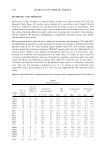
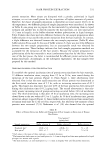
596 JOURNAL OF COSMETIC SCIENCE DOES MELANIN HAVE AN SPF AND CAN IT BE MEASURED? Howard Epstein1'2, Prashiela Manga3, Amu Koshoffer*, David Story2, Tony Simion2, Raymond Boissy* 1 Union Institute and University of Cincinnati, OH 2 Kao Brands Company, Cincinnati, OH -'Department of Dermatology, New York University School of Medicine, NY, NY * Department of Dermatology, University of Cincinnati College of Medicine, Cincinnati, OH Introduction The Food and Drug Administration (FDA) describes Sun Protection Factor Value (SPF) as the UV energy required to produce a minimal erythema dose (l\,1ED) on protected skin divided by the UV energy required to produce an MED on unprotected skin. Limited studies have been performed to determine the specific SPF of melanin. In order to standardize testing, we have begun to develop an assay using methodology initially designed for the determination of the SPF of sunscreen products. One accepted protocol measures SPF value of sunscreen products after application of 2 milligrams per square centimeter of product is applied to skin in vivo and exposed to UV irradiation. The SPF value is the reciprocal of the effective transmission of the product viewed as a UV radiation filter (1). The Optometries SPF-290S was developed an in vitro method to measure SPF values of various types of material containing sunscreen products. The instrument was designedto detect low levels of transmitted light using a high output continuous 125-watt xenon lamp. Light from the lamp passes directly through the sample. The recommended protocol requires a concentration of 2 uL/cm2 of sample is mixed evenly in support medium and spread on a quartz plate. A sheet of Transpore Tape™ (TT) is placed over the quartz plate to simulate human skin. The instrument makes automatic measurements over the entire area integrating any irregularities caused by spreading technique (2) A few investigators have reported that the SPF of in vivo melanin ranges from SPF 2-9.68 (3,4,5). In this study we report on the results of a protocol developed to measure the SPF of melanin extracted from cultured human melanocytes from donors with light to dark skin. Materials and Methods The SPF of melanin was determined using an SPF-290S Analyzer System manufactured by Optometries LLC. Neonatal human and mouse melanoma melanocytes were cultured to confluence in either MCDB153 medium, supplemented with 3% fetal bovine serum, 5µg/ml insulin, 2ug/ml transferin, lµg/ml Vitamin E, 0.6ng /ml bFGF, 13µg/ml bovine pituitary extract, SnM 12-0-tetradecanoylphorbol-13-acetate and 1% penicillin-streptomycin or DMEM supplemented with 8% fetal bovine serum, lmM glutamine, 0.5mM sodium pyruvate and 1% penicillin-streptomycin media, respectively. Cells from multiple culture flasks were combined in a centrifuge tube, pelleted and rinsed twice in Hank's buffered saline solution (HBSS). The melanin pellets were weighed and were either mixed with 0.2N sodium hydroxide and a sunscreen-free moisturizing lotion orl % gelatin in HBSS used as support medium to facilitate spreading on TT that was attached to the quartz test plate. Melanin combined with gelatin or lotion was applied per Optometries protocol (2). Results and Discussion In order to determine the optimal conditions for measuring the SPF of melanin, we evaluated the following conditions on outcome as reproducibility: 1. melanin solubilization, 2. application vehicle and 3. amount of melanin. In the initial studies quantities of melanin ranging from 0.12 grams to 0.30 grams mixed with 110 uL sodium hydroxide did not provide enough material to evenly spread on TT. A quantity of 220 uL gelatin or lotion was determined to be the optimal volume of support medium to facilitate spreading of melanin on TT. It was then necessary to determine the optimal amount of melanin required to obtain consistent readings from the SPF Analyzer. A quantity of 0.30 grams of mouse or human melanin obtained through cell culture was determined to be the optimal amount for this study. SPF baseline reading for 1 % gelatin in HBSS and test lotion was obtained as shown in Tables 1 and 2. SPF data obtained for cultured melanocytes was compared with SPF readings for synthetic stock melanin solution of0.01 grams solubilized in 10ml of0.2N sodium hydroxide (1000 ug/mL). A 1:10 dilution (100 ug/mL) of stock melanin solution was tested for SPF. A quantity of 300 uL (0.30 grams) synthetic melanin at 1000 ug/mL and another sample at 100 ug/mL was measured for SPF as shown in Tables 3 and 4.

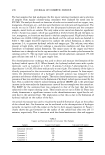
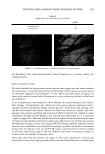
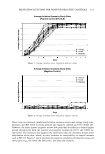
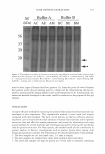
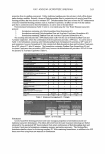
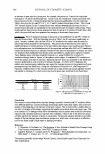
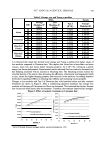
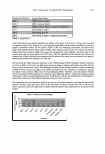
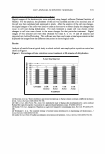
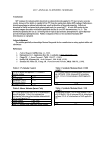
2007 ANNUAL SCIENTIFIC SEMINAR 597 Conclusions SPF readings for melanin pellets dissolved in sodium hydroxide applied to TT may not give accurate results, because of the ability to rapidly lift the TT from the quartz plate during SPF readings. Furthermore, dissolving melanin in sodium hydroxide may result in alteration of physical properties. Pellets not dissolved in NaOH and mixed with gelatin could easily be spread on IT. In vitro SPF results for this method compare favorably with limited published data for in vivo SFP determinations (3,4,5). This method has potential for use as a screening tool for topical and systemic photoprotective agents that may provide biological photoprotection. Further evaluation of this in vitro method of melanin SPF determination is warranted. Acknowledgement The authors gratefully acknowledge Marion Margosiak for her contribution in setting up data tables and tabulations. References I. Federal Register 64(98), (May 21, 1999). 2. Optometries LLC, Application Note No. 1 available at www.optometrics.com 3. Cripps DJ. J. Invest Dermatol., 76(5): 154-157, (1981). 4. Kaidby KH, KligmanAM. Arch Dermatol., 114: 46-48, (1978). 5. Sheehan JM, Potten CS, Young AR. Photochem and Photobio, 68(4): 588-592, (1998). Table 1: 1 % Gelatin Control 220 uL of gelatin was applied to TI to obtain a baseline reading. SPF 0.93 UVA/B Ratio 0 Erythemal UV A PF 0.94 (Protection Factor) Average UV A PF 0.94 Table 2: Mouse Melanin (Intact Cells) A 0.3 gram pellet mixed with 110 uL of 0.2N NaOH to dissolve the pellet. 110 uL of a sunscreen-free moisturizing lotion was mixed with the melanin/NaOH. 210 uL was spread on TI. Lotion Control I SPF= 0.8 Mouse Melanin I SPF= 1.8 Note: TI detached from quartz plate during readings. Table 3: Synthetic Melanin (Stock= 1000 uelmL) A O .01 grams synthetic melanin powder dissolved in 10 mL 2N NaOH. 220uL lotion and 300 uL melanin stock. 220 uL oflotion/melanin in NaOH applied to TI. SPF I 2.38 Table 4: Synthetic Melanin (Stock= 100 uelmL) Diluted stock melanin. 200 uL stock melanin 1.8 mL of 0.2N NaOH 200 uL lotion and 300 uL diluted stock melanin, 220 uL of lotion/melanin in NaOh applied to TI. SPF I 1.5
Purchased for the exclusive use of nofirst nolast (unknown)
From: SCC Media Library & Resource Center (library.scconline.org)