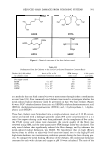
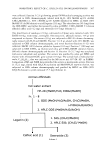
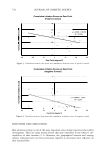
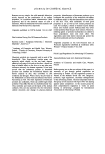
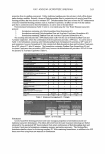
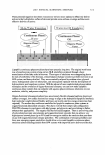
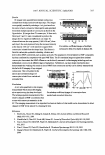
INHIBITORY EFFECT OF C. OFFICINALIS ON MELANOGENESIS 507 were collected. Fraction 5 (2.4 g) showing potent DPPH radical scavenging activity was subjected to ODS chromatography (eluted with H2O, 30% MeOH aq/1 % AcOH, CHC1 3 /MeOH=l:1, 80% i-PrOH aq/1% AcOH) followed by HPLC on ODS (30% MeOH/1 % AcOH elution) to yield loganin (233 mg). The other fraction (50.4 mg) from the ODS HPLC was further fractionated by silica gel HPLC. CHC1 3 /MeOH 5: 1 elution afforded caffeic acid (4.2 mg) and sweroside (18.4 mg) (Scheme 1). The dried fruits of sanshuyu (2.0 kg, cultivated in China) were extracted with 50% EtOH (8.0 kg, room temp., overnight). The extracts (C. officinalis extract, 714 g) were evaporated to dryness. The extract (50 g) was subjected to HP-20 column chromatog raphy (eluted with H2O and MeOH). Fraction 3 (2.0 g), eluted with 20% MeOH, was subjected to ODS column chromatography, and seven fractions (fractions 6-12) were collected. MeOH (30%) elution yielded to loganin (431 mg). Fraction 7 (500 mg) was subjected to ODS (CHC1 3 aq elution) and silica gel (CHCliMeOH stepwise elution, 600 ml) column chromatography and fraction 13. Fraction 13 (52.7 mg) was acetylated with acetic anhydride and pyridine. The acetate was purified by silica gel HPLC and elution with n-hexane/EtOAc gone acetate (19 mg). The acetate had a molecular for mula, C 17 H 26 O u, that was indicated by the MS ion at m/z 407 (M+Ht in FABMS. Comparison of MS and NMR data identified the acetate as morroniside acetate. Fraction 11 (52.1 mg), eluted with CH 3 CN aq elution and MeOH/H 2 O stepwise elution, was subjected to ODS column chromatography and purified by HPLC on ODS (20% CH 3 CN elution) to yield cornuside (7. 7 mg) (Scheme 2). Loganin (2) Cornus officinalis hot water extract HP-20 (MeOH/H2O, EtOAc/MeOH) Fr. 1 - 8 1. ODS (MeOH/H2O/AcOH, CH3CI/MeOH, i-PrOH/H2O/AcOH) 2. HPLC ODS (MeOH/H2O/AcOH) 1. SiO2 (CH3CI/MeOH) 2. HPLC SiO2 (CH3CI/ MeOH) Caffeic acid (1) Sweroside (3) Scheme 1

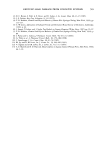
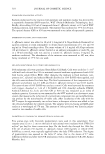
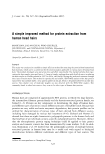
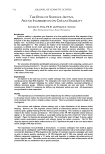
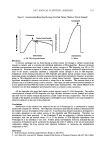
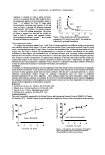
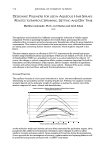
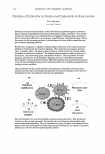
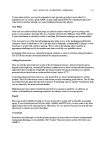
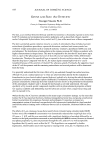
508 Loganin (2) Fr.6 JOURNAL OF COSMETIC SCIENCE Camus officinalis I 50% EtOH extract I HP-20 (MeOH/H2O) Fr.1-5 I ODS (MeOH/H2O) 1. ODS 1. ODS (CH3CN/H2O) (CHJCN/H2O) 2. SiO2 2. ODS (CH3CI/MeOH) (MeOH/H2O) 3.ODS 1. acetylation (CH3CN/H2O) 2. HPLC SiO2 4. HPLC ODS (hexane/EtOAc) (CH3CN/H2O) Morroniside acetate ( 4) 11 Cornuside (5) Scheme 2 1. SiO2 (CH3CN/H2O) 2. ODS (MeOH/H2O) 3. SiO2 (CH3CI/MeOH/H2O) Morroniside acetate was obtained as a colorless crystal (18). The FABMS of morroniside acetate proved the [M+Hr ion at m/z 407, which coincided with the molecular formula C17H 2 6 O 11 . The 1 H-NMR spectrum of morroniside acetate (in CD 3 OD): ol.27 (2H, d, j = 7 .0 Hz), 1.53 (lH, dt, J = 13.5, 3.9 Hz), 1.66 (3H, s), 1.78 (lH, m), 1.19 (lH, m), 3.07 (lH, m), 3.71 (3H, s), 4.14 (lH, dd, J = 2.4, 12.3 Hz), 4.34 (lH, m), 5.00 (lH, m), 5.10 (lH, t,J = 9.7 Hz), 5.23 (lH, t,J = 9.2 Hz), 5.67 (lH, d,J = 8.77 Hz), 6.14 (lH, d, j = 3.2 Hz), 7.43 (lH, s). 13C NMR (CDC13 ): 018.7, 20.5, 20.6, 21.2, 25.9, 30.9, 31.3, 39.1, 51.4, 61.6, 67 .2, 68.4, 71.0, 72.1, 91.2, 94.3, 96.7, 111.1, 152.5, 166.6, 169.2, 169.4, 169.6, 170.1, 170.6. It was thought that this compound without acetylation was morroniside, because it was identified when the isolated compound was morroniside-5-acetate. Caffeic acid (12), loganin (13), sweroside (14,15), and cornuside (11) were identified by comparison with 1 H-, 13C-NMR spectral data. (See Scheme 3 for the chemical structures of these components.) DPPH RADICAL-SCAVENGING ASSAY For this experiment, 0.05 ml of a solution of the compound isolated from the C. officinalis extract was added to 1.95 ml of DPPH (Sigma-Aldrich Co) MeOH solution, 6.0 x 10- 5 M. After the mixture was incubated at room temperature for 30 min, the absorbance at
Purchased for the exclusive use of nofirst nolast (unknown)
From: SCC Media Library & Resource Center (library.scconline.org)