INHIBITORY EFFECT OF C. OFFICINALIS ON MELANOGENESIS 517 (12) E. Lim, G. S. Higgins, Y. Li, and D. J. Bowles, Regioselectivity of glucosylation of caffeic acid by a UDP-glucose: Glucosyltransferase is maintained in plants, Biochem. ]., 373, 987-992 (2003). (13) H. Kawai, M. Kuroyanagi, and A. Ueno, Iridoid glucosides from Lonicera japonica Thunb., Chem. Pharm. Bull., 36, 3664-3666 (1988). (14) N. Keawpradub, H. Takayama, N. Aimi, and S. Sakai, Indole alkaloids from Alstonia glaucescens, Phytochem., 37, 1745-1749 (1994). (15) H. Inouye, S. Ueda, K. Inoue, and Y. Nakamura, Uber die monoterpenglucoside. X. Secoiridoid glucoside aus swertia japonica. Isolierung von funf secoiridoid-glucosiden sowie die struktuaufklarung des swerosides, des swertiamarins und des gentiopicrosids, Chem. Pharm. Bull., 18, 1856-1865 (1970) (16) Y. Yoshiki, K. Okubo, and M. Onuma, Chemiluminescence of benzoic and cinnamic acid, and flavonoids in the presence of aldhyde and hydrogen peroxide or hydroxyl radical by Fenton reaction, Phytochem., 39, 225-229 (1995). (17) A. U. Khan and M. Kasha, Singlet molecular oxygen evolution upon simple acidification of aqueous hypochlorite: Application to studies on the deleterious health effects of chlorinated drinking water, Proc. Natl. Acad. Sci., 91, 12365-12367 (1994). (18) H. Inouye, S. Ueda, K. Inoue, and Y. Takeda, Studies on monoterpene glucosides and related natural products. XXIII. Biosynthesis of the secoiridoid glucoside, gentiopicroside, morroniside, oleuropein, and jasminin, Chem. Pharm. Bull, 22, 676-686 (1974).

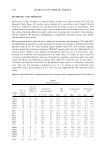
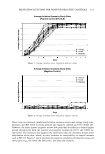
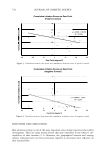
J. Cosmet. Sci. 1 58, 519-525 (September/October 2007) The differences in human cumulative irritation responses to positive and negative irritant controls from three geographical locations MING YI W. TRIMBLE, Hill Top Research, 3225 N. 7 5th Street, Scottsdale, AZ 85251 NALINI KAUL, Hill Top Research, 236 Osborne Street, Winnipeg1 Manitoba, Canada, R3L-2W2 and JOHN E. WILD and JAMES P. BOWMAN, Hill Top Research, 6088 Main and Mill Streets, Miamiville, OH 45147. Accepted for publication April 26, 2007. Synopsis A retrospective analysis was conducted to evaluate whether studies from three geographically diverse locations have similar response profiles to the positive and negative controls in a standard 14-day cumulative irritation study (1). The positive irritant control (0.1 % sodium lauryl sulfate, SLS) and the negative control (0.9% sodium chloride, saline) data from seventeen 14-day cumul�tive irritation studies were reviewed. The studies were compiled from three locations representing dry/hot, humid/hot, and dry/cold environments (Scottsdale, Arizona St. Petersburg, Florida and Winnipeg, Manitoba, respectively). Irritation scores were generated by trained skin graders from a total of 442 subjects studied between 1999 and 2005. Cumulative irritation scores were reviewed and compared between study locations. The irritation scores for the positive and negative controls were not significantly different between locations. Temperature and relative humidity (RH) variation did not correlate significantly with overall irritation. However, the dryer climate (i.e., negative or low dew point) had a tendency to induce a higher overall irritation level for both positive and negative controls. INTRODUCTION The cumulative irritation test is the industry standard used to determine and compare the irritation potential of topical agents (1). It has long been known that environmental and host factors may influence the state of skin conditions and therefore result in a change of cutaneous irritation (2,3). Historical positive and negative control data from seventeen 14-day cumulative irritation studies were reviewed from three climatically distinct study centers (Arizona, Florida, Manitoba). The objective of this analysis was to determine if the different study centers/climate conditions produced similar results for the positive and negative controls. 519
Purchased for the exclusive use of nofirst nolast (unknown)
From: SCC Media Library & Resource Center (library.scconline.org)