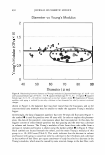
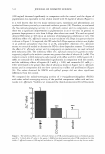
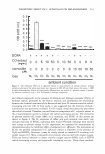
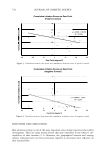
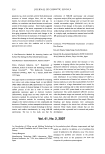
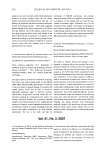
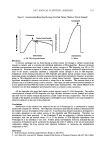
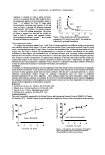
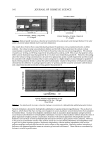
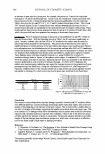
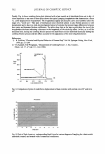
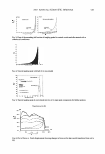
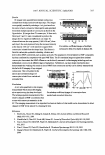
524 0 0 UJ C 0 -= Q) :i E :, 0 ♦ -30 -20 JOURNAL OF COSMETIC SCIENCE Cumulative Irritation Scores vs Dew Point (Positive Control) ♦ ♦ y = -0.065x + 30.406 R2 = 0.2004 ♦ ♦ ♦ ♦ ♦ -10 0 10 20 Dew Point (degree C} 30 Figure 3. Correlation between dew point and cumulative irritation scores of positive control. 0 0 UJ C 0 E :§ Q) � :i E :, 0 ♦ -30 -20 Cumulative Irritation Scores vs Dew Point (Negative Control) 3 ♦ ♦ -10 0 Dew Point (degree C) 10 y = -0.0463x + 1.0721 R 2 = 0.378 20 30 Figure 4. Correlation between dew point and cumulative irritation scores of negative control. DISCUSSION AND CONCLUSIONS Skin irritation testing is one of the most important steps during topical product safety development. There are many known factors that may contribute to the subject's sus ceptibility to skin irritants (2-4). However, the geographical location and varying climate conditions have not been previously explored to determine their influence on skin susceptibility.

IRRITATION OUTCOME FOR POSITIVE/NEGATIVE CONTROLS 525 Based on the results of this analysis, climate conditions such as average study tempera ture and relative humidity did not significantly impact the irritation outcome for either 0.1 % SLS and saline. However, the dryer climate may have a tendency to induce a higher level of irritation, particularly in the negative control. Overall, the different study centers produced similar results for both the positive and the negative controls regardless of geographic location. ACKNOWLEDGMENT The authors thank Yassaman Najmabadi, Joanne Browne, and Joelle Potrebka for their assistance during the data collection process. REFERENCES (1) R. S. Berger and J. P. Bowman, A reappraisal of the 21-day cumulative irritation test in man, J. Toxicol. Cut. Ocul. Toxicol., 1, 109-115 (1982). (2) S. Weltfriend, M. Ramon, and H. I. Maibach, "Irritant Dermatitis (Irritation)," in Dermatotoxicology, 6th ed., H. Zhai and H. I. Maibach, Eds. (CRC Press, Boca Raton, FL, 2000), pp. 181-228. (3) C.H. Lee and H. I. Maibach, "Sodium Lauryl Sulfate in Dermatotoxicology," in Dermatotoxicology, 6th ed., H. Zhai and H. I. Maibach, Eds. (CRC Press, Boca Raton, FL, 2000), pp. 479-506. (4) N. Golda and H. I. Maibach, Occlusion as an active agent, Cosmet. Toiletr., 121(5), 36 (2006).
Purchased for the exclusive use of nofirst nolast (unknown)
From: SCC Media Library & Resource Center (library.scconline.org)