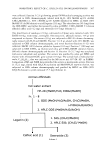
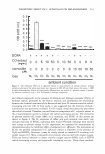
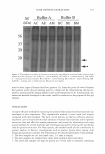
HAIR PROTEIN EXTRACTION 529 samples belonging to the third group were immersed in a mixture of chloroform/ methanol (2:1, v/v) for 24 hr at room temperature after ethanol treatment for 30 s and drying of the samples. In the third step, the effect of the sample preparations of the hair shafts on the protein extraction was compared by preparing two groups of the hair materials. The first group of the hair materials was pulverized in a mortar with a pestle using liquid nitrogen, and then the powdered hair materials were used for protein extraction in the buffer solutions. Another group of the hair materials was directly immersed in the buffer solutions without grinding in the mortar. In the fourth step, various incubation times were introduced to establish the optimal incubation time in extracting the protein from the hair shaft materials. For this experi ment, the hair materials were washed three times with distilled water and incubated at 50°C for 12 different incubation times ranging from 2.5 hr to 50 hr (2.5, 5.0, 7.5, 10, 15, 20, 25, 30, 35, 40, 45, and 50 hr). The extraction mixtures (containing the buffer solution and the hair materials) collected at the given incubation times were filtered through three layers of nylon mesh, and the amounts of protein were quantified to analyze the temporal progress of the protein extraction. EXTRACTION, MEASUREMENT, AND SDS-PAGE ANALYSIS OF HUMAN HAIR PROTEIN Total proteins were extracted by placing the hair materials into a tube or container containing the buffer solutions. After each sample group had been pretreated, 20 mg of the hair materials were incubated in buffer solutions A and B (5 ml per 20 mg materials) at 50°C for the given extraction times. In buffer solution C (a commercial protein extraction kit), the extraction procedures were done according to the manufacturer's manual. After completion of their incubations, the mixtures were then filtered through three layers of nylon mesh (200-mesh size) and the flowthrough was used for the protein measurement. The amounts of protein were measured with the protein-dye binding method of Brad ford (13) using a commercial protein assay kit (Bio-Rad, Hercules, CA). For this analysis, 10 µl of the incubated flowthrough was transferred to a cuvette containing 200 µl of dye solution and 790 µl of distilled water to make 1000 µl in total. The amounts of the total protein secreted into the buffer solutions were then quantitated by detecting the optical density at 595 nm of a wavelength, using a spectrophotometer (HP Agilent 8453, Palo Alto, CA). For analysis of sodium dodecyl sulfate-polyacrylamide gel electrophoresis (SDS-PAGE), 2 ml of the protein flowthrough was concentrated with a Centricon centrifugal filter device (Millipore, Bedford, MA) by centrifuging the devices containing the filtrate at 3000g for approximately 2.5-3 hr at 4°C. Thirty micrograms of the concentrated pro teins were boiled for 5 min and cooled in ice for 2 min, and then analyzed using the Bio-Rad mini-gel system (Bio-Rad, Hercules, CA) according to the manufacturer's manual. A gel with 5 % stacking and 15 % separating acrylamide was employed and visualized after staining with Coomassie brilliant blue G-250. The stained gel was transferred to a container containing a destaining solution (10% isopropanol and 10% acetic acid, v/v) and destained three times with slow shaking.

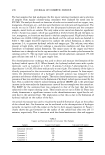
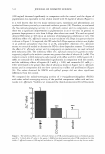
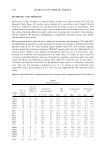
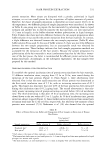
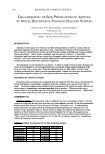
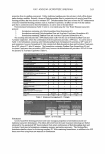
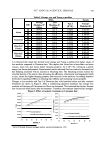
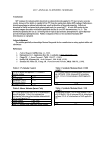
530 JOURNAL OF COSMETIC SCIENCE RESULTS AND DISCUSSION EFFECTS OF EXTRACTION BUFFERS AND WASHING OF THE HAIR SAMPLES ON PROTEIN EXTRACTION In general, the components of extraction buffers in isolating proteins from various tissues play an important role. In particular, because the surface of most hairs, including human head hairs, are lipidized or contaminated with some substances deterrable to isolation of their proteins, the hair materials are generally pretreated before the protein extraction step is performed. This pretreatment step increases the extraction time and thus is time-consuming. Accordingly, we carried out an experiment to examine the effects of the extraction buffers and washing pretreatments on protein extraction using human head hair materials. As shown in Table I, the highest amount of hair protein was extracted in buffer solution A, with a value of 247 .2 ± 3.2 µg/mg of hair. In buffer solution B, a value of 207 .2 ± 5 .2 µg/mg of hair was observed, while the lowest amount of the protein was found in buffer solution C with a value of 8.7 ±0.5 µg/mg of hair. These data suggest that buffer A solution is the most appropriate buffer for the extrac tion of hair protein. Another important thing is that buffer solution C, which is a commercial protein extraction kit used frequently in most tissues, is improper for the isolation of hair protein. This very low amount of protein extraction may be due to the presence of denaturing agents in buffer solution C, which acts as a deterrence in the extraction of hair protein (10-12). However, the difference in protein extraction between buffer solutions A and B may be derived from two factors. One factor is the difference in the concentration of urea (8 M in buffer B and 5 M in buffer A) and another is the presence of thiourea in buffer A solution. In particular, the presence of thiourea in extraction of hair protein at concentrations ranging from 1.2 M to 3 M increases the extraction of hair protein by 50% compared with those of other extraction buffers (10). Table I also shows that there is no significant difference among the washing pretreat ments, indicating that they have no influence on protein extraction from human hair materials. Consequently, the two washing steps employing pretreatments of ethanol and the mixture of ethanol plus chloroform/methanol, which consume over 24 hr, were omitted in the subsequent experiments. EFFECTS OF HAIR SAMPLE PREP ARA TI ON ON PROTEIN EXTRACTION Sample preparation from various tissues is one of the important factors. for efficient Table I Effects of Protein Extraction Buffer and Washing of Hair Samples on Extraction of Human Hair Protein Washing Controla Ethanol EtOH+Chl/MeOH6 Mean Buffer solution A 248.6 ± 4.1 247.0 ± 2.9 246.2 ± 2.6 247.2 ± 3.2c Total protein* (µg/mg hair) Buffer solution B 202.8 ± 6.2 209.9 ± 5.2 209.0 ± 4.2 207.2 ± 5.2c * Each value is the mean of three replicates ± standard deviation. a Control: washing of the hair materials only with distilled water (3 x washings). 6 EtOh, ethanol Chl, chloroform MeOH, methanol. c Mean values calculated in each column of the buffer items. Buffer solution C 9.0 ± 0.4 8.1 ± 0.4 9.1 ± 0.7 8.7 ± OS
Purchased for the exclusive use of nofirst nolast (unknown)
From: SCC Media Library & Resource Center (library.scconline.org)