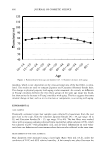
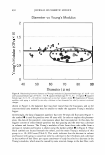
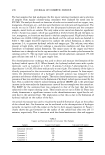
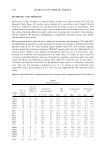
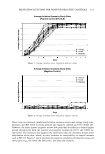
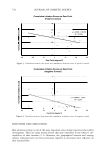
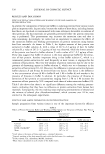
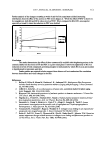
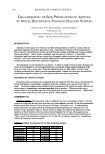
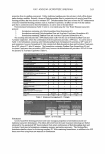
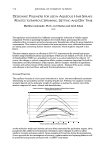
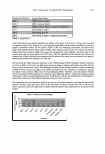
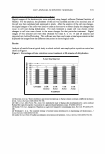
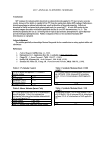
HAIR PROTEIN EXTRACTION 531 protein extraction. Most tissues are disrupted with a grinder, pulverized in liquid nitrogen, or cut into small pieces for the acquisition of higher amounts of protein. However, the choice of sample preparation is dependent on tissue sources (8,10,11). In this experiment, two different groups of sample preparations were introduced. As shown in Table II, one group was to prepare the hair materials by pulverizing them in liquid nitrogen and another was to directly immerse the hair materials, cut into small pieces (1-2 mm in length), in the buffer solutions without pulverization in liquid nitrogen. Table II shows that there was little difference between the two sample preparations when buffer solution A was used for the protein extraction from the hair materials. In contrast, a slight difference was detected between the two sample preparations (Table II) when buffer solution B was used. In the case of buffer solution C, there was also little difference between the two sample preparations, but an unacceptable result was obtained for protein extraction. These findings indicate that both sample preparation methods are acceptable for the extraction of the hair protein. Because the sample preparation by pulverization of the hair materials is more cumbersome than that by the direct immer sion of the hair pieces, the latter is recommended for efficient protein extraction from human head hairs. Accordingly, in the subsequent experiment, the hair samples were prepared by this method. TEMPORAL PROGRESS OF PROTEIN EXTRACTION To establish the optimal incubation time of protein extraction from the hair materials, 12 different incubation times, ranging from 2.5 hr to 50 hr, were tested during the extraction of the hair proteins (Figure 1). From Figure 1, three observations were obtained. One is that the most rapid extraction rate of hair protein was determined at the first initial incubation time of 2. 5 hr, with an increasing extraction rate of 42 .1 µg/hr. This figure also illustrates that over 40% of the hair protein has been extracted during this incubation time (105.2 µg/mg hair). The second observation is that rela tively greater increasing rates of protein extraction occurred before 24 hr of incubation time. The third observation is that after 24 hr of incubation time, the increasing rates slowed down to the rate values of 0.3 to 1.1 µg/hr. At 50 hr of incubation time, protein extraction almost stopped (Figure 1). Some workers extracted proteins from animal hairs or human head hairs for 12 hr or 18 hr, respectively, but relatively low amounts of hair proteins were recovered (7, 11). Nakamura et al. (10) also showed that the optimal Table II Effects of Protein Extraction Buffer and Propagation of Hair Samples on Extraction of Human Hair Protein Sample preparation Powdered haira Hair pieces6 Buffer solution A 252.8 ± 3.3 249.3 ± 1.7 Total protein* (µg/mg hair) Buffer solution B 228.8 ± 3.1 217.1 ± 6.5 * Each value is the mean of three replicates ± standard deviation. Buffer solution C 7.1 ± 1.0 7.9 ± 0.6 a The human hair shafts were cut into small pieces (ca. 1-2 mm in length) and then were pulverized in liquid nitrogen in a mortar with a pestle. 6 The hair materials, cut into small pieces (ca. 1-2 mm in length), were used for protein extraction.

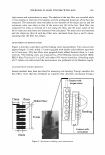
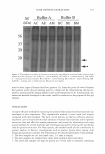
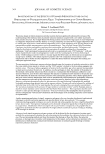
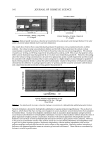
532 300 250 ·= 200 -� 150 C: C: 100 ·m 0 50 0 0 JOURNAL OF COSMETIC SCIENCE 241.8± 8.1 10 20 30 Time(hour) 249.5± 2,3 (ug/rng hair) 254.3± 4.7 252.6± 4.0 40 50 Figure 1. Temporal progress of incubation time for extracting protein from human head hair materials. Twelve incubation times were 2.5 hr, 5.0 hr, 7.5 hr, 10 hr, 15 hr, 20 hr, 25 hr, 30 hr, 35 hr, 40 hr, 45 hr, and 50 hr. The values shown above are the mean of three replicates ± standard deviation. incubation time for extracting proteins from both human hairs and mammalian hairs could be 48 hr to 72 hr for sufficient amounts of the hair proteins. Although they recommended different incubation times for extracting the proteins from the human head hairs or other mammalian hairs, our results demonstrate that the reasonable incu bation time for extracting the protein from human head hairs is 24 hr. SDS-P AGE ANALYSIS OF HUMAN HEAD HAIR PROTEIN An experiment of SDS-PAGE was conducted in 5% stacking and 15% separating acrylamide gel to examine the electrophoretic patterns of the proteins extracted from human hair materials by preparing small pieces of hair materials with 3 x washings in distilled water and then incubating them for 24 hr in buffer solutions A or B (buffer solution C is omitted because of inappropriate protein extraction from human head hairs). Figure 2 shows that the hair proteins extracted in both buffer solutions can be clearly analyzed on the gel. In general, the proteins extracted from various hair sources are resolved into several bands with different sizes of molecular weights on the gel (7,8,10,11), as shown in Figure 2. Most of the hair proteins consist of keratin protein families, which are classified into eight types of different molecular weights (7). Of them, two types of keratin families are predominant, type I and type II, with molecular weights of 44-48 kilodaltons (kDa) and 55-60 kDa, respectively (1,2,7). Figure 2 shows that the presence of two larger sizes of protein signals, which can be classified into type I and type II keratin protein families, was identified. In addition, two smaller sizes (arrow signs) of unidentified human hair proteins appeared on the gel (Figure 2), which
Purchased for the exclusive use of nofirst nolast (unknown)
From: SCC Media Library & Resource Center (library.scconline.org)