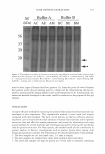
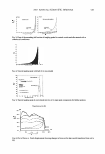
542 JOURNAL OF COSMETIC SCIENCE additive. This is an important feature, as the silicone did not verify that all fonnulations presented negative values change the rheological profile however, the addition of between -39.7 and -70.0 mV. Within this range of values, silicone still can be used as a viscosity controller. The the emulsion physical stability is high (Fig. 10). It was formulations had their viscosity increased 15 and 150 days concluded that the addition of PEG-12 Dimethicone kept after their preparation. This characteristic shows that the the liquid crystalline phase of the emulsion obtained with emulsions have their organization increased along the Crodafos CES®, influencing in a positive way in the system storing time. In the analysis of zeta potential, we could stability. Vol. 29, No. 3, 2007 Review Article B. A. Bernard, L'OREAL Recherche, Clichy, France. Tel.: Increasing quality of life by improving the quality of skin 33 (0)1 47567599 fax: 33 (0)1 47567078 e-mail: in patients with atopic dennatitis bbernard@rd.loreal.com K. Halvarsson and M. Loden The hair follicle is a very active organ with a complex Aco Hud Nordic AB, Research & Development, PO Box structure, which produces a hair fibre at a rate of 0.3 mm a 622, SE-194 26 Upplands Viisby, Sweden day. Accordingly, the hair follicle is highly demanding in Marie Loden, ACO Hud Nordic AB, PO Box 622, SE-194 energy source, as the hair bulb matrix cells are endowed 26 Upplands Viisby, Sweden. Tel.: +46 8 59002951 fax: +46 8 59002980 e-mail: marie. loden@aconordic.com with one of the highest rates of proliferation in the human Atopic dennatitis is a chronic relapsing inflammatory skin disease which usually starts during the first years of life. In patients with the disease, the quality of skin is severely affected, and this is closely linked to a reduced quality of life. An increasing prevalence of the disease has also been observed during recent years, which has been attributed to potential provocation factors in the environment. The environmental influence of the disease is complex, but the role of stratum comeum as a biosensor regulating the response to a variety of insults has been suggested as one crucial factor. Therefore, our daily hygiene and treatment of dryness are necessary measures to improve the quality of life and possibly reduce the frequency of the disease. Soaps as well as moisturizers show important differences in their impact on barrier function. 6-0 glucose linoleate supports in vitro human hair growth and lipid synthesis body. Moreover, recent data have shown the involvement of lipids in hair follicle function. As in vitro-grown hair follicle keeps producing a hair fibre that closely resembles the natural hair fibre, we decided to use this model to investigate the role of a new of glucose linoleate derivative (6-O-linoleyl-o-glucose: 6-O-GL) as a lipid precursor and energy provider. Our results demonstrated that 6-O-GL was (i) quite stable and surprisingly resistant to oxidative degradation, and (ii) readily taken up and metabolized by the hair follicle into various lipids, namely neutral lipids, ceramides and polar lipids. Moreover, it supported hair follicle growth and survival in a glucose- and linoleic-acid free medium. 6-O-GL thus appeared to be a bi-functional nutrient, ensuring both proper fibre quality and production by the hair follicle. A new technique associated with the evaporimetry method for evaluating occlusion P. Vingler*, B. Gautier*, M. Dalkot, R. Rozott, 0. Gaillard*, J. F. Michelet* and B. A. Bernard* J. P. P. Marques, D.S. B. Basso and A. S. Nunes *L'OREAL Recherche, Clichy and tL'OREAL Recherche, Natura lnova�!o e Tecnologia de Produtos Ltda., Rodovia Aulnay-sous-Bois, France Anhanguera, SP, Brazil

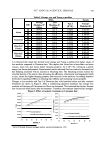
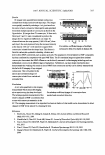
ABSTRACTS 543 Juliana Palmeira Portugal Marques, Natura Inovai;:iio e Tecnologia de Produtos Ltda., Rodovia Anhanguera, km 30,5, Polvilho, Cajamar, SP, Brazil. Tel.: +55 (11) 4446 2897 fax: +55 (11) 4446 2889 e-mail: j ul ianamarques@natura.netnop The stratum comeum is the outennost layer of the skin. It constitutes a penneability barrier that keeps micro organisms and toxic agents from entering the skin, while retaining water and electrolytes. In order to preserve its colour and elasticity, the skin needs lipids and water. Certain occlusive products in contact with the skin diminish its natural transepidennal water loss (TEWL), and the occlusion potential of such products can be evaluated with the aid of evaporimetry. The purpose of this work was to increase the sensitivity of the method by associating the well-established methodology for measuring TEWL with a technique for removing occlusive products from the skin. The present study was designed to evaluate the procedure of measuring TEWL evaporimetrically (the traditional method) in comparison with our new method, which employs the same evaporimetric measurement combined with a removal technique that uses cotton to remove the physical barrier that occlusive products fonn on the skin. The product used in this study was solid petrolatum (petroleum jelly), which possesses well-known occlusive properties. The TEWL measurements were made over a pre-defined period of time, on different skin sites, and were systematically compared with the results generated by an untreated control site. The TEWL was first detennined by the classic method (without product removal), then the K. Sivasegaran, School of Optometry, University of Waterloo, 200 University Avenue West, Waterloo, ON N2L 3Gl , Canada. Tel.: +I 519 888 4567 fax: +I 519 725 0784 e-mail: jsivak@uwaterloo.ca Pre-screening of cosmetic ingredients is vital for consumer safety. Previous in vivo techniques, such as the Draize test, have proved to be unreliable in predicting ocular irritancy and therefore there is a need for alternate testing methodologies. One such test is the scanning laser in vitro assay system which quantifies irritancy based on the focusing ability of the cultured bovine lens. In combination with confocal microscopy, a more thorough documentation of ocular irritancy can be achieved. This study investigates the response of cultured bovine lenses over time to butyl, methyl and propyl parabens, which are common antimicrobial agents found in cosmetic and ophthalmic products. The focusing ability of the lens was measured with an automated laser scanner over a period of 96 h. At 120 h· post-treatment, the lenses were analysed by using a confocal laser scanning microscope to determine the characteristics of nuclei, and the morphology and distribution of mitochondria within the lenses. Irritancy to the three parabens was investigated at both an optical and cellular level. Each of the parabens was tested at 0.002% and 0.2%, where the 0.2% butyl paraben was found to be the most irritating. product was removed and new readings were taken. Our Growth, survival and inactivation of Pseudomonas results show that the classic technique was unable to show aeruginosa and Staphylococcus aureus strains of various a statistical distinction between the occlusion capability of origin in the presence of ethanol solid petrolatum and the untreated control site, whereas this A. Pinon*, V. Alexandre*, S. Cupfennant, A. Crozier+ and same method used in association with product removal M. Vialette* provided a statistically significant difference between the TEWL measured on the occluded and control sites. *Institut Pasteur de Lille, 1 rue du professeur Calmette, Therefore, our removal technique associated with the BP245, 59019 Lille Cedex, tL'Oreal Recherche, Chevilly traditional method for measuring TEWL proved capable of Larue and tL'Oreal DGT, Aulnay sous Bois, France increasing the response sensitivity of evaporimetry with occlusive products. Dose-response of the cultured bovine lens to butyl, methyl and propyl parabens K. Sivasegaran, L. Ho, K. L. Moran, V. Bantseev and J. G. Sivak School of Optometry, University of Waterloo, 200 University Avenue West, Waterloo, ON N2L 3Gl, Canada Michele Vialette, Institut Pasteur de Lille, I rue du professeur Calmette, BP245, 59019 Lille Cedex, France. Tel.: +33 3 20 87 7853 Fax: +33 3 20 87 7224 e-mail: michele. vialette@pa teur-lille.fr The influence of ethanol on the behaviour of Pseudomonas aeruginosa and Staphylococcus aureus strains was evaluated throughout this study. Strains of different origin were used: collection, clinical and industrial strains were selected. Concentrations of ethanol from O to 20% (v/v) were evaluated by automated optical density measurements
Purchased for the exclusive use of nofirst nolast (unknown)
From: SCC Media Library & Resource Center (library.scconline.org)