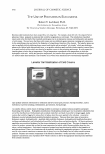
ABSTRACTS 541 skin was clinically nonnal. It can be concluded that (i) and without PFPE phosphate, by visual observation and protected skin areas show lower TEWL, skin pH and skin instrumentation (pH measures and 1 H-NMR spectroscopy). hydration and less protease activities than skin areas that Furthennore, to evaluate whether the substances produced are exposed to the environment, possibly indicating from the DHA degradation are potential irritants, patch subclinical inflammation on these body sites, (ii) in normal tests on volunteers were used to check the safety and healthy foreann skin, the outer SC exhibits greater serine indirectly the stability of the compositions. In conclusion, protease activity than its deeper layers, (iii) compared with our investigations on the guidelines to formulate DHA the forearm, urokinase- and plasmin-like activities are containing sunless tanners: elevated on SC strippings from the cheek, confirming activation of the plasminogen cascade, and (iv) tryptase- • confirmed that the pH is a key parameter in like activity in the SC is also elevated in samples from the formulating these compositions cheek, possibly indicating involvement of mast cells in • proved that PFPE phosphate is a safe and compatible these barrier-compromised body sites or the synthesis of a ingredient to lower the pH novel tryptase-like enzyme by keratinocytes. Although elevation of the activities of urokinase, plasmin, kallikrein • gave some evidence of the critical importance of 5, kallikrein 7 and now a tryptase-like enzyme was thickeners observed on SC derived from skin of clinically normal cheeks, we anticipate even higher activities in skin • suggested a strategy based on multifunctional agents conditions where the epidermal barrier is further impaired. Sunless tanning products containing dihydroxyacetone in combination with a perfluoropolyether phosphate G. Pantini*, R. lngoglia*, F. Brunettat and A. Brunetta t to minimize the ingredients. Influence of PEG-12 Dimethicone addition on stability and formation of emulsions containing liquid crystal F. F. Andrade*, 0. D. H. Santost , W. P. Oliveira* and P. A. Rocha-Filho* *Department of Pharmaceutical Science, Faculty of *Solvay Solexis SpA, Personal Care Products, . Viale Pharmaceutical Sciences of Ribeirao Pre f o, University of Lombardia 20, 1-20021 Bollate, Milan, Italy and t Kalis Sao Paulo, Sao Paulo, Brazil and Department of Srl, Via Zanini 5, 1-31041 Comuda, Treviso, Italy Pharmacy, School of Pharmacy, Federal University ofOuro Giovanni Pantini, Via Teodosio 74, 20131, Milan, Italy. Preto, Ouro Preto, Brazil Tel.: 00 39 02 2615978 e-mail: F. F. Andrade, Department of Pharmaceutical Science, giovanni.pantini@lvirgilio.it Faculty of Pharmaceutical Sciences of Ribeirao Preto, University of Sao Paulo, Sao Paulo, Brazil. Tel.: 005516- lt is well known that the shelf-life of products containing 36024279 fax: 005516-36024879 e-mail: dihydroxyacetone (DHA) is quite unsatisfactory, and that in feandmd@webmail.fcfrp.usp.br this area the adjustment to an acidic pH is the way usually recommended to improve DHA stability. The adoption of Oil/water emulsions, contammg liquid crystals, were this rule, however, is a challenge for the cosmetic chemist developed employing Andiroba oil, PEG-12 Dimethicone not only because of the risks of skin irritation, but also and Crodafos CES®. It was evaluated the influence of because of the strong limitations in the choice of the acidic silicone surfactants on the emulsions stability and on the agent. It occurs that the use of either hydroxy-acids and formation of liquid crystalline phases and therefore, phosphoric acid/phosphate buffers has the opposite effect physicochemical characteristics, such as rheology and zeta on the one intended. Recently, a perfluoropolyether potential, were evaluated. Emulsions were prepared by the phosphate (PFPE phosphate) was introduced as a new emulsions phase inversion method. All the formulations acidic agent to lower the pH without increasing the skin presented lamellar liquid crystalline phases. The PEG-12 irritation. Starting from a rationale based on this potential, Dimethicone addition did not change microscopically the we investigated sunless tanners containing PFPE phosphate liquid crystalline phases. The emulsions containing silicone and DHA. We monitored the ageing of sunless tanners with demonstrated lower viscosity than those without the

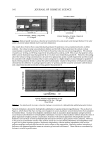
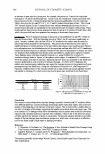
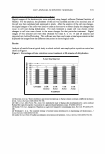
542 JOURNAL OF COSMETIC SCIENCE additive. This is an important feature, as the silicone did not verify that all fonnulations presented negative values change the rheological profile however, the addition of between -39.7 and -70.0 mV. Within this range of values, silicone still can be used as a viscosity controller. The the emulsion physical stability is high (Fig. 10). It was formulations had their viscosity increased 15 and 150 days concluded that the addition of PEG-12 Dimethicone kept after their preparation. This characteristic shows that the the liquid crystalline phase of the emulsion obtained with emulsions have their organization increased along the Crodafos CES®, influencing in a positive way in the system storing time. In the analysis of zeta potential, we could stability. Vol. 29, No. 3, 2007 Review Article B. A. Bernard, L'OREAL Recherche, Clichy, France. Tel.: Increasing quality of life by improving the quality of skin 33 (0)1 47567599 fax: 33 (0)1 47567078 e-mail: in patients with atopic dennatitis bbernard@rd.loreal.com K. Halvarsson and M. Loden The hair follicle is a very active organ with a complex Aco Hud Nordic AB, Research & Development, PO Box structure, which produces a hair fibre at a rate of 0.3 mm a 622, SE-194 26 Upplands Viisby, Sweden day. Accordingly, the hair follicle is highly demanding in Marie Loden, ACO Hud Nordic AB, PO Box 622, SE-194 energy source, as the hair bulb matrix cells are endowed 26 Upplands Viisby, Sweden. Tel.: +46 8 59002951 fax: +46 8 59002980 e-mail: marie. loden@aconordic.com with one of the highest rates of proliferation in the human Atopic dennatitis is a chronic relapsing inflammatory skin disease which usually starts during the first years of life. In patients with the disease, the quality of skin is severely affected, and this is closely linked to a reduced quality of life. An increasing prevalence of the disease has also been observed during recent years, which has been attributed to potential provocation factors in the environment. The environmental influence of the disease is complex, but the role of stratum comeum as a biosensor regulating the response to a variety of insults has been suggested as one crucial factor. Therefore, our daily hygiene and treatment of dryness are necessary measures to improve the quality of life and possibly reduce the frequency of the disease. Soaps as well as moisturizers show important differences in their impact on barrier function. 6-0 glucose linoleate supports in vitro human hair growth and lipid synthesis body. Moreover, recent data have shown the involvement of lipids in hair follicle function. As in vitro-grown hair follicle keeps producing a hair fibre that closely resembles the natural hair fibre, we decided to use this model to investigate the role of a new of glucose linoleate derivative (6-O-linoleyl-o-glucose: 6-O-GL) as a lipid precursor and energy provider. Our results demonstrated that 6-O-GL was (i) quite stable and surprisingly resistant to oxidative degradation, and (ii) readily taken up and metabolized by the hair follicle into various lipids, namely neutral lipids, ceramides and polar lipids. Moreover, it supported hair follicle growth and survival in a glucose- and linoleic-acid free medium. 6-O-GL thus appeared to be a bi-functional nutrient, ensuring both proper fibre quality and production by the hair follicle. A new technique associated with the evaporimetry method for evaluating occlusion P. Vingler*, B. Gautier*, M. Dalkot, R. Rozott, 0. Gaillard*, J. F. Michelet* and B. A. Bernard* J. P. P. Marques, D.S. B. Basso and A. S. Nunes *L'OREAL Recherche, Clichy and tL'OREAL Recherche, Natura lnova�!o e Tecnologia de Produtos Ltda., Rodovia Aulnay-sous-Bois, France Anhanguera, SP, Brazil
Purchased for the exclusive use of nofirst nolast (unknown)
From: SCC Media Library & Resource Center (library.scconline.org)