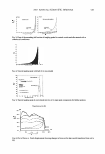
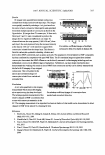
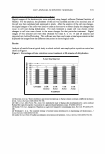
]. Cosmet. Sci.J 58, 547-548 (September/October 2007) Abstracts IFSCC Magazine Vol. 10, No. 2, 2007* Multicenter Study on Measurement of the Natural pH of the Skin Surface Doerte Segget+, Uwe ABmus*, Michael Brocks, Jessica Erasm/, Peter Finkel+, Andreas FitznefS, Helgard Heuss~, Uta Kortemeier§, Sven Munke§§, Thomas Rheinlander**, Hartmut Schmidt-Lewerkilhne'#, Werner Schneider, Gabriele Wesel'- [Members of the DGK (German Society for Scientific and pH were 4.9 (arithmetic mean). The 95% interval was between 4.1 and 5.8. The pH on the forearm of the male volunteers was slightly lower than that of the females. The difference was statistically significant (p0.01 4.8 to 5.0). The authors suggest that the GDCh recommendations for the claims »skin neutral pH«, »ideal pH« or »skin-friendly pH« should be revised and propose a pH range of 4.1 to 5.8 for the main body areas excluding the underarm and genital areas. Changes in Facial Impressions by Controlling the Color of Applied Cosmetics) »Skin Cleansing« Group] Surface Reflection from Cosmetic Foundations: ++ SIT Skin Investigation and Technology Hamburg GmbH, Hamburg, Germany, Dammtorwall 4, 20354 Hamburg, Germany * Institut Fresenius AG, Taunusstein, Germany s Sasol Germany GmbH, Marl, Germany # Cognis, Dilsseldorf, Germany + Sara Lee H&BC, Dusseldorf, Germany $$ Dalli-Werke GmbH, Stolberg, Germany - Firmenich GmbH, Kerpen, Germany § Degussa Care Specialities Goldschmidt AG, Essen, Germany §§ Lever Faberge GmbH, Buxtehude, Germany ** Mibelle AG Cosmetics, Buchs, Switzerland ## Beiersdorf AG, Hamburg, Germany & Hans Schwarzkopf & Henkel GmbH&Co.KG, Hamburg, Germany Characterization of the skin's natural state is very important for understanding skin functions and describing disturbances of skin function. In the field of cosmetics and dermatologicals the natural pH of the skin surface plays an important role in the development of products with a skin neutral pH. In a multicenter study the natural pH of the skin surface (exception of underarm and genital areas), was to be measured. It was to be determined whether gender specific differences in the pH occur. The skin surface pH was measured on the inside of the forearms in 222 volunteers (147 female, 75 male) using the skin pH meters of the respective institutes. The pH was measured in triplicate on adjacent areas 24h after the last contact of the measuring site with water, topical applications and an intensive washing procedure. The values of the skin surface Appearance Evaluation and Formulation Technique Koji Minami, Tomomichi Kaneko, Tomoyuki Suzawa, Taisuke Aosaki, Noboru Nagatani, Hajime Hotta, and Kimihiko Hori Skin Care Products Research Laboratories, Kao Corporation, 1-3, Bunka 2-chome, Sumida-ku, Tokyo, 131-8501, Japan An attractive new series of foundations that vary in the glossy color originating in pearlescent pigments and are capable of changing facial impressions was developed. The color of the reflection of pearlescent pigments was attributed to additive mixing of interfering light. A brightly colored foundation film was obtained by mixing a sufficient amount of medium-sized pearlescent pigments into foundations. Five foundation films containing pearlescent pigments of different glossy color (red, gold, green, blue and white) were prepared. Gonio spectrophotometry was employed to determine the angle dependence of the reflected spectra, and the approximate optical characteristics of the films were derived. Using the approximations as input parameters in a made-up face simulation system, five images of a woman's facial skin with different glossy colors were processed by a computer graphics technique. Thirty•nine women assessed the facial impressions for glossy color using a semantic differential method with 69 descriptive words. Results of the subsequent statistical analysis showed that different glossy colors provide different impressions of facial appearance. * These abstracts appear as they were originally published. They have not been edited by the Journal of Cosmetic Science. 547

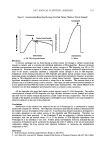
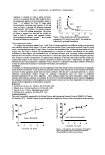
548 JOURNAL OF COSMETIC SCIENCE Effect of Microalgal Extracts on Thioredoxin Expression in on the protection against polluting agents by measuring Human Skin Cells and Their Protection of Skin cellular vitality and on the protection of Langerhans cells Pierre-Yves Morvan and Romuald Vallee against UV exposure. By stimulating the thioredoxin level, the micro-algal extracts protect skin cells against several Life Science Research Department, Codiflntemational, BP types of free radical generating systems. l , 35610 Roz-sur-Couesnon, France Skin is the constant target of active forms of oxygen Combing Damage to Hair Cuticle Structure generated by UV radiation exposure. It needs to reinforce anti-oxidant defense mechanisms to protect itself against K. Ram Ramaprasad, Sigrid B. Ruetsch, Hans-Dietrich cell damage. Thioredoxin is a protein found extensively in Weigmann and Yash K. Karnath animals, plants and marine bacteria. It protects cells against TRI/Princeton, 601 Prospect Avenue, Princeton, NJ 08542, the cytotoxicity produced by free radicals. An increase in USA thioredoxin production could be thus an interesting way to improve skin cell protection. We studied thioredoxin expression in human skin cells by minichips, and the results were confirmed by RT-PCR. Protein expression was quantified by Western blot. Thioredoxin mRNA is expressed by human dermal fibroblasts and epidermal keratinocytes. The thioredoxin protein was detected in both types of human skin cells and visualized in human reconstituted epidermis. Some stress-resistant micro-algae also express protective proteins. We tested the effect of two micro-algal extracts on the level of thioredoxin expression in human skin cells and on the protection against free radicals by measuring the inhibition of superoxide anion, Optical probing of hair fibers is an elegant, non-invasive method to monitor the fiber surface and its changes with various grooming protocols. In this paper, a goniophotometer with a He-Ne light source was used to study reflection profiles from single hair fibers in both the root-to-tip and tip-to-root orientations of the fiber. The calculated scale angle (the inclination of the cuticle to the fiber axis) was used as a monitor to study combing damage in hair to demonstrate the usefulness of the method. It was shown that progressive dry combing of hair leads to cuticle thinning or abrasive damage, and wet combing results in cuticle breaking or ablative damage. Further, the use of a conditioner active like a polyquatemium-10 largely mitigates both types of damage. These findings were supported by the results of a parallel scanning electron microscopic study.
Purchased for the exclusive use of nofirst nolast (unknown)
From: SCC Media Library & Resource Center (library.scconline.org)