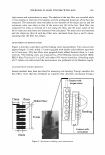
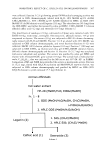
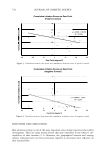
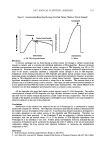
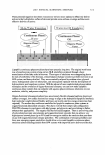
554 JOURNAL OF COSMETIC SCIENCE OP TIMIZATION OF SURFACTANT CONCENT RATIONIN TOPICAL MICROEMULSION FORMULATIONS Introduction Jessica S. Yuan, Alice Yip and Edgar J. Acosta Department of Chemical Engineering and Applied Chemistry University of Toronto Microemulsions have been considered as potential delivery vehicles because of their high solubilization capacity for hydrophilic and lipohilic active ingredients, their thennodynamic stability, transparency, and their self emulsifying properties. Microemulsions are systems which contain water and/or oil nano-domains coexisting in thennodynamic equilibrium due to the presence of a surfactant film adsorbed at the oil/water interface. The applications of microemulsions in cosmetic and phannaceutical fonnulas have been limited due to the relatively high concentration of surfactants (up to 80 wt.%) and cosurfactants (such as medium chain alcohols), required to formulate these systems. Such high concentrations of excipients increase the cost of the formulation and increase the chances of triggering allergic reactions. Lecithin microemulsions are especially desirable in cosmetic and pharmaceutical applications because lecithin is a naturally-occurring nontoxic surfactant. Furthennore, alcohol-free lecithin microemulsions have been formulated with food-grade linker molecules using total (lecithin+ linker) concentrations as low as 20 wt. % 111• Link.er molecules are amphiphiles that segregate near the oil/water interface, close to the surfactant molecules 121• Moreover, the link.er-based lecithin microemulsion systems have proven to be effective vehicles for topical delivery, featuring high skin absorption and permeation ofthe active ingredient, and minimal cytotoxicity 131• The objective of this study is to optimize the surfactant concentration on the vehicle and to investigate the relation between lecithin concentration and delivery performance (skin absorption/permeation) of the active ingredient. The result could lead to the more cost-effective formulations and lower side effects in human. In this work, the linker-based systems consist of soybean-extracted lecithin as surfactant, a mixture of sodium octanoate and octanoic acid as hydrophilic link.er, sorbitan monooleate as lipophilic linker and isopropyl myristate (1PM) as oil phase. To this end, the in vitro absorption/permeation of lidocaine (a poorly water-soluble ingredient used in acne treatment) through pig skin was evaluated as a function of lecithin concentration. Experimental Preparation and selection of linker-based microemulsion Linker microemulsions were formulated using different lecithin concentrations (from 0.4% to 4.0% at intervals of 0.4%). The sorbitan monooleate to lecithin weight ratio was kept constant at 3:1 for all systems. The octanoic acid to lecithin weight ratio was kept constant at 1: I. For a given lecithin concentration, sodium octanoate scans were conducted by varying the sodium octanoate concentration at constant temperature (22°C) and electrol)1e concentration (0.9% w/w NaCl). For in vitro penneation studies, six samples of Type II microemulsions and another six samples of Type I microemulsions (corresponding to each lecithin concentration) were selected. In vitro permeation studies Cadaver pig ears were purchased from the local market and frozen overnight. Thin skin tissue (600µm thickness) was dermatomed off the dorsal side of the ears. In vitro penneation studies were performed according to the standard percutaneous absorption protocol supplied by MatTek Corporation (Ashland, MA, USA). Briefly, the skin piece was placed in a MatTek Penneation Device (MPD), with the epidermis facing up. The microemulsion formulation (0.4 ml) was applied in the donor compartment. The receptor compartment was filled with 5 ml of PBS (0.0IM phosphate, 0.137M NaCl, pH 7.4). At predetermined time, the receiver solution was withdrawn completely and immediately replaced by fresh PBS solution. At 5.5 h, the experiment was terminated. Results and discussion Phase behaviour of linker-based microemulsions The phase behaviour of the linker microemulsions was obtained by scanning the concentration of sodium octanoate, from 0.5% to 7% at intervals of 0.5%. In this manner, the following phase transition occurred in all series with increasing sodium octanoate concentrations: Winsor Type II (water-swollen reverse micelles) - Winsor Type III or IV (bicontinuous phase) - Winsor Type I (oil-swollen micelles). This phase behaviour is similar to the one observed in our previous study 131• Figure 1 presents the "phase map" of the linker microemulsions where the boundaries between the different Winsor types of microemulsion phases are plotted in terms of the lecithin concentration (y-axis) and the sodium octanoate-to-lecithin ratio (x-axis). As the surfactant concentration increases from the A to J series, more sodium

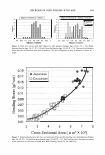
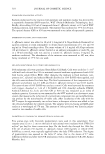
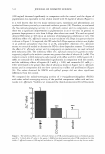
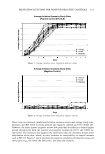
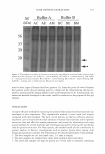
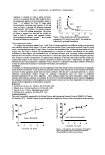
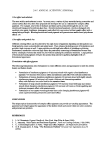
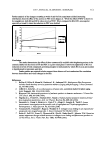
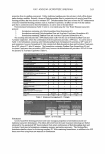
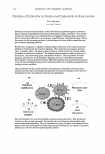
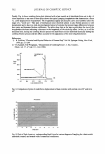
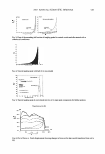
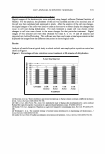
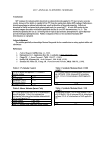
2007 ANNUAL SCIENTIFIC SEMINAR 555 octanoate is required to reach a phase inversion. Acosta et al. proposed that this effect might be due to the preferential partition of the hydrophilic linker in water 11 1 • In addition, the Type IV single phase microemulsion containing equal volumes of oil and water in Figure 1 required the following minimum concentrations: 2.8% lecithin, 3% sodium octanoate (ratio ~l) and 8.4% sorbitan monooleate. The system of Figure 1 requires less than half the lecithin (to form a Type IV system) than standard lecithin polyethyleneglycol-ethanol systems141, and avoided the need for alcohol as cosurfactant In vitro permeation studies 4.5 7 4.0 j .l 3.5 1 3S 3.0 .\ a;. 2.5 ·j , Type I j 2.0 ·! .i 1.5 ·j "'.:_�� Type Ill .J 1.0 1 Typell • --...-� .,, -L o.5 -l - - - ·=--·-··-··-·-··• 0.0 •:••••••••• ....... T .. •••••••••••••• • ••••••• .. •••••••,•••..•••••.. •••••r•••• .. •• ......... 0.0 1.0 2.0 3.0 4.0 5.0 SO/le Figure 1. Phase map for the linker microemulsions prepared at 22°C and 0. 9%w/w NaCL The dotted line indicates the optimwn formulation. To conduct the pem1eation studies Type I and Type II systems produced with different lecithin concentrations were carefully selected (using Figure 1) in such a way that micelles (Type I) and reverse micelles (Type II) would retain a constant diameter (about 10 nm). Figure 2, presents the transdermal flux of lidocaine formulated in Type I (Figure 2A) and Type II (Figure 2B) microemulsions as a function of lecithin concentration in the system. According to these figures, the transderrnal flux of lidocaine increases with increasing lecithin concentration between 0% to 4% lecithin. We have also noted that it is within this region that the lidocaine absorption increases with increase in lecithin concentration. A Langmuir-type adsorption of micelles and reverse micelles (within the internal lipid surface of the stratum comeun) is proposed to explain these results. Additionally, the higher flux obtained in Type II microemulsions (compared to Type I systems) is explained by the higher solubility of lidocaine in Type II systems and its tendency to associated with surface active molecules. Conclusion In summary, the adsorption/permeation of active ingredients from linker based lecithin microemulsions is dependent on the lecithin concentration. As the lecithin concentration increases, more micelles (or reverse micelles) are formed and more of these aggregates absorb into the stratum comeum. After the skin is saturated (achieved at a certain surfactant concentration), further increase in surfactant concentration does not result in improved absorption/pemieation of the active ingredient These findings suggest that future formulation studies should consider optimizing the surfactant concentration for the level of topicaVtransdermal delivery required. Minimizing the surfactant concentration in these applications would result in lower cost, but more importantly in lower risk of allergic reaction triggered by the formulation excipients. References 1. Acosta et al., Environ. Sci. Technol., 39, 1275-1282, 2005. 2. Sabatini et al., Colloids Interface Sci., 8, 316-326, 2003. 3. Yuan et al. Int. J. Pharm. Submitted Januacy 2007. 4. Corswant et al., Langmuir, 14, 6864-6870, 1998. Acknowledgements This work was partially supported by the Natural Science and Engineering Research Council (NSERC) of Canada. We thank the SCC- Ontario Chapter for providing financial support for Jessica Yuan's participation at this meeting. �m A E �m °' ::::J \,,.,/ X ::::J LL 0 Type I (micelle) 2 3 Lecithin,% w/w 4 � E u .c ........ °' ::::J \,,.,/ X ::::J u:: 0 Type II (reverse micelle) 2 3 4 Lecithin,% w/w Figure 2. Transctermal 11ux of Hdocaine 1btmula1Bd in Type I (PartA) and Type II (PartB) microem.Jlsions cmtaining differentledthin ooncentrations.
Purchased for the exclusive use of nofirst nolast (unknown)
From: SCC Media Library & Resource Center (library.scconline.org)