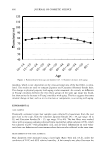
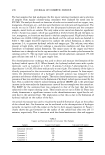
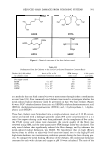
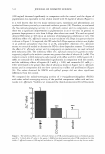
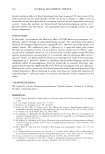
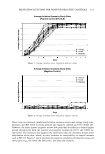
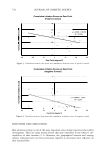
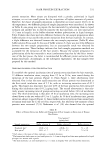
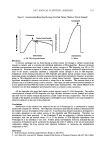
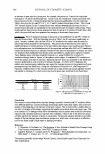
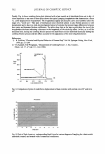
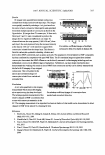
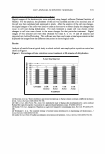
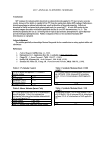
556 JOURNAL OF COSMETIC SCIENCE RHEOMORPHOLOGICAL CHANGES IN MASCARA TEXTURE RELATED TO f ILLING STRESS Yelena Loginova, Ralph Macchio and Alan Farer Coty International Research and Development Center 410 American Road) Morris Plains) NJ 07950) USA Abstract The performance of mascara has a strict correlation with its rheological properties. As a heavy emulsion, mascara exhibits a complex rheological behavior. The aim of this study was to investigate the shear induced structural changes in mascara formulation related to filling stress. The corresponding microscopic images that show the deformation and recovery of the formula make a valuable contribution to product development. The study attempts to characterize the rheomorphological changes in mascara texture associated with filling. The corresponding images of product performance on false lashes made of human hair illustrate the influence of rheomorphological changes on makeup results. Materials and Methods: Rheomorphological data were obtained with a Brookfield rotational speed and stress controlled R/S - CPS Rheometer with a plate measuring system (plate - C25-2), using software 2.6. Visualization of images was obtained with an Olympus BH2 microscope with a digital camera. Total image magnification with a 17" screen was 800X. Mascara samples were filled manually according to a routine lab procedure and with a GRISO NA MA pump filling machine. The mascara bulk was studied before the filling. The samples were evaluated immediately after the filling, then 24 hrs and 72 hrs later. Results were generated using the standard rheological test methods: viscosity measurements with controlled stress and controlled shear rates, yield stress measurements, thixotropy and recovery. The yield value was obtained by extrapolating to zero on the shear stress-shear rate curve. At the end of the recovery test the measured material was collected for microscopic evaluation. The mascara formulation having of7% of polymer, 28/50 w/w percents of water/oil ratio and 10% of a pigment phase containing of the Black Iron Oxide was employed for this study. Results and discussion We found similar rheological behavior of the formula after the hand filling through syringe and filling machine. Fi gu re 1 shows the compression of the formula recovery before and after the filling.

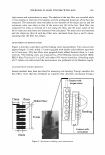
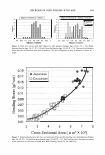
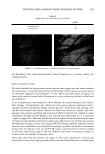
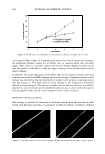
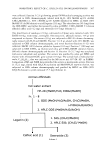
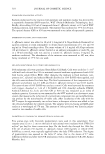
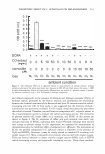
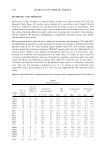
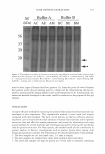
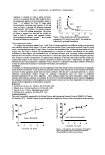
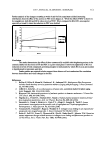
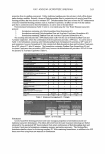
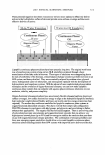
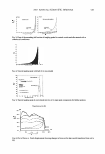
2007 ANNUAL SCIENTIFIC SEMINAR Figure 1 Comp rison of the formula recovery Sample A - before filling, Sample B - after machine filling Recovery test 50 40 30 20 "10 Sh•ar rat. [11•1 I ..... -. ...... Sample A I ---sample B 557 As seen in Figure 1 machine filling significantly impacts the recovery of the formula. The microscopic images of structural changes related to machine filling are shown in Figure 2. Figure 2 Microscopic imag of structural changes induced by filling. Before filling After filling 24 hr Figure 3 illustrates the impact of filling on mascara performance. Figure 3 The sample on the right is freshly filled. Conclusion 78 hr A comparison of the obtained data shows the following: An evaluation of rheomorphological changes under a different filling stress helps to explain changes in mascara performance during industrialization of the product. This technique allows identification of filling sensitive formulas during the product development stage. References : 1. A. Knaebel. R. Skouri, J.P. Munch, and SJ. Candau, Structural and rheological properties of hydrophobically modified alkali-soluble emulsion solutions, J. Polym. Sci. B Polym. Phys., 40, 1985-1994 (2002). 2. H.A. Barnes, Rheology of emulsions, Colloids Surf A Physicochem. Eng. Aspects, 91, 89-95 (1994). 3. F. Lequeux, Emulsion rheology, Curr. Opin Colloid Interface Sci., 3408-411 (1998). 4. T.G Mason, New fundamental concepts in emulsion technology, Curr. Opin. Colloid Interface Sci., 4, 231-238 (1999). 5. CL. Rohn, Analytical polymer technology. Cincinnat� OH, Hanser Publisher (1995). 6. P.van Puyvelde, Y.A. Antonov and P. Moldenaers, A rhea-optical investigation of shear-induced morphological changes in biopolymeric blends, Korea-Australia Rheology J., 3, 115-119 (2002).
Purchased for the exclusive use of nofirst nolast (unknown)
From: SCC Media Library & Resource Center (library.scconline.org)