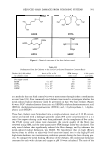
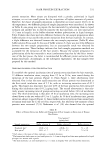
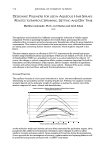
562 JOURNAL OF COSMETIC SCIENCE ENHANCEMENT OF SKIN PERMEATION OF ACTIVES BY NOVEL BIOADHESIVE POLYMER DELIVERY SYSTEM INTRODUCTION Kishore R. Shore, Ph.D.1, Bozena Michniak2) and Rashmi Thakur" 1 Polytherapeutics) Inc. 2 Department of Pharmaceutics, Ernest Mario School of Pharmacy Rutgers - The State University of New Jersey Although it would appear to be obvious to use film-forming polymers as delivery systems, there are significant challenges facing their application to skin. Unsatisfactory retention of the formed polymeric film on skin for a desired duration of time, uncomfortable feel, peeling, and flaking are common problems that are encountered. The net result is inadequate wear time and loss of efficacy. A hydrophilic hydrophobic graft copolymer delivery system that is designed to address these and other issues has been reported1•2, and is now commercially available under the INCi name dimethylacylamide/acrylic acid/polystyrene ethyl methacrylate copolymer (Copolymer). The Copolymer is water insoluble but can absorb ~ 20 times its weight of water to form a hydrogel, and can be easily formulated by conventional methods into cosmetically elegant dennal formulations in the form of a cream, lotion, serum or gel. When the formulation dries on a skin surface, it forms a water insoluble bioadherent film, which is invisible and imperceptible. Human use studies have shown that the formed film is retained on skin for 24+ hours unless washed away with soap and water. DELIVERY OF ACTIVES TO SKIN Dissolution studies of model active compounds from the Copolymer film have shown controlled release of both hydrophobic and hydrophilic compounds under sink conditions over a period of more than 24 hours3 • Excellent bioadhesion and controlled release of properties of the Copolymer make it attractive for use in cosmetic, dermatological, and transdermal drug delivery products. The present study was to evaluate effect of the Copolymer upon rate of skin permeation of actives contained therein. Caffeine was used as a model compound and oleic acid was used as a model enhancer. EXPERIMENTAL FORMULATIONS: Skin permeation studies of caffeine from various formulations (Table 1) with and without the Copolymer and oleic acid were done using Franz diffusion cells and 500-µm thick dermatomed human cadaver skin (National Disease Research Interchange, Philadelphia PA). A clear polymeric dispersion/solution was prepared by first hydrating and then homogenizing 2% Copolymer in a 92 :8 mixture of water and ethoxy diglycol. Excess amount of caffeine was added to the dispersion to ensure saturation of the formulation, which was kept at room temperature for 24 hours. The suspension was shaken well using a vortex mixer every hour for 10 hours. Oleic acid was added to the formulations 3-6 (Table 1) prior to the experiment to prepare its 2% v/v and 5% v/v solutions, respectively. Formulations without the Copolymer served as control. TABLE 1: Caffeine Formulations for the Skin Permeation Studies Copolymer w/v Caffeine Oleic acid v/v Formulation 1 0 Saturation 0 Formulation 2 2% Saturation 0 Formulation 3 0 Saturation 2% Formulation 4 2% Saturation 2% Formulation 5 0 Saturation 5% Formulation 6 2% Saturation 5%

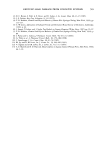
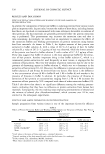
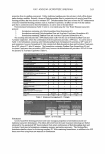
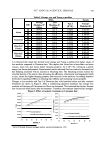
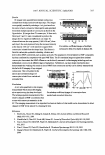
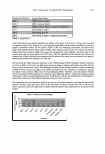
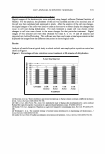
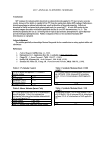
2007 ANNUAL SCIENTIFIC SEMINAR 563 FRANZ CELL DIFFUSION STUDY :METHOD: Vertical Franz cells (5.1 ml-Permegear, PA) were used with phosphate buffer solution (PBS) as the receptor phase. Dennatomed human cadaver skin samples were pre-hydrated with PBS for an hour before the experiment. A 100-µl aliquot of each of the formulations 1-6 was placed on the cadaver skin surface in respective donor cell and allowed to dry. Samples of the receptor phase (300 µl) were collected periodically up to 34 hours and analyzed for caffeine by HPLC. An equivalent amount of fresh PBS was replaced in the receptor phase, each time the sample was withdrawn. RESULTS AND DISCUSSION Lag time and caffeine permeation rates (µg/cm2.hr) (Table 2) were calculated from corresponding plots of mean of cumulative amount (µg/cm2) permeated vs. time (hours). The results indicate that statistically there was no significant difference between the flux of caffeine with and without the Copolymer in the absence of the penetration enhancer oleic acid. However, the permeation rates of caffeine, in the presence of oleic acid, were significantly greater (almost double) when formulated with the Copolymer than the corresponding rates without the Copolymer. TABLE 2: Skin Permeation Rates for Caffeine (n=4) Formulation Lag time (hrs) 0% oleic acid Control 3.8± 2.8 Copolymer 2.7± 5.5 2% oleic acid Control 3.9± 1.7 Copolymer 4.1 ±18.2 5% oleic acid Control 6.4± 17.2 Copolymer 4.7 ±30.1 CONCLUSIONS Flux (µg/cm.!.hr) 6.5 ±1.2 5.6 ±1.6 9.8 ±2.1 18.2 ±6.9 17.2 ±2.9 30.1 ±3.2 The copolymer by itself does not appear to either enhance or retard the skin permeation of caffeine. However, in the presence of a penetration enhancer, such as oleic acid, the flux of caffeine was significantly increased by the Copolymer. A plausible explanation for this effect may be that the Copolymer provided controlled release of both caffeine and oleic acid, thereby maximizing the penetration enhancing effect of oleic acid. This phenomenon can be very useful in maximizing performance of cosmetic and other dennatologically active agents. REFERENCES 1. K. R. Shah, U.S. Patent 5,942,243 (August 24,1999). 2. K. R. Shah, U.S. Patent Pending Publication#: 20040143026 (July 22, 2004). 3. K.R. Shah, "PharmaDur™ Bioadhesive Delivery System" in John J. Wille, ed. "Skin Delivery Systems", Blackwell Publishing, Ames, Iowa, 2006, p 211-222.
Purchased for the exclusive use of nofirst nolast (unknown)
From: SCC Media Library & Resource Center (library.scconline.org)