564 JOURNAL OF COSMETIC SCIENCE INVESTIGATION OF THE EFFECTS OF POLYMER MICROSTRUCTURE ON THE RHEOLOGIES OF POLYELECTROLYTE GELS: THE IMPORTANCE OF CHAIN RIGIDITY, BRANCHING, HYDROPHOBIC MODIFICATION AND POLYMER-PARTICLE INTERACTION Robert Y. Lochhead, Ph.D. The School of Polymers and High Performance Materials The University of Southern Mississippi The precise design of stimuli-responsive polymer systems has been significantly enhanced by increase of the understanding of the molecular basis of polymer solutions transitions coupled with a new ability to precisely tailor polymer structure. For example thermo-thickening systems can be free-flowing liquids at room-temperature or refrigerator temperatures and they thicken, or even gel, when they are raised above a trigger temperature that is usually close to the lower critical solution temperature (LCST). Graft copolymers of N- acryloyl taurate with commercially available macromonomers can be thermothickeners. Thus, Acryloyl Taurate/Vinyl Pyrrolidone Copolymer can thicken and stabilize emulsions that contain alpha- and beta-hydroxyacids.2 Poloxamers end capped with poly(acrylic acid)3 enable the facile preparation of multiple emulsions by a thermogelling mechanism.• Graft copolymers having poly(acrylic acid) or a copoly(acrylic acid /PVP) backbone.5-6 with side chains of poly(ethylene oxide) or poly(propylene oxide) confer the useful property of thermo-thickening of foams.7 Flash-foaming occurs best with low viscosity liquids but these foams can break and run on application and give poor aesthetics. The stimuli responsive polymers allow the composition to be foamed at room temperature and to thicken at body temperature to confer the desired attributes throughout the foaming and subsequent application steps. Thermo-associative thickening in aqueous solutions depends upon the formation of molecular networks in which the water-soluble chains remain in solution and the "LCST moieties" attached to the chain phase-segregate into junction zones. This type of phase-segregation is hindered in the miscibility gap where spinodal decomposition is relied upon to produce the network. In addition, once the gel begins to form, the mobility of the polymer in the medium will be greatly reduced and Fick's second law would predict that the diffusion coefficient would decrease. Moreover, once the first chains segregate the reptation of additional LCST moieties to the junction zone will be limited by the molecular relaxation processes of the participating polymers. Thus, thermo-gelling above the lower critical solution temperature often involves intramolecular and intermolecular hydrophobic interaction and the temperature and extent of this interaction can be fine-tuned by dissolved salts in the formulation.8 Moreover, surfactants dramatically affect the phenomenon of thermo-thickening. Hydrophobically-modified hydrophilic polymers form physical networks in aqueous solution. The networks can be enhanced by addition of surfactant close to the CMC, but for small micelles the network is disrupted by excess micellar concentration.9 The viscosity is maintained in the presence of large rod-like or worm-like micelles10 and the thermally-induced micelle to vesicle transition can be utilized to thermo-thicken these systems. 11 Block copolymer micelles can be tailored to confer specific rheologies on solutions.12 It has now been found that amphipathic block copolymers interact synergistically with associative thickeners and the rheologies of the resulting composites can be tailored for optimization.13 Another promising application of stimuli- responsive polymers is the use of modern biochemical combinatorial techniques to identify and isolate peptides with specific affinity to hair, skin and nails. 14 For example, combinatorial phage-peptide techniques are used to identify and isolate peptides that have a high binding affinity to hair, skin or nails.15 Bioresponsive hydrogels can be decorated with protein ligands that will specifically bind to a target tissue. Modification of these microgels with enzyme-sensitive components, or by peptides that are triggered by small-molecules that are emitted by the target substrate could lead to precise swelling or shrinking of the microgel on demand. Advance of such stimuli-responsive polymer systems will be facilitated by the development of routine, rapid methods for measuring and evaluating the molecular properties that underpin the responsive behavior for each case. The most promising methods are those that measure the rheology or those that follow the molecular processes, or microgel size or modulus with temperature. In this respect, we have directed our attention to the identification of methods that would provide essential information to ultimately guide the design of stimuli responsive polymeric thickeners.

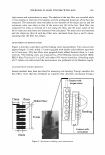
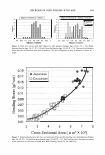
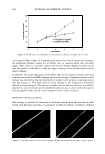
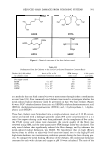
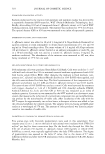
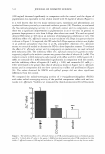
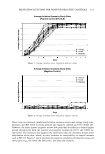
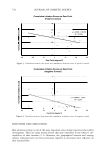
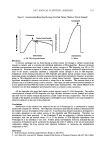
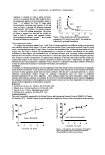
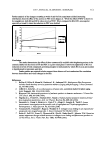
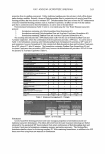
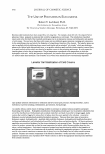
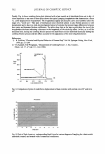
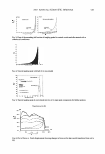
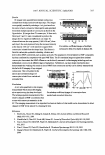
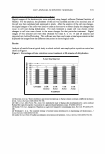
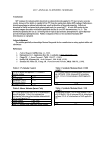
2007 ANNUAL SCIENTIFIC SEMINAR 565 The rheological evaluation and molecular interpretation of microgel thickening systems are assisted by scaling theories that have been developed to explain the role of hydrophobic 'multistickers'on the formation of gel networks by polyelectrolytes.17 We have adopted a similar rheological approach to gain insight into microgel sizes and to assess the level of interaction between the microgels. We have applied these theories in our investigation of polyelectrolyte and hydrophobically-modified polyelectrolyte thickeners, as well as networks formed by polymer-particle interaction and polymer-surfactant interaction. We have generated plots of reduced specific viscosity against polymer concentration for microgel thickeners and hydrophobically-modified microgel thickeners. We gain insight into the molecular behavior by measuring the following values depicted in Figure 1: • The intrinsic viscosity, [11], is a measure of the hydrodynamic volume of the polymer microgel in solution. It's dimensions we usually given as deciliters occupied per gram of polymer. • The critical overlap concentration, C*, which is the lowest concentration that provides sufficient polymer volume to cause overlay of the polymer molecules. For polyelectrolytes at this concentration, overlap can occur without entanglement. On the other hand, hydrophobically modified hydrophilic polymer molecules can form network structures below the 'volume-filling' concentration. 4 Viscosify Regimes for H ydrophobically -Modified Polyelectrolytes 2 4 erTlX)rary' ne1!M 'fhe polyelec:1rolyte shield each other = 'E ntmglerremand hydrophobic association Figure 1: A schematic representation of the specific reduced viscosity against polymer concentration, showing the molecular rheological characteristics of the different concentration regimes. Results and discussion -1.5 -1 -05 Log of Conmntration (g.tl.) Intrinsic Viscosity ~ 1 0dUg (1 l[ri]~0.1) C*~ 0.14g/dl 0.5 : .§ 0 � -1.5 -1 -0.5 LcgclCcncentradcin( g.tl] Intrinsic Viscosity ~ 2dl/g (1 /[ri]~0.5) C*~ 0.5g/dl 0.5 Figure 2: Reduced specific viscosity as a function of concentration for a poly (acrylic acid) microgel thickener A in water and in o.8 percent sodium chloride at pH 7 and room temperature.
Purchased for the exclusive use of nofirst nolast (unknown)
From: SCC Media Library & Resource Center (library.scconline.org)