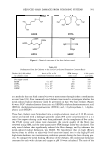
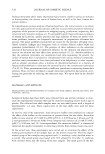
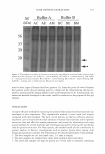
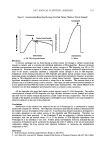
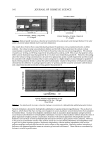
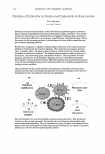
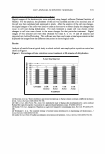
572 JOURNAL OF COSMETIC SCIENCE GENERAL OVERVIEW OF SILOXANE CHEMISTRY IN EMULSIONS Eric Abrutyn Kao Brands Company Emulsions in the personal care industry in the United States are primarily aqueous-continuous phase emulsions using traditional monomeric and polymeric organic emulsifiers. Over the past 20 years, the industry has slowly embraced the use of lipophilic-continuous phase emulsions to deliver actives more effectively (e.g., Sunscreen, Liquid Make-up, and Antiperspirants). One of the reasons for this increasing popularity is the development of more effective emulsifiers and more consumer appealing aesthetics. Whether they are aqueous or lipophilic continuous phase emulsions, all will required some key attributes to be functional and consumer appealing. They need to have an aqueous, and most likely, a lipophilic phase. The aqueous phase provides a conduit for delivery of water soluble humectants to enhance skin hydration. The lipophilic phase provides a conduit for delivery of moisturizers, skin conditioning agents, and aesthetic modifiers. They all probably will need fragrance, preservatives, and miscellaneous functional actives for multi-functional benefits. Where aqueous-continuous phase emulsions differ from lipophilic-continuous phase emulsions is in how the two incompatible phases will be stabilized (surface active modifying ingredients) and rheology/viscosity modifiers. This presentation will focus on the chemistry and application of lipophilic-continuous phase emulsions and how they are formulated and processed in emulsions. Examples will be shown to demonstrate how they are employed in personal care applications. i. aq ... i / � oil Polymeric stabilization aq. r � � ... :··· • on In rfi ci comple1 aq. Monomolecular film aq. oU Solid d.sor tion Why do formulators shy away from lipophilic-continuous phase emulsions? Why are they not used more in the personal care arena? For one, they have a list of perceived issues that on the surface make them unappealing. They are considered too greasy (oil phase is first thing felt when applied to the skin), too expensive to make (high oil phase contribution), too expensive to process, and they are not known for their high temperature stability.

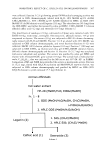
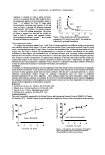
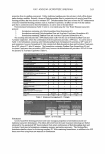
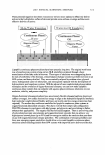
2007 ANNUAL SCIENTIFIC SEMINAR These potential negatives have been overcome so we have more options to effectively deliver actives to the hydrophobic surface of skin and provide more uniform coverage and thus more effective delivery of actives. \\ ater-in-Oi ion 573 Lipophilic-continuous phase emulsions have been around a long time. The original work horse was a borax/beeswax system relying on low lll.B emulsifiers produced through a basic neutralization of the fatty acids in beeswax. These types of emulsions were unappealing due to the lack of uniformity of the beeswax, critical balance of phase volume to prohibit inversion to an O/W system, and heavy skin feel. They were eventually eclipsed by sorbitan esters, glycerol esters, hydrogenated castor oil ethoxylates, and subsequently replaced with the development of hydroxystearic acid copolymer systems. With the advent of more sophisticated polymerization techniques and the evolution of organo-functional siloxanes, one can now make lipophilic continuous phase systems that can compete with aqueous phase continuous emulsions on cost, aesthetics, stability, and process simplicity. Organo-functional siloxane polyethers have an extremely flexible siloxane backbone (improved surface coverage), low surface tension (less energy to align at the hydrophilic/lipophilic interface), high molecular weight (retained fluidity and lower use levels), and low energy process (no shear required). The modem day workhorse emulsifier for lipophilic-continuous phase systems is organo-functional alkoxylated siloxanes. They have evolved from simple rake configuration PEG/PPG siloxanes to copolymers with alkyl groups, polyglycerin, and crosslinking to further enhance their applicability. The organic field has not stayed stagnant. There is an evolving class of polyisobutylsuccinate esters/amides and organo-functional xylosides that can achieve very high aqueous internal phase (up to 95%) and low energy to stabilize the emulsion that puts them on par with organo-functional siloxane polyethers. The combination of siloxane polyethers and these new emerging organic emulsifiers should allow us to create lipophilic-continuous phase emulsions almost indistinguishable from O/W systems with improved active delivery to the skin.
Purchased for the exclusive use of nofirst nolast (unknown)
From: SCC Media Library & Resource Center (library.scconline.org)