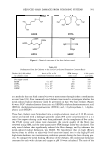
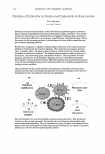
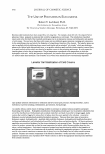
578 JOURNAL OF COSMETIC SCIENCE THE USE OF POLYMERS IN EMULSIONS Robert Y. Lochhead, Ph.D. The Institution for Formulation Science The University of Southern Mississippi, Hattiesbu13, MS 39406-0076 Emulsion skin treatments have been around for a very long time. For example, about 400 AD, the emperor Nero's physician, Galen, prepared an emulsion that would be recognized as a cold cream. The introduction of purified stearic acid in the first half of the twentieth century gave rise to an impressive increase and both quality and quantity of cold creams. We now know that these cold creams and are stabilized against emulsion creaming and coalescence, by the emulsifying action and also by the formation of a larnellar gel structure of the stearate. The lamellar phase can exist as multiple colloid-stabilizing layers around each droplet and in extended "oily streaks" which are cholesteric phases with a helical pitch between each layer, or as myelins which are multi-walled cylinders similar to nerve fibers or as multi-walled vesicles which are observed as maltese crosses in the polarizing microscope. In cold creams the lamellar phase is below the gel temperature. The gel temperature corresponds to the temperature at which the hydrophobic tails melt. Above this transition temperature, the lamellar order persists but the individual tail groups are mobile rather than crystalline. That Cosmetic oil-in-water lotion emulsions have conventionally depended LameHar Gel Stabilization of Cold Creams upon primary emulsion stabilization by surfactants and have relied upon polymeric rheology modifiers, such as Carbomers, to prevent creaming, sedimentation, and syneresis, during storage. In cosmetic lotions, correct choice of rheology modifier is necessary to optimize sensory properties and proper functioning of the product. Hydrophobic modification of hydrophilic polymers gave rise to polymeric emulsifiers that served the dual function of both primary and secondary emulsifiers and made it possible to design rugged, stable systems that could be triggered to release their oil phase when they were applied to the substrate. Associative thickeners are also hydrophobically-modified hydrophilic polymers. There are three basic types of associative thickeners namely, hydrophobically - modified alkali-swellable thickeners, hydrophobically modified ethoxylated urethanes and aminoplast, and hydrophobically-modified cellulose ethers and polysaccharides. All known polymeric emulsifies are associative thickeners, but the reverse statement is not necessarily true. This type of chemistry can be tailored to produce systems that are fluid at room temperature but which exhibit thermo-gelation when they rise above a critical temperature. Such stimuli-responsive systems have been disclosed as useful for the formation of multiple emulsions. Water- in-oil emulsions can be sterically-stabilized by amphipathic polymers. Polymers are also used in color-cosmetic emulsions to structure the oil-phase, to act as film-formers and to confer transfer-resistant qualities. Polymers are essential components of the emulsion formulator's toolkit and today's formulator has an impressive and diverse array of polymers from which to choose, to deliver the appropriate desired product attributes from cosmetic emulsions.

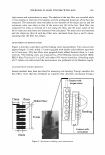
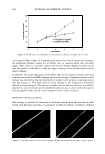
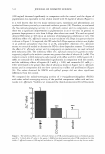
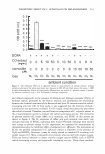
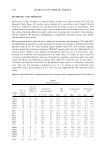
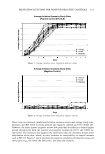
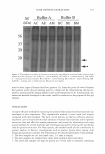
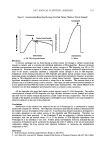
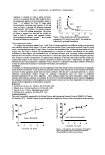
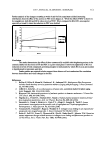
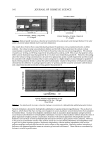
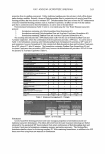
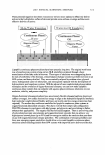
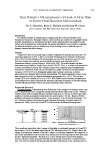
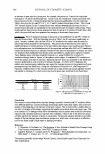
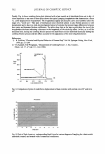
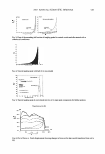
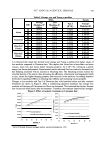
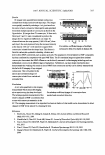
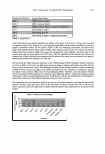
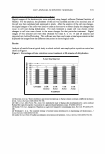
2007 ANNUAL SCIENTIFIC SEMINAR 579 TRUE POROSITY MEASUREMENT OF HAIR: A NEW W"AY 10 STUDY HAIR DAMAGE MECHANISMS Yin Z. Hessefort, Brian T. Holland and Richard W. Cloud Nalco Company, 1601 West Diehl Road, Naperville, Illinois 60563 Introduction The iitemal structure of damaged hair is changed in the hair cortex am medulla by the fonnati.on of mesopores. lbis paper employs a mvel method, gas sorpt:i.on [I], to quantify the true porosity characteristics by detennini.ng total pore volume, adsoiption pore size distributionaDl smface area of damaged hair. Subsequently, the damage mechanisms were studied by comparing the different adsorption pore size distributions of hair resulting from two different types of damage: chemical am photo damage. Methods Virgin brown hair was bleached using a solution coitaining 6% hydrogen peroxide am 1. 7% ammonium hydroxide at 40°C.A QUV Accelerated Weathering Tester (Q-Panel Lab Products) with a 340 UV A bulb emitting at 340 rm maximum was used. The em:rgy dose was 450 J/cm2• Forty hair strmls were :ramomly selected aid their diameters were measured in Fiber Dimensional Analysis System (Mitutoyo, Model LSM 5000). The tensile strength was then detennim:d using a DiaStron Tensile Tester (Model 170/670). The L, a, b values were measured in a Hunter Colorimeter (LabScan XE). Nitrogen soiption was conducted using a Quantacluome Autosolb-1 C instrument. Finely cut hair was added to a sample cell where it was placed under vacmun at 145°C for 0.5 hom. Heating the sample wxler vacuum is :oecessaiy to remove physiso:rbed water that may affect porosity measuremeits. The degas temperature is based on the data collected from DSC in which the dehydration peak appears at ca. 125 °C. The total pore volume (TPV) was collected at PIP O of ca. 0. 995. BJH (Ba.nett Joyner Halenda) adsorpt:i.on pore size distribution was used to detennim the mesopores am small macropores of hair after damage. 5-pt BET (Bnmauer-Emmett-Teller) was used to detennine surlace area (SA). Results and Discussion Chemical Damage: Ullierstaoling how the porosity of hair changes with damage can be a real asset in determining what is causing the damage 3111 what adverse effect it bas on hair. Nitrogen soiption can be used to measure the pore structure of hair up to ca 100 rm, at which water vapor soiption or mei:cmy porosimetry would need to be used for pores 100 nm. Based on ruP AC definition micropores are defined as pores 2 rm, mesopores 2 nm-50 mn am macropores 50 nm. Nitrogen soiption can therefore be used to measure micropores, mesopores am small macropores. Table I shows the SA aid TPV of bleached hair at different bl�aching times. Bleach Tune (min) 0 (Virgin hair) l 5 10 15 20 0.40 1.13 1.17 0.55 0.49 0.58 TPV(cc/g) 0.000689 0.000991 0.001010 0.000785 0.000742 0.000778 •-L,-2�.LLJ:...JJ:!:1:£..:.::��t:r.J:t!II 10 --- Figure 1: Adsorption pore size wstribution of virgin hair (-) and I min bleached hair (--). These results are astonishing after 1 minute of bleaching, a comiderable iu:rease in SA ml TPV has occurred. The SA has nearly tripled 3111 the TPV has i:n:reased by 30%. Figure 1 shows th: change in the mcsopore structure of hair after 1 mimlte of bleaching compared to the virgin hair. It also clearly demonstrates what were o:n:e four distinct pores for the virgin hair are mw three pores for the 1 mirrute bleached hair. The peak at ca. 2 mn is similar in pore size for both samples however, the pore volume associated with that pore has greatly increased for I mimrte bleached hair. The other two pores for the bleached hair are either combimtions of the virgin hair pores or
Purchased for the exclusive use of nofirst nolast (unknown)
From: SCC Media Library & Resource Center (library.scconline.org)