604 JOURNAL OF COSMETIC SCIENCE
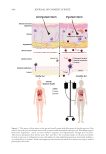
was developed on the premise that these signals can be modulated. Would it be possible to
signal the human body to reestablish its own microbiome harmony?
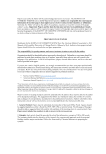
The Dermal Microbiome-Immunology Assay is designed to assess the effect of active
ingredients used in the personal care industry to alter dendritic cell paracrine signaling
molecules to kill detrimental organisms found on the skin but leave alone the commensal
microbiota as to not disrupt the beneficial skin environment. This addresses the common
misconception that all bacteria are bad bacteria. The skin needs commensal, or “good,”
bacteria for crucial mechanisms to function properly. For this reason, it is important to
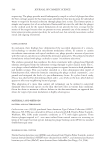
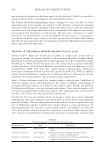
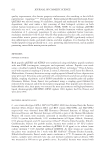
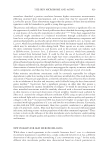
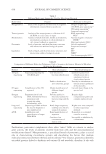
note that for the below assay, a reduction in all microbes would not be ideal. Table II below
describes the microorganisms that are examined in the Dermal Microbiome-Immunology
Assay, along with their importance.
METHODS OF THE DERMAL MICROBIOME-IMMUNOLOGY ASSAY
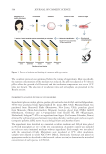
Human CD14+ Monocytes (PromoCell, C-12909) are thawed and seeded with an
appropriate amount of complete Dendritic Cell Generation Medium (Complete Media)
(PromoCell, C-28050) and supplemented with Component A of the Cytokine Pack moDC
(PromoCell, C-28050). Twenty-four hours later, the culture media is replaced with fresh
complete Dendritic Cell Generation Medium supplemented with 1x Component A of the
Cytokine Pack moDC. After three days, culture media is replaced again. Twenty-four
hours later, Component B of the Cytokine Pack moDC (PromoCell, C-28050) is added to
culture media and allowed to incubate for an additional 48 hours. Following the two-day
incubation, the mature dendritic cells are harvested and cryopreserved.
After a 24-hour attachment period, the complete media is replaced with 5 milliliters of
either the complete media, which functioned as the control, or differing concentrations of
an antimicrobial-free cosmetic active diluted with complete media. Notably, the Dendritic
Cell Generation Medium is also free of antimicrobial agents. Then, after the dendritic cells
are exposed to experimental conditions for 24 hours, the conditioned media is collected and
stored at −80° Celsius until the time kill test is performed.
For the time kill test, one milliliter of the test article is loaded into a sterile disposable
polypropylene tube. Each container is inoculated with one of the three bacteria organisms
presented in Table I. The inoculum concentration for each bacterium is standardized using
the 0.5 McFarland turbidity standard and is further diluted to yield approximately 106
microorganisms/mL. The amount of each inoculum added to the samples is no more than
1.0% of the product volume to ensure the composition is not altered. Serial dilutions from
each container are performed to enumerate the surviving microorganisms using the plate
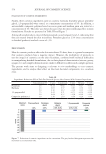
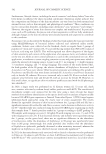
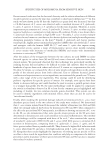
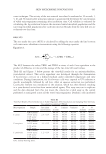
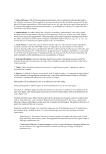
Table II
The Microorganisms Examined and Their Importance
Microorganism Type Importance
Staphylococcus aureus Gram-positive Human opportunistic pathogen with antibiotic resistant
strains
Pseudomonas aeruginosa Gram-negative Human opportunistic pathogen and used to study
antibiotic resistance and pathogenesis
Staphylococcus epidermidis Gram-positive An element of normal skin microbiota, nonpathogenic, and
supports dermal barrier integrity
was developed on the premise that these signals can be modulated. Would it be possible to
signal the human body to reestablish its own microbiome harmony?
The Dermal Microbiome-Immunology Assay is designed to assess the effect of active
ingredients used in the personal care industry to alter dendritic cell paracrine signaling
molecules to kill detrimental organisms found on the skin but leave alone the commensal
microbiota as to not disrupt the beneficial skin environment. This addresses the common
misconception that all bacteria are bad bacteria. The skin needs commensal, or “good,”
bacteria for crucial mechanisms to function properly. For this reason, it is important to
note that for the below assay, a reduction in all microbes would not be ideal. Table II below
describes the microorganisms that are examined in the Dermal Microbiome-Immunology
Assay, along with their importance.
METHODS OF THE DERMAL MICROBIOME-IMMUNOLOGY ASSAY
Human CD14+ Monocytes (PromoCell, C-12909) are thawed and seeded with an
appropriate amount of complete Dendritic Cell Generation Medium (Complete Media)
(PromoCell, C-28050) and supplemented with Component A of the Cytokine Pack moDC
(PromoCell, C-28050). Twenty-four hours later, the culture media is replaced with fresh
complete Dendritic Cell Generation Medium supplemented with 1x Component A of the
Cytokine Pack moDC. After three days, culture media is replaced again. Twenty-four
hours later, Component B of the Cytokine Pack moDC (PromoCell, C-28050) is added to
culture media and allowed to incubate for an additional 48 hours. Following the two-day
incubation, the mature dendritic cells are harvested and cryopreserved.
After a 24-hour attachment period, the complete media is replaced with 5 milliliters of
either the complete media, which functioned as the control, or differing concentrations of
an antimicrobial-free cosmetic active diluted with complete media. Notably, the Dendritic
Cell Generation Medium is also free of antimicrobial agents. Then, after the dendritic cells
are exposed to experimental conditions for 24 hours, the conditioned media is collected and
stored at −80° Celsius until the time kill test is performed.
For the time kill test, one milliliter of the test article is loaded into a sterile disposable
polypropylene tube. Each container is inoculated with one of the three bacteria organisms
presented in Table I. The inoculum concentration for each bacterium is standardized using
the 0.5 McFarland turbidity standard and is further diluted to yield approximately 106
microorganisms/mL. The amount of each inoculum added to the samples is no more than
1.0% of the product volume to ensure the composition is not altered. Serial dilutions from
each container are performed to enumerate the surviving microorganisms using the plate
Table II
The Microorganisms Examined and Their Importance
Microorganism Type Importance
Staphylococcus aureus Gram-positive Human opportunistic pathogen with antibiotic resistant
strains
Pseudomonas aeruginosa Gram-negative Human opportunistic pathogen and used to study
antibiotic resistance and pathogenesis
Staphylococcus epidermidis Gram-positive An element of normal skin microbiota, nonpathogenic, and
supports dermal barrier integrity