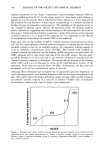
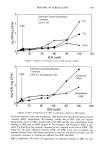
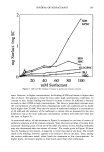
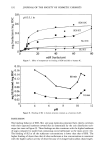
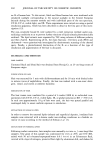
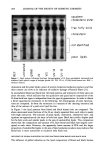
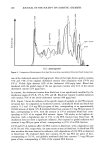
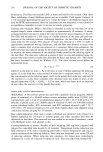
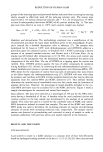
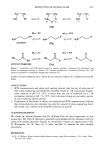
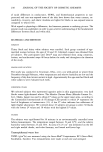
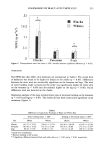
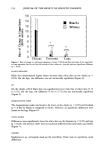
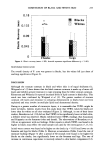
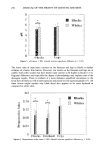
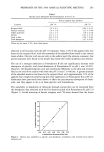
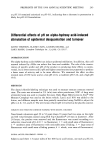
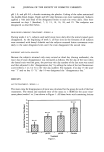
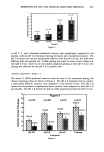
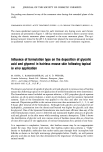
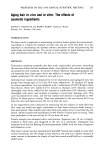
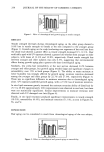
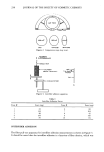
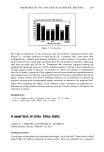
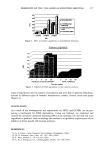
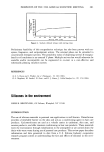
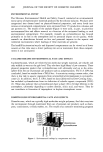
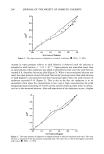
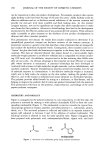
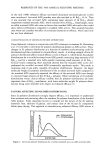
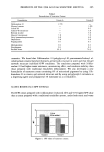
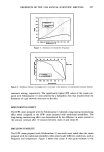
290 JOURNAL OF THE SOCIETY OF COSMETIC CHEMISTS ties for innovation in skin care product development. For example, products that contain alpha hydroxy acids have been the rage of the past four years. Alpha hydroxy acids are effective exfoliants and act to facilitate natural exfoliation of the stratum corneum and provide the end-user with more youthful and fresh looking skin. As this product category matures, new active ingredients are sought that allow manufacturers to make new claims for their products. Advances in biotechnology have lead to the development of processes for the efficient production of non-animal-derived enzymes. These advances make it possible to place enzymes on the forefront of new product developments in skincare and other consumer products. This presentation will discuss the results from studies conducted to determine if an immobilized proteolytic enzyme can facilitate turnover of the stratum corneum. A proteolytic enzyme is a generic term that describes a class of proteins that are nonspecific and catalyze the hydrolysis of peptide bonds. Consequently, these enzymes could act to "loosen" the glue that holds the keratinocytes together in the horny layer of the stratum corneum. The data we obtained showed that papain bound to a water-soluble high- molecular-weight polymer is an effective exfoliant and is comparable to lotions contain- ing 10% lactic acid. As exfoliants, enzymes tend to be less irritating than AHAs since they are not acidic. An obvious advantage is that enzymes are most effective at neutral pHs where irritation is minimized. A patented technology has been developed to covalently link enzymes to high-molecular-weight materials, such as carbohydrates, and synthetic polymers. Enzyme immobilization provides several key benefits over the use of unbound enzymes in a formulation: 1) the effective molecular weight is increased, which acts to help retain the enzyme on the skin surface, making the product more effective, and 2) the enzyme is stabilized and cannot denature in a formulated product. The polymer provides added benefit by acting as a thickener, or film-former, and by helping to improve the aesthetic feel of a skin care product formulated with the material. This presentation will focus on the synthesis, characterization, and biology of the novel papain-polymer conjugates. CHEMISTRY AND BIOLOGY Papain is conjugated to the polymer substrate in a two step process. In the first step, the polymer is activated by treating it with carbonyl diimidazole (CDI) to form the corre- sponding imidazolide (Figure 1). The imidazolide is reactive towards the typical func- tional groups present in enzyme, peptides, and other proteins (i.e., carboxylate, amines, thioIs, etc.). The activated polymer is collected and added to an aqueous solution of papain (pH adjusted to between 9 and 10 by addition of sodium hydroxide). The resulting mixture is allowed to react for some specified time. Papain conjugates have been prepared with polyacrylic acid, carboxymethylcellulose, alginic acid, and hyal- O o R•011 CDI.• Irnidazolide Figure 1. Activation of a carboxylate group using carbonyl diimidazole.

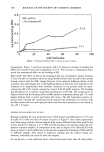
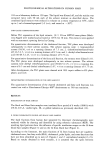
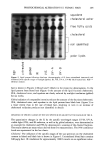
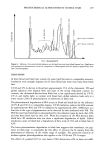
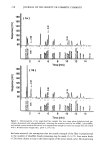
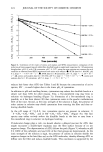
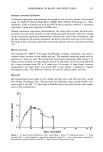
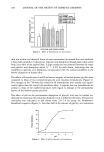
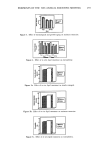
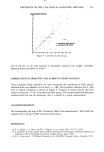
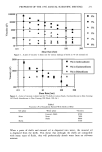
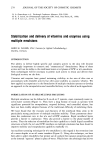
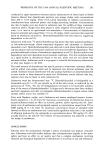
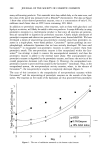
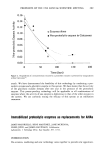
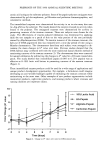
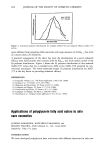
PREPRINTS OF THE 1996 ANNUAL SCIENTIFIC MEETING 291 uronic acid acting as the substrate polymer. Some of the papain-polymer conjugates were characterized by gel electrophoresis, gel filtration and perfusion chromatographies, and colorimetric methods. The immobilized enzymes were characterized for activity in an in vitro assay that uses Ac-Arg-pNA as the substrate. The results showed the enzyme retained its activity when bound to the polymer. The conjugated enzymes were characterized for activity in promoting turnover of the stratum corneum. Three test subjects were chosen for the study. The effectiveness of enzyme-induced exfoliation was determined by applying daily the test samples to a patch of skin on the volar portion of the arm previously stained by dihydroxyacetone (DHA). To monitor turnover of the stratum corneum, the fade-out of DHA-pigmented skin was measured over a nine-day period of time using a Minolta chromameter. The chromameter data from each subject were averaged to de- termine the mean changes in b* value over time. Previous studies showed that the DHA-fadeout assay correlated well with the more traditional dansyl chloride method of monitoring turnover of the stratum corneum (1). The chromameter data were corrected for natural exfoliation by subtracting the changes in b* value for a DI water-treated skin patch. The study showed that immobilized papain (0.005 to 0.25% papain) was as effective as 8-10% lactic acid lotions in promoting turnover of the stratum corneum (Figure 2). These immobilized enzyme products could be used for a wide range of applications and unique product development opportunities. For example, a formulator could imagine developing an anti-wrinkle hydrogel capable of exfoliating the stratum corneum while moisturizing at the same time. Other examples of new product opportunities include moisturizer products, night-time products, and tanning products where evenness and tanning duration are important claims. 2: 0 . -2 2 10% Lactic Acid HA-Papain Alginate-Papain Carbomer-Papain ' ' ''1 .... I- ' ' '1 .... I .... 3 4 5 6 7 8 9 Time (days) Figure 2. Change in b* value over time for DHA-treated skin.
Purchased for the exclusive use of nofirst nolast (unknown)
From: SCC Media Library & Resource Center (library.scconline.org)