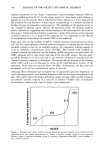
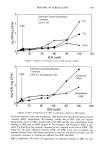
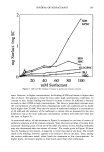
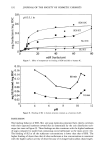
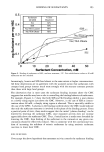
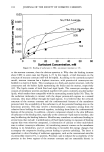
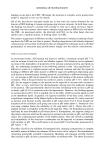
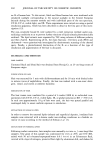
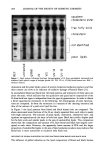
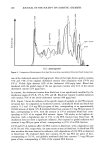
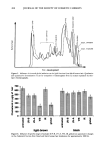
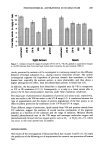
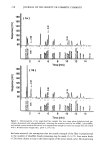
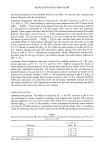
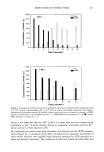
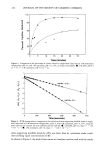
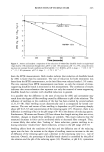
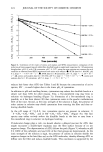
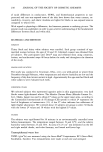
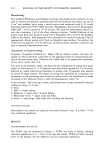
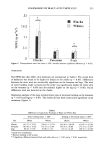
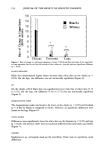
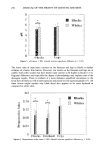
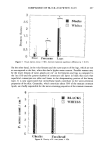
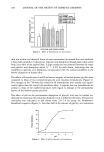
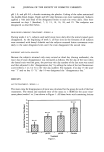
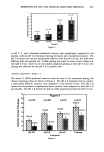
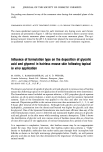
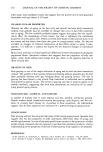
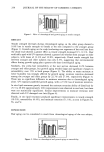
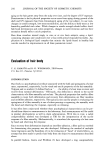
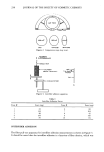
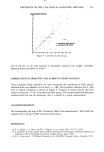
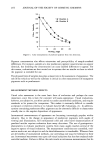
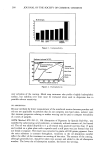
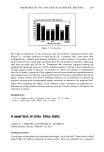
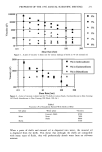
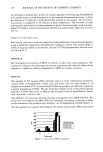
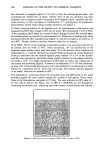
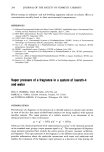
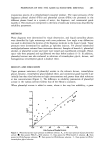
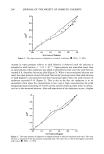
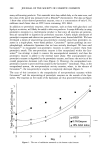
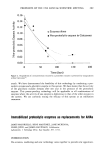
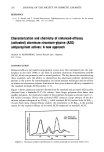
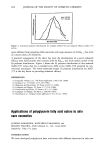
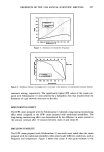
206 JOURNAL OF THE SOCIETY OF COSMETIC CHEMISTS Ill, • I : I ' 1111 I/I '.., Ili,, I o., I 1• I II -,- I x , light'- brow TLC- rteve[opmenf Figure 5. Comparison ooe de•si•osmms oemm lipid oemc•ions oemm uni•mdi•ed blo•d •nd bl•ck human tion of the cholesterol amount (620 Ixg/g hair). Hair of this light-brown quality contains 73% and 74% of the original cholesterol amount after irradiation with UV-B and UV-A. Visible light destroys 62% of the cholesterol (240 Ixg/g hair). Blond hair irradiated with the global range of the sun spectrum contains only 41% of the initial cholesterol content (255 Ixg/g hair). In contrast, the cholesterol content from black hair is not significantly modified by the irradiation ranges of UV-B, UV-A, VIS, and IR. Black hair exposed to global radiation still contains 76% of the initial cholesterol content (440 Ixg/g hair). FFA. Figure 7 shows the influence of the specific ranges of sunlight on the FFA amount in human hair. In comparison to cholesterol content, unirradiated blond and black hair contain 13.5 and 13.0 mg FFA per gram of hair, corresponding to an approximately 20-fold amount of lipids. UV-B irradiated blond hair contains 8.2 mg FFA per gram of hair, corresponding to 61%, with the amount in UV-A irradiated blond hair corre- sponding to 81% of its original FFA amount. Again, VIS results in the highest de- struction, with a degradation rate of 53% in the FFA fraction from blond hair. IR irradiation does not show a significant influence. Hair exposed to global radiation still contains 9 mg FFA per gram of hair, corresponding to 67% of its FFA fraction. UV-B and UV-A radiation affect the FFA content in black hair, with a degradation rate of 38.5% and 19%, respectively, the same extent as that in blond hair. In black hair VIS does not show the same destructive influence, with degradation of 23% FFA as observed in blond hair. IR irradiated black hair contains 10.2% mg FFA per gram of hair, corresponding to 78.5%, and globally irradiated black hair contains 7.5 mg FFA per gram of hair, corresponding to 58% of the original FFA fraction.

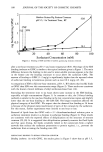
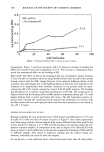
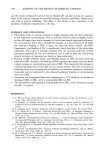
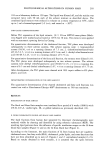
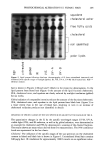
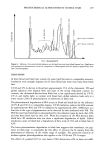
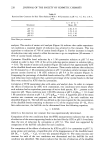
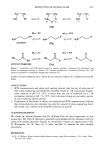
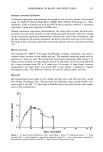
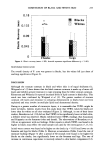
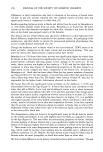
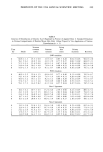
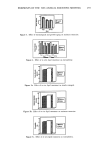
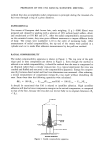
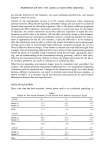
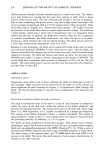
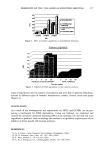
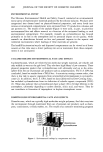
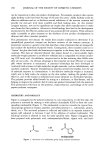
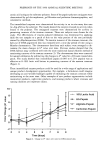
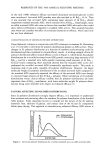
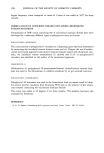
PHOTOCHEMICAL ALTERATIONS IN HUMAN HAIR 207 o 1 '•• Light-unfrbrow ½ 'l J Jl , , Light-brown, irradiated ,, "• ',,' I i J• • TLC- development Figure 4. Influence of six-week global radiation on the lipid fractions from blond human hair. Qualitative and quantitative determination occurs by comparison of densitograms from IL extracts separated by thin- layer chromatography. DISCUSSION IL from blond and black hair contain the same lipid fractions in comparable amounts. Irradiation with sunlight degrades the IL from blond hair more than those from black hair. UV-B and UV-A destroy in blond hair approximately 25% of the cholesterol. VIS and global radiation even degrade 60% and more of the initial cholesterol content. In contrast, the cholesterol fraction from black hair is not significantly altered by UV-B, UV-A, and visible light in contrast with blond hair, global radiation leads only to a lower extent (24%) of photooxidation of cholesterol in black hair. The photochemical degradation of FFA occurs in blond and black hair by the influence of UV-B and UV-A to comparable degrees. UV-B irradiation reduces the FFA amount by approximately 40% and UV-A irradiation by approximately 20%. Differences as a function of the type of pigmentation can be detected for hair irradiated with VIS. The FFA fraction from blond hair is photooxidized by this radiation range by more than 50% and that from black hair by only 23%. With the exception of the FFA fraction from black hair, IR irradiation does not show a significant degradation of lipids. Global irradiation causes in blond hair a degradation of fatty acids of 33% and in black hair of 42%. The lower photooxidative degradation in black hair suggests that eumelanin, the pig- ment in black hair, is responsible for this effect. It protects the IL mainly from the photochemical influence of the visible range of sunlight. The protective function of melanin against photodegradation also applies to the UV-B and UV-A ranges. The effects of a partial (UV) or very drastic (VIS) destruction of IL in hairs not suffi-
Purchased for the exclusive use of nofirst nolast (unknown)
From: SCC Media Library & Resource Center (library.scconline.org)