J. Soc. Cosmet. Chem., 47, 213-227 (July/August 1996) Reduction of human hair by cysteamine and ammonium thioglycolate: A correlation of amino acid analysis and single-fiber tensile kinetic data MELISSA A. MANUSZAK, EDWARD T. BORISH, and R. RANDALL WICKETT, College of Pharmacy, University of Cincinnati, 3223 Eden Avenue, Cincinnati, OH 45267 (M.A.M., R.R.W. ), and L & F Products, 1 Phillips Parkway, Montvale, NJ 07645 (E.T.B.). Accepted for publication July 31, •996. Presented at the Annual Scientific Seminar of the Society of Cosmetic Chemists, May 4-5, 1995. Synopsis A study was conducted to determine the effects of reduction by cysteamine and ammonium thioglycolate (ATG) on the physical and chemical properties of human air. The methods utilized were amino acid analysis with ortho-phthaldehyde derivatization (OPA) and a modification of the single~fiber tensile kinetics (SFTK) method. Virgin, medium brown hair from a single source (DeMeo Brothers) was used for all of the experiments. Stress relaxation of hair fibers was monitored to determine the rate of reduction of stress- supporting disulfide bonds by cysteamine and ATG. Levels of cystine and cysteine were monitored by amino acid analysis to determine the rate of reduction of disulfide bonds in the whole fiber. The results of this study indicated that the rate of reduction of both stress-supporting and whole-fiber disulfide bonds by ammonium thioglycolate was faster than the rate of reduction by cysteamine. The kinetic results obtained by stress relaxation were found to agree with the results from amino acid analysis. INTRODUCTION The kinetic behavior and mechanisms of action of various mercaptans have been inves- tigated by monitoring stress-relaxation and stress-strain behavior of hair fibers (1-3). The results of these studies indicate that dramatic effects may result when parameters such as temperature, pH, or concentration of the reducing agents are varied. The mercaptans, which are used to produce a permanent wave, attack the disulfide bonds in the hair and cleave these bonds so that they may be reformed in a new configuration. This reduction of disulfide bonds has been shown to proceed through two displacement Current addresses: Melissa Manuszak, Department of Chemistry, Louisiana State University, Baton Rouge, LA 70803 Edward T. Borish, Zotos Corporation, 100 Tokeneke Road, Darien, CT 06820. 213

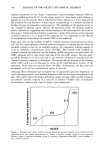
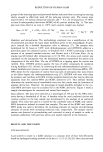
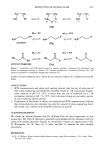
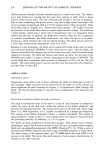
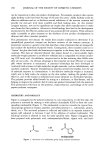
214 JOURNAL OF THE SOCIETY OF COSMETIC CHEMISTS reactions (3-11). In 1958, Sch/Sberl and Griifje (10) showed that the first displacement reaction (Eq. 1) leads to the formation of the mixed disulfide of keratin and mercaptan. Later, in 1974, Bor6 and Arnaud (11) confirmed that nucleophilic substitution occurs in the second displacement reaction (Eq. 2). Ker-S-S-Ker + RS-H •-• Ker-S-S-R -3- Ker-S-H (1) keratin reduced keratin (cystine) mercaptan mixed disulfide (cysteine) Ker-S-S-R + RS-H--• R-S-S-R + Ker-S-H (2) reduced keratin mixeddisulfide mercaptan disulfide (cysteine) Ker - S - S - Ker NH 3 + -- CH2 -- Ker -- S -- S -- CH2 -- CH2 -- Ker - S - H keratin -}- • -}- (cystine) CH2 -- SH CH2 -- NH3 + reduced keratin (cysteine) cysteamine mixed disulfide with cysteamine (3) Recent studies have shown that a variety of other compounds may result from the interaction of mercaptan with keratin. Amino acid analysis has been used to identify residues of lanthionine, lysinoalanine, mixed disulfides, cleaved fatty acid fragments, and even small changes in the protein and lipid composition of permanently waved hair (12-20). In this study, the kinetics of reduction of hair by cysteamine and ammonium thiogly- colate (ATG) were investigated using amino acid analysis and single-fiber tensile ki- netics (SFTK). Both measurements have been previously used to study disulfide reduc- tion however, the results of these two methods have yet to be correlated. The results of this study indicate that SFTK and amino acid analysis agree qualitatively but not quantitatively. This discrepancy may result from the fact that SFTK measurements determine the removal of stress-supporting disulfide bonds, while amino acid analysis determines the removal of all disulfide bonds in the fiber. Cysteamine (NH 3 +-CH2-CH2-SH) has an ammonium group adjacent to the thiol. The ammonium group may directly affect the properties exhibited by cysteamine as a re- ducing agent for permanent waving. Once cysteamine cleaves the keratin disulfide when the attached amino group is protonated (Eq. 3), ionic crosslinks may be formed with carboxylic acid residues in the keratin fibers. This will result in the replacement of a covalent crosslink with an ionic crosslink that is not completely cleaved until the second replacement reaction occurs (Eq. 2). Therefore, the effects of reduction on the physical and chemical properties were studied and compared with the effects produced by am- monium thioglycolate, a reducing agent that has been extensively studied in previous work (4,16,17,21-25). EXPERIMENTAL MATERIALS Medium-brown, virgin hair from a single source was obtained from DeMeo Brothers (New York). This hair sample was used for all the studies described in this report. The reducing agents ammonium thioglycolate and 2-aminoethanethiol HCI (cysteamine)
Purchased for the exclusive use of nofirst nolast (unknown)
From: SCC Media Library & Resource Center (library.scconline.org)