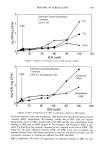
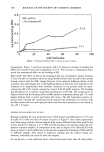
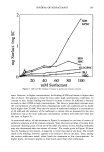
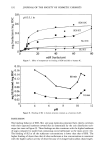
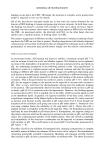
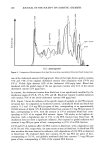
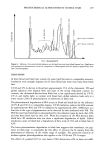
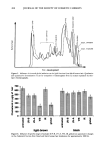
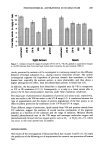
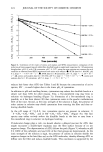
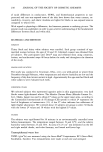
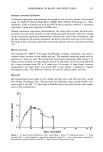
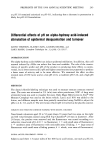
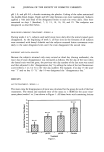
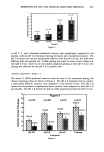
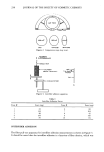
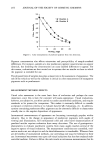
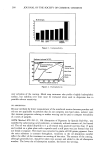
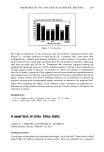
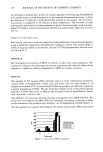
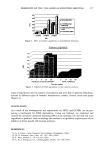
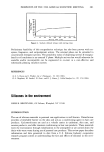
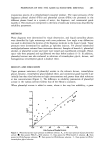
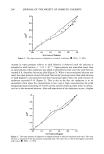
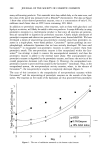
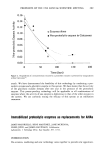
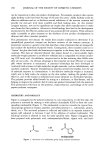
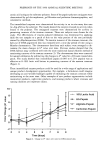
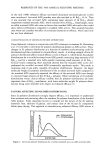
282 JOURNAL OF THE SOCIETY OF COSMETIC CHEMISTS ENVIRONMENTAL ENTRY The Silicones Environmental Health and Safety Council conducted an environmental entry survey of representative materials produced by the silicone industry. Products were categorized into classes based on physical/chemical properties, and entry levels into various environmental compartments were estimated from '93 production volumes and use patterns (1). The results of the analysis (Figure 1) were used, in part, to prioritize environmental fate and effects research as a function of the estimated loading to each environmental compartment. For example, research on cyclomethicone has focused primarily on its fate in the atmosphere and its potential impact on air quality, while research on dimethicone focused on fate and potential impacts in the aquatic and terrestrial environments where loadings of these materials are greatest. The landfill/incineration/recycle and dispersed compartments can be viewed as of lower concern at this time since a direct pathway into air or wastewater from these compart- ments is not anticipated. CYCLOMETHICONE ENVIRONMENTAL FATE AND EFFECTS Cyclomethicones, which are relatively low-molecular-weight materials, are volatile and only soluble in water at the ppb level. They also have high Henry's Law constants. These physical properties predict that cyclomethicones will ultimately end up in the atmo- sphere from the use of personal care products such as antiperspirants. The U.S. EPA has concluded, based on results from a TSCA Sect. 4 ecotoxicity testing consent order, that there is low risk to aquatic organisms from octamethylcyclotetrasiloxane (a cyclomethi- cone) (2). In addition, the U.S. EPA, based on data submitted by Dow Corning Corp., has excluded cyclomethicone from its definition of volatile organic compounds (VOC) (3). These data indicate that cyclomethicones have a short (10 to 30 day) lifetime in the atmosphere, ultimately degrading to carbon dioxide, silicic acid, and water. They do not contribute to formation of tropospheric or deplete stratospheric ozone. DIMETHICONE ENVIRONMENTAL FATE AND EFFECTS Dimethicones, which are typically high-molecular-weight polymers, find their way into the environment through wastewater from use of personal care products such as sham- poos, conditioners, or body washes, etc. The results of an extensive monitoring program 25.00 20.00 g o 15.oo • 10.00 • 5.00 Dimethicones 0.00 C-'yclon'•thicones Figure 1. Environmental loadings by compartment and class.

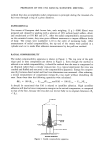
PREPRINTS OF THE 1996 ANNUAL SCIENTIFIC MEETING 283 conducted at eight wastewater treatment plants representative of those found in North America showed that dimethicones partition into sewage sludge with concentrations from 290 to 5155 mg/kg. These levels varied depending on influent concentration, contributions from industrial plants, and sludge processing methods. Concentrations less than 6 mg/kg were also found in sediments near the outfalls of these wastewater treatment plants. Sludge from these plants is either disposed of by landfill or inciner- ation, or is used as an agricultural soil amendment. Concentrations of dimethicone found in amended soils ranged from 0.4 to 10 mg/kg, which was lower than expected based on theoretical calculations. Dimethylsiloxanediols were also detected, suggesting degradation in the soil (4). Laboratory work with •4C labeled dimethicone has shown that these polymers hydrolyze to low-molecular-weight silanol-terminated oligomers and ultimately to dimethyl- silanediol in soil. Dimethylsiloxanediols were detected in soils where dimethicone load- ing was greatest and environmental conditions were most favorable for degradation. This provides additional evidence of dimethicone degradation in soil (5). Results indicate that degradation rates were dependent on soil moisture conditions. Very dry conditions result in a rapid decline in dimethicone found in the soil, while very wet soil shows only minimal decline. Additional work is in progress to reconcile the laboratory observations to what may happen in the field. The small amount of dimethicone that may be present in wastewater treatment effluent will be sorbed onto sludge solids and be deposited into bottom sediments near the outfall. Sediment-bound dimethicone will also undergo hydrolysis to dimethylsilanediol at rates similar to those observed in moist soil. Preliminary results indicate that deg- radation rates may be faster in some sediments (6). Laboratory work has demonstrated that •4C Dimethylsilanediol is biodegraded at a measurable rate (0.2 to 2% per month) on all of the soils tested, as indicated by the production of •4CO2. The rate of biodegradation was found to be essentially indepen- dent of the source of dimethylsilanediol. A fungus and a bacterium have been isolated, and both organisms were able to biodegrade dimethylsilanediol in liquid culture when another carbon source was available (7). Tests with Daphnia, midge, and a freshwater and marine amphipod (aquatic inverte- brates) exposed to 1 to 20 times the maximum concentration of dimethicone found in natural sediments found no effect on survival, growth, and/or reproduction (8). Labo- ratory tests of earthworms and springtails exposed to concentration ranges from 250 to 4000 mg/kg (8 to 130 times the maximum concentration found in amended soils) showed no effects on earthworms and a statistically significant reduction in the number of offspring produced by the springtails at concentrations above 500 mg/kg (15-20x actually found in the soil) (9). No evidence of bioaccumulation was observed in either the midge or earthworm. CONCLUSIONS Silicones enter the environment through a variety of personal care product consumer uses. Laboratory and field studies indicate that cyclomethicones degrade in the atmo- sphere and have no effect on air quality and that a complex mechanism involving chemical and biological degradation of dimethicone is occurring in soil and sediments.
Purchased for the exclusive use of nofirst nolast (unknown)
From: SCC Media Library & Resource Center (library.scconline.org)