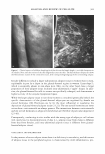
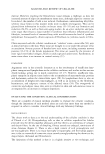
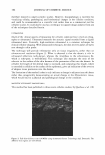
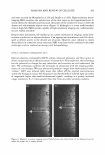
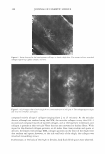
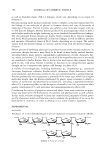
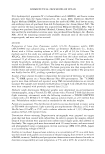
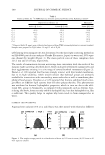
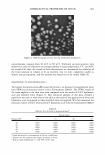
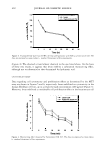
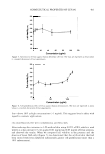
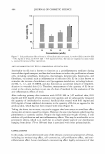
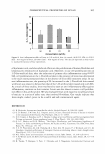
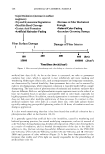
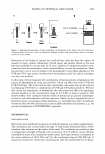
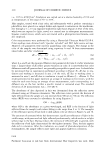
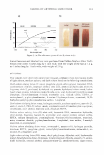
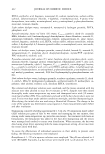
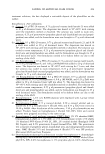
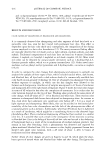
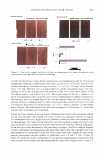
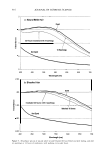
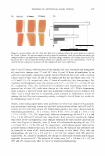
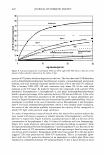
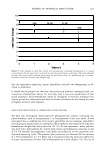
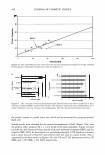
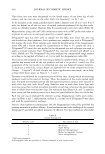
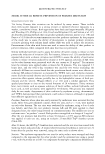
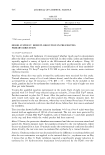
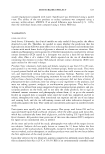
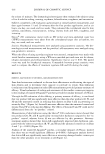
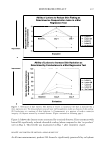
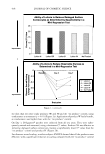
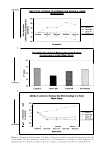
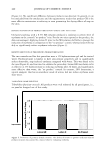
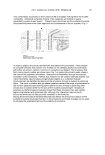
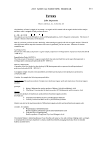
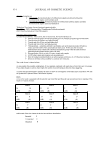
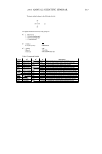
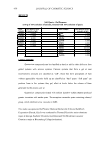
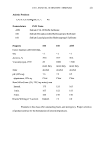
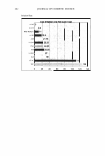
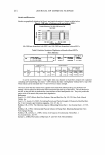
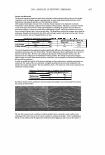
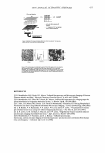
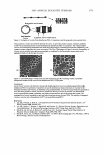
410 JOURNAL OF COSMETIC SCIENCE i.e., 1195 to 4780 J/cm2 • Irradiation was carried out at a relative humidity of 35% and at temperatures in the range of 45° to 50°C. Hair samples, treated with a hair color, and subsequently with a product containing a photofilter, were placed in a sample holder and exposed to radiation in the weatherom eter through a 5 x 2.5-cm exposure window for eight hours (Figure 2). Part of the tress, which was not exposed to light, served as a control area in subsequent measurements. Separate control tresses, which were not treated with a photoprotection formula, were also employed. Color measurements were performed by using a Hunterlab Ultrascan Model D25P-9. Color readings were obtained with "specular included" and D65 light-source settings. Hunter L-a-6 parameters were used for quantifying color changes. The change in the color of the samples was determined using equations la and 1 b from measurements taken before and after irradiation: dB = ✓((L 0 - L/ + (a0 - a/ + (b 0 - b/) dC = ✓[(a 0 - a/ + (b0 - b/J (la) (lb) where L, a, and b are the measured Hunter color parameters for time O or after irradiation time t. Larger values of dB reflect greater variation in color. It is noteworthy that color differences with dB greater than 1 are generally perceptible in panel tests. It should also be mentioned that in experiments performed according to Figure 26, dB due to irra diation and washing is measured in area 2 of the tress, dB due to washing alone is measured in area 1, and dB due to irradiation is equal to dB(area 2) - dB(area 1). The results presented in this paper represent an average of readings on five tresses, with the value for each tress being an average of ten measurements, each corresponding to a different site on the hair (within a specific treated or untreated area). The standard deviation of dB measurements was ± (10-20) %. The absorbance of dyes deposited in hair was determined from the reflection curves obtained using an Ultrascan colorimeter. The reflection curves provide the fraction of light reflected from the sample at 1-nm intervals from 380 nm to 750 nm. The reflection values (REF) were converted to absorbance by using Equation 2: OD = -log10(REF) (2) where OD is the absorbance at a given wavelength, and REF is the fraction of light reflected from the sample (with values falling in the range from O to 1). The examples of the reflectance spectra of hair dyed to dark auburn color are shown in Figures 3a and 36. The spectrum of untreated white hair demonstrates significant reflectance of light in the visible range, with green and red light reflected predominantly, which results in a slight yellow tinge to the hair. Dyeing reduces the intensity of reflected light in general, with the reflection of red light characterized by the highest intensity. Thus, the hair appears dark red in coloration. After the irradiation, as a result of photodecomposition of dye chromophores, the sample reflects more light and appears lighter in coloration. HAIR Piedmont Caucasian or yak hair from International Hair Importers was used. Dark

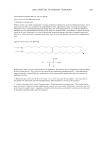
FADING OF ARTIFICIAL HA.IR COLOR Ill •1::1 100 BLUE GREEN RED 80 +-- ---------------- - C 00+----------i.--------=.....-�---- ,i::,II, � 40 +-- - - -------\,�---- -- / -- / � // 20 +-- - ----- - - Dy,ed - ---�-/-_/,,../----- -\�----/ 0 -1------=:::=:===::::::;::::=======�=---�-------,------- 350 450 550 Wave.ten tlrl (111111) 0 750 b) !Initial Dyed Figur,e 3. a) The reflectance . p'·ctm of h:;iir (I), shown in (b . 411 32 Ho :rs frradiation brown Cauca ian anc bJeached hair we1·e purchased from DeMeo Brother� (New Yor ·). Tresses ,vere either 3 inches long by 1 inch wide, with the w ight of the hair at 1.2 g, or 6 inches long by 1 inch wide, ,vith weight of 2.0 g. TRTIA 1 ENTS 1-hir samples were cl ed -....vith commerciaJ wo-part, permanem h. ir dyes having hades of light auburn, medium auburn, 'llld dark 'll burn based on rhe foUowi1 g com po itions: DcJrk au/mm colrwing lolion (I): warer, propylene glycol., ethoxyglycol, lauramide DEA, soytrimonium chloride, isopropyJ akolml, oleic acid, ammonium hydroxide, ol th-10, fragrance, oleth- , panthenol, hydrolyzed soy protein, h ,drol }1 zed wh ar starch, hydro ]yzed wheat protein, behentrimonium chloride, citric acid, hydroxyethyl.cetyldimonium phosphate, dicetyklimonium chloride, erythorbic acid, sodium sulfite, EDTA, p aminophenol, p-p] enylenediamine, 4-amino-2-hydroxytoluene, resorcinol, N,N bis(hydroxyethyl)-p-phenylenediamine sulfate, 1-naphthol. Dar, aNb1m1 _le,,e/opi11g lotiou: water, hydrogen peroxide, acrylar.e copolymer, stearer 1-21, oleth-2, oLc:h-5, PEG-5( tallow amide, a rylates/sr ·areth-20 methacrylate copolymer, sim ·thicone, oleyl alcoh I, etidronic acid, disodium EDTA. l11Iedi11m ar,bun, coloring lolion (fl): oJeic acid, lauramicle DEA, ammonjum hydroxide, cetyJ akohol, fragrance, laureth-23, erychorbic acid, stearyl alcohol, sodium sulfite, EDTA, sodium metasilicate, p-aminoph nol, 4-amino-2-hydroxytoluene, resorcino1, mica, titanium dioxide, p-phenylenediamine, 1-naphthol, iron oxides, 2-methyl resorcinol, m-aminophenol. }\,fedirmt a11lmnz developin1: lo1ion: ·vater, nono .ynol-4, nonoxynoJ-9, hydrogen peroxide, disodium EDTA, propylene gly ol, trim hylsilylamodimethicone, isolaureth-6, oc toxynol-40, phosphoric acid. Light auburn coloring lotion (Ill): water, decyl polygJucose, dilinol.eic acid, linoleamido propyl climethylamine dimer clilinoleate, behentrimonium chloride, steareth-21, ammo nium hydroxide, cetearyJ alcohol, :polyqtY ternium-22, amodimethicone, algae extract,
Purchased for the exclusive use of nofirst nolast (unknown)
From: SCC Media Library & Resource Center (library.scconline.org)