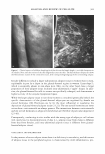
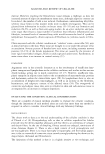
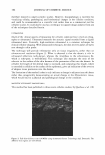
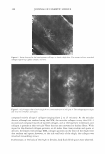
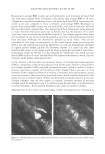
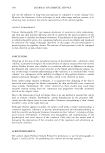
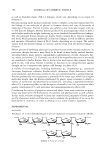
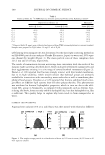
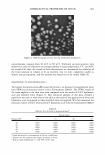
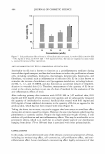
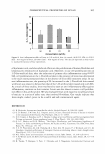
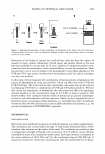
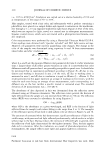
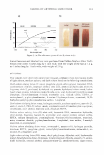
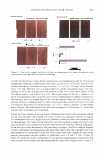
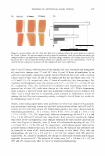
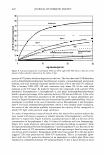
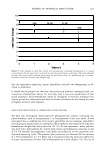
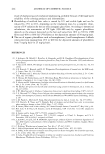
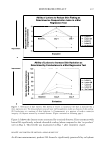
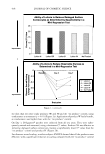
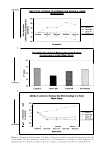
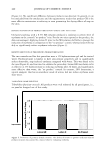
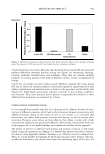
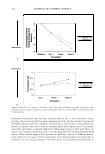
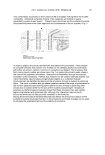
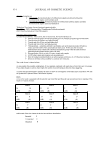
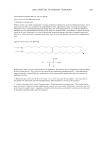
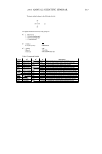
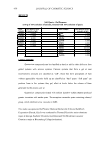
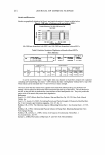
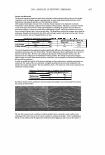
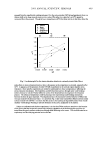
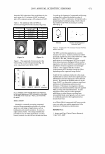
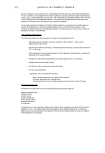
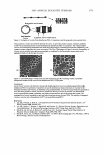
2005 ANNUAL SCIENTIFIC SEMINAR showed a 30% reduction of the ear thickness by the application of a 2% solution of MPC in ethanol, and a 50% reduction using a 10% solution ofMPC. Table I. The inhibitory effect ofMPC on microvessel outgrowth in the rat aortic ring assay. Concentration Microvessel Density ¾ Inhibition (pixel' + SDI 0 15.8+4.0 0 I 13.4+4.l 15 10 12.2+2.5 22 100 10.6 + 3.8 33 Figure la Figure lb Figure I . The outgrowth of microvessel in the Control (Fig la) and in Experimental (Fig. I b) aortic ring treated with I 0µM of MPC. 200 T 100 1 50 l ! 0 -1--- Control HR008 2% HR008 10% lndorrethacin Fig. 2. Inhibition of TPA induced edema (ear thickening) by the topical application of MPC (referred to in this graph as HR-008) on the mouse ear. Mean ± SD of 5 animals per group. DISCUSSION Menthol is a naturally occurring compound extracted from peppermint and used as a cooling agent in a wide range of applications, such as toothpastes and cosmetic products. It occurs in eight isomeric forms. The strong menthol odor precludes its use in wider applications. For this reason, research over the last two decades had been focused on development of compounds with strong cooling effect without the distinctive odor of peppermint. MPC is a derivative of menthol with a propyleneglycol carbonate group, which reduced the menthol smell while increasing its cooling effect (Fig. 3). Menthol Menthol propyleneglycol carbonate, MPC Figure 3. Comparison of the chemical structure between menthol and MPC. The MPC used in this application is a racemic mixture of D- and L- isomers and listed as GRAS (generally regarded as safe) under FEMA No. 3B06 and JEFCA No. 444. Besides its known applications as a cooling agent, MPC has recently been shown to possess biological effects in other organisms, such insect repellency and inhibition of attachment of marine organisms on submerged surfaces. This suggests that this versatile compound may have multiple biological effects depending on the organisms being studied. Under the test conditions employed in this study, menthol and its isomers showed no si gn ificant anti inflammatory and anti-angiogenic effect (data not shown). By altering the menthol molecule in the form ofMPC, we were able to observe significant inhibition of inflammation and microvessel formation. Preliminary investigation in human volunteers also demonstrated that topically applied MPC prevents itch and inflammation. Its anti angiogenic effect may have other potential applications in other diseases resulting from uncontrolled blood vessel growth, such as cancer. A worldwide patent for these applications has already been filed. As a FEMA GRAS compound, MPC may provide a new use and a new market opportunity in the treatment of inflammatory skin diseases. REFERENCE: I. Kruger and Figg. Clinical Cancer Research, 7: 1867-1 B72, 200 I. 471

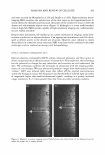
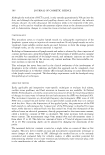
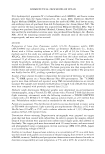
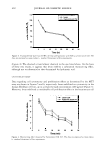
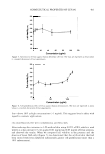
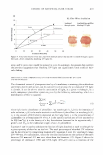
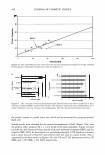
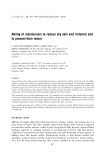
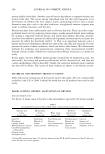
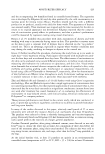
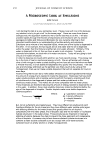
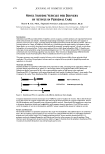
472 JOURNAL OF COSMETIC SCIENCE THE NOSE KNOWS OR WORKING AT THE "OLD FACTORY" FORMULATION PARAMETERS FOR NASAL DELIVERY SYSTEMS Gary Agisim, Richard Kenny, Sara Magee and Bhalchandra Patel Wyeth Consumer Healthcare Cosmetic chemists, in their role as formulation scientists, are increasingly asked to develop drug delivery systems and products for specialized anatomical sites, in particular the nose. In addition to its important olfaction sensory function, the nose is a route of increased interest for drug delivery, both via the nasal capillary system into the blood stream, and directly into the brain via the olfactory nerve which is not a true cranial nerve but a brain appendage. The nose is also a prominently visible organ requiring specialized care during cough/cold season. The design of nasal delivery systems must consider relevant physiological factors such as nasal anatomy especially site of drug deposition, blood flow, ciliary clearance, enzymatic activity, and pathophysiology of the nose. The key formulation properties include drug concentration,, dose, spray volume, droplet size/distribution, pH buffering, osmolarity, solubilization strategies, taste/throat sensation, preservation, humectants, viscosity, absorption promotion, and packaging components/materials, including labeling stock. Nasal drug delivery provides a viable alternative for the administration of many pharmaceutical agents. Some of the major advantages offered by the nasal route are: [l] --- Rapid absorption, higher bioavailab_ility, hence lower doses --- Fast onset of therapeutic action ---Avoidance of liver fust pass metabolism ---Avoidance of catabolism & irritation by gastrointestinal tract --- Minimally invasive, hence reduced risk of infection --- Convenient for self-medication improved patient compliance ANATOMY The nasal cavity is subdivided along the center into two halves by the nasal septum. The two cavities open to the facial side through the anterior nasal apertures and to the rhinopharaynx. via the posterior nasal apertures. The total surface area of the nasal cavity in man is about 150 cm2 and the total volume about 15 ml. Each of the two nasal cavities can be subdivided into three regions: the nasal vestibule, the olfactory region, and the respiratory region. The olfactory region in man covers and area of about 10 cm2 and is positioned on the superior turbinate, opposite the septum. The respiratory region is dominated by the large inferior turbinate. In the respiratory region, which is considered the major site of drug absorption into the systemic circulation, the mucosa consists of an epithelium resting on a basement membrane and a lamina propria. The anterior part of the respiratory regions is covered with squamous epithelium which changes to a transitional epithelium and converts in the posterior part of the cavity to pseudostratified columnar epithelium. The pseudostratified epithelium, also named respiratory epithelium, consists of four dominant cell types: ciliated columnar cells, non-ciliated columnar cells, goblet cells and basal cells. A total of 15 to 20% of the respiratory cells are covered by a layer of long cilia 2 to 4µm in size. The cilia move in a coordinated way to propel mucus across the epithelial surface to the pharynx. The respiratory cells are also covered by about 300 microvilli per cell. Microvilli increase the surface area of the cell considerably, which in tum promotes the transport of substances and water between the cells. Goblet cells are interspersed between the columnar cells and are the main entities responsible for the secretion of the mucus covering the epithelial cell layer. The mucus layer consists of a low viscosity sol layer that surrounds the cilia and a more viscous gel layer forming a layer on top of the sol layer and covering the tips of the cilia. The epithelial cells are closely connected on the apical surface, surrounded by intercellular junctions whose specialized sites and structural components are known as the junctional complex. Each complex is composed of three regions: Zonola Occludens, closest to the apical surface further down the zonola adherens and last the macula adherens. The zonola occludens forms a tight band around the upper part of the cell and contains the ZO-1 protein that influences diffusion of ions and neutral molecules through intercellular spaces. [2]
Purchased for the exclusive use of nofirst nolast (unknown)
From: SCC Media Library & Resource Center (library.scconline.org)