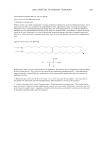
2005 ANNUAL SCIENTIFIC SEMINAR The mucus is a drixotropic, pseudoplastic sol/gel composed of 90-95% water, 1-2% salt, 2-35 mucin. The mucus has eight key functions: [3] --- Protects 1D1JCosa --- Retainer for substances in nasal duct -Adhesive --- Holds water --- Transports particulates --- Provides for transfer of heat --- Acts as a penneable matrix mesh --- Exhibits surface electrical activity FORMULATION CONSIDERATIONS Formulation pH and Buffering The formulation pH should be optimized: --- To avoidlminimize irritation of the nasal mucosa To achieve efficient drug absorption --- To promote optimal functioning of'the preservation system In general, to avoid nasal initation, the formulation pH should be adjusted to 4.5 to 6.5. The nasal surface pH is 7.39, and the pH of the nasal secretions is 5.5 -6.5 in adults and 5.0- 6.7 in infants. [ I] Most water-soluble drugs are absorbed in the unionized form. The most important factors in drug absorption and membrane transport are pH, pK, and drug partition coefficients. Most water soluble drugs are absorbed well in their unionized form. Hirari [4] found that nasal absorption of weak electrolytes such as salicylic acid and aminopyrine are highly dependent on the degree of ionization as predicted by Henderson-Hasselbach equation. For the slightly basic drug, arninopyrine, the absorption rates increase with increasing pH, suggesting that aminopyrine is absorbed through the nasal mucosa via passive transport of the unionized species. For salicylic acid the absorption increases with decreasing pH, as expected however, the experimental results indicate a substantially higher absorption than would be predicted by the pH/partition coefficient-lipoidal-transport model, indicating that perhaps salicylic acid promotes its oWn absorption through membrane disruption. Buffer systems used most frequently are sodium phosphate (dibasic)/ sodium phosphate (monobasic), sodium citrate/ citric acid, sodium borate/boric acid, glycine, sodium bicarbonate. Citrate offers the most optimal pKa (6.40) and synergistic antioxidant properties however, citrate salts can "sting" mucosa and are not fully compatible with benzalkonium chloride the most widely used preservative. Glycine is the least irritating, but with pK.'s of2.35 and 9.78 offers no buffering at the target 4.5 to 6.5 range. Borate has a pK. of9.24 and reacts with glycerin bicarbonate is unstable with the pH eventually drifting to 8.0 as the carbon dioxide volatilizes. Phosphate is the best compromise between buffer efficacy and irritation potential. Phosphate systems have a pK. of 7 .21. and are intermediate in irritation between citrate and glycine. A buffer capacity of 0.015 is very satisfactory and will maintain the pH of the formulation throughout shelf life. Most nasal sprays are formulated to isotonicity (285 mOsm/kg) to minimize irritation potential. Hypertonic solutions, up to 600 mOsm/kg, have been marketed with reports of increased nasal secretions, Although sodium chloride is the most widely used tonicity adjuster, reduced irritation has been reported with glycols particularly glycerin and sorbitol. [3] Preservation Benzalkonium Chloride is the preferred, and most frequently used, preservative in nasal sprays at a level 0.01 to 0.03%. This preservative is active against a wide range of bacteria, yeasts and fungi. Greater activity is seen with Gram-negative than with Gram-positive bacteria, with minimal activity against 473

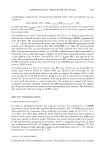
474 JOURNAL OF COSMETIC SCIENCE bacterial endospores and acid fast bacteria. Benzalkonium chloride functions well within the pH range of 4.5 to 6.5 however it is incompatible with anionic surfactants, nonionic surfactants (high concentrations), citrates, soaps, cellulose polymers, and zinc salts. The incorporation of disodium edetate at 0.0 I to 0.1 % is critical to the function of benzalkonium chloride. This agent chelates magnesium ions allowing for the penetration of the preservative through the micro-organism membrane. Occasionally, nasal spray formulas will contain cellulose polymers to suspend water-insoluble drugs, to increase the formulation viscosity thus minimizing throat-drip, or to retard ciliary clearance. Since cellulose can bind and inactivate benzalkonium chloride, a second preservative such as benzyl alcohol or phenylethyl alcohol is recommended. Drug Candidate Characteristics The following attributes are most desirable for a drug for nasal administration [ l]: --- Substantial aqueous solubility to provide an effective dose in the 25 - 150µ1 volume administered to each nostril --- pH-partition coefficient indicating a substantial portion of the drug is unionized at the desired 4.5 - 6.5 pH range --- Other appropriate nasal absorption properties such as promotes self-absorption via temporary disruption of the nasal membrane --- Responsive to absorption promotion by an excipient agent such as a cyclodextrin --- Minimal nasal _irritation from the drug --- No offensive odors / aroma associated with the drug --- No toxic nasal metabolites Appropriate clinical rationale for nasal dose Nasal treatment drug such as a cough/cold decongestant Low dose, generally below 25mg per dose Desired rapid onset of action without exposure to gastric system or liver first pass Absorption Optimization The following excipients have been investigated nasals drug aborption enhancers: ammonium glyrrhizinate hyaluronic Acid acetyl-1-cystein sodium taurocholate fusidic acid derivatives phosphatidylcholines cyclodextrins Cyclodextrins are cyclic oligomers of glucose that form inclusion complexes with drugs that fit into their lipophilic cavities. The drug solubility and bioavailability can be markedly improved. A substantial improvement in insulin absorption was reported by Merkus [5] by administering the insulin in a complex with dimethyl-beta-cyclodextrin.
Purchased for the exclusive use of nofirst nolast (unknown)
From: SCC Media Library & Resource Center (library.scconline.org)