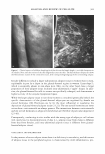
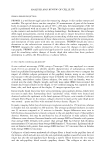
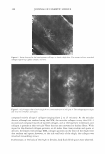
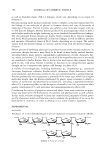
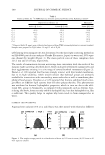
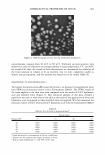
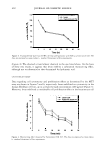
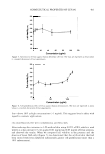
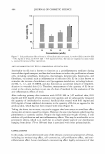
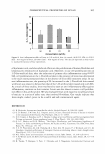
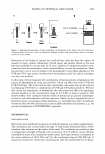
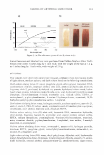
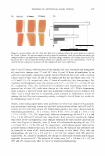
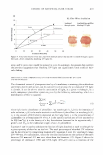
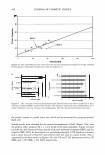
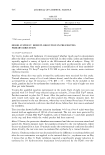
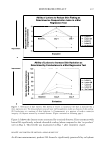
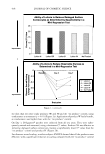
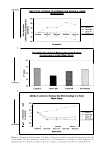
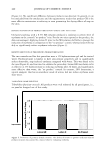
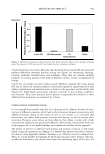
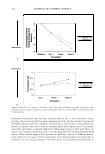
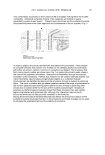
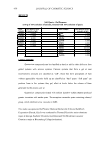
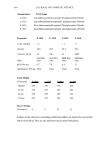
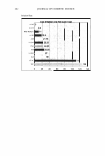
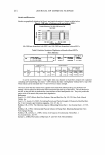
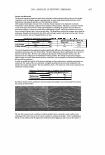
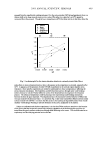
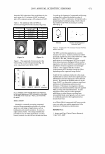
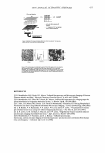
422 JOURNAL OF COSMETIC SCIENCE 60 a. 40 u � 0 20 %UV Absorbed Figure 10. The relationship between color protection and the calculated percentage of UV light absorbed by formulations containing benzophenone-3 and benzophenone-4. a Surfactant Only I 3%Zn0llde 23% Protection J 1 5% Benz-3, 1.5% ,I'! ZnOxlde --� - �� - ---r 3" eenz.3 17% Protection Total Color Change b 3'!1,0MC 1.5% ZnO, 1.5% OMC J 3'lfl Benz-4 j 1.5% ZnO, 1.5'lfl Benz-4 3'1f1Zn0 No Fonnulation 4 Tolal Color Cha-(cE) Figure 11. Hair color protection by (a) benzophenone and ZnO (micronized) and (b) benzophenone-4, octyl methoxy cinnamate (OMC), and ZnO (micronized). The treatment amount was 0.5 g of formulation per 1 g hair. Irradiation time was 16 hours (two shampooings). Yak hair was dyed with auburn hair color. the product results in a small luster loss, which can be minimized by using micronized ZnO (23). Similar results were obtained for the system benzophenone-4-ZnO (Figure 11 b), with the greatest effect produced by a 1:1 w/w blend of the photo-absorbers. Figure 116 also includes the data obtained for hair treated with octyl methoxy cinnamate (OMC) and the mixture OMC-ZnO. As mentioned in a preceding paragraph, UVB absorbers attenuate only a small fraction of total UV and prevent color loss only to a small extent. This is supported by the data shown in Figure 116, with 3% and 7.9% photoprotection by 3% OMC and 1.5% OMC-1.5% ZnO, respectively.

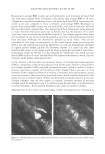
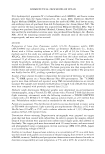
FADING OF ARTIFICIAL HAIR COLOR 423 We have also conducted experiments to ascertain the effect of formulations containing other DVB-UVA photofilter systems, such as that composed of 1 % dimethylpabaimi dopropyl laurdimonium tosylate (1 %) and benzophenone-3 (1 %) (see formulation in the Experimental section). Natural white hair was dyed with a red dye one group of samples was irradiated under artificial sunlight and shampooed every eight hours, and the second was treated with 0.17 g of formulation per gram of hair, using an oil-based formulation, and irradiated and shampooed similarly to other samples. A reduced treatment amount was employed in order to simulate the practical usage conditions and to minimize the unfavorable tactile modification of the hair. After 24 hours of total irradiation, samples treated with the oil formulation had an average color loss of 4.59 ± 0.54 while samples not treated with the formulation had an average color loss of 4.82 ± 0.83, amounting to 4. 5 % color protection. After 48 hours of irradiation, the average color losses were 7 .22 ± 0.25 and 8.24 ± 0.47 for the treated and untreated samples, respectively, which corresponds to 12% color protection. Finally, color fading could be reduced by including cationic polymers or silicones, in combination with photo-absorbers, in the photoprotection products (24,25 ). Such raw materials are typically included in the commercial formulations of conditioners, fixa tives, or shampoos. The mechanism of color-loss prevention could be explained by a "sealing effect" of absorbed layers of polymer or silicone slowing down the diffusing out of hair dyes during shampooing. The use of film-forming polymers and/or oils could also improve the uniformity of distribution of photo-absorbers, resulting in a greater attenu ation of incident light. In one experiment, natural white hair, dyed with medium auburn hair color, was treated with 2% benzophenone-4 and 2% benzophenone-4 in the form of a salt of PVP/DMAPA copolymer. After 16 hours of irradiation and two shampooings, the dE was 7 .9 ± 1.0, 7 .1 ± 0.8, and 6.4 ± 0.8 for untreated, benzophenone-4 treated, and benzophenone-4-polymer-treated hair, respectively. Thus, the observed photopro tection effect of 19% for benzophenone-4-PVP/DMAPA was greater than that (10%) measured for benzophenone-4 alone. In another experiment, natural white hair dyed with medium auburn hair color was treated with 2% benzophenone-4-PVP/DMAPA copolymer 2% benzophenone-4-PVP/DMAPA copolymer-2% amodimethicone and 2% benzophenone-4-PVP/DMAPA copolymer-2% trimethylsiloxyamodimethicone, which, after 16 hours of irradiation and two shampooings, gave a dE of 5.5 ± 0.6 (14% protection), 4.8 ± 0.9 (25% protection), and 5.6 ± 1.1 (12.5% protection), respectively, versus a dE of 6.4 ± 0.6 (0% protection) for the untreated control. Such result suggests that cross-linkable, aminofunctional silicone can lower color loss when used in combi nation with a photo-absorber. CONCLUSIONS The main conclusions from this study can be summarized as follows: • Fading of artificial, permanent hair color is greatest for hair subjected to both irra diation and shampooing, and significantly smaller for hair undergoing only irradia tion or washing. Color loss has been found to be dependent upon the hair type employed, with hair melanin displaying significant protection of artificial hair dyes. Artificial hair color based on pyrazole intermediates showed the deepest fading as a
Purchased for the exclusive use of nofirst nolast (unknown)
From: SCC Media Library & Resource Center (library.scconline.org)