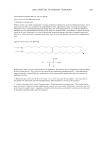
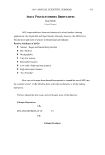
2005 ANNUAL SCIENTIFIC SEMINAR 453 ESTERS John Imperante Phoenix Chemical, Inc., Somerville, NJ The chemistry of esters is simple in its concept. An organic acid is reacted with an organic alcohol with a catalyst and heat, water is stripped off and you have an ester. R-OH+RCOOH The catalyst can vary from (Phosphoric Acid and (Hypophosphorous Acid to Organotin compounds). The choice of catalyst is based on the kinetics of the reaction. How do you know you have an ester? Basically, when reacting an organic acid with an organic alcohol, if the acid value decreases and the sap value increases while water is generated, you have an ester. Measures of reaction completion are: Acid Value (AV): The amount of free fatty acid present in a given sample, expressed in milliequivalents of potassium hydroxide (KOH -MW 56.1) Saponification Value (SAP NO.): The total amount of fat present in a given sample (both free and esterified) that can be saponified expressed in milliequivalents of potassium hydroxide (KOH -MW 56. l) Hydroxyl Value (OH): A measure of the free alcohol or other hydroxyl (OH) bearing materials as expressed in milliequivalents of potassium hydroxide (KOH -MW 56.1) It all appears simple, however, ester possibilities are infinite and in practice, ester production can become a complicated affair. Consider, for example the following ester possibilities. Simple Esters/ The reaction products of simple mono functional organic acids and simple mono functional organic alcohols: Example: ► Behenyl Behenate the reaction product of Behenyl Alcohol and Behenic Acid ► Ethylhenxyl Isononanoate, the reaction product ofEthylhexanoate and Isononanoic Acid Diesters The reaction products of dicarboxylic acids and mono functional organic alcohols. Examples are: ► ► lsopropanol and Sebacic Acid to yield Diisopropyl Sebacate Isostearyl Alcohol and Malic Acid to yield Dissosteryl Malate Diesters can also be the reaction products of difunctional organic alcohols and monofunctional organic acids. Consider, for example: ► Neopentylglycol Diethylhexanoate Reaction product ofNeopentyl glycol and 2-Ethylhexanoic acid ► Propylene Glycol Dipelargonate Reaction product of Proplylene Glycol and Pelarganic Acid Diisostearyl Malate is interesting because if you drive the acid value too low and continue stripping water, you begin to strip water from the malic backbone to create a double bond thereby changing the product from its intended hydroxy acid derivative.

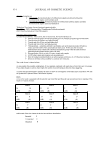
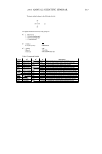
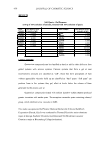
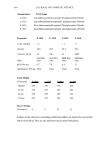
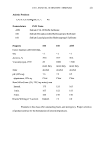
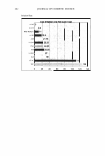
454 Triesters Examples are: JOURNAL OF COSMETIC SCIENCE ► Triisostearin the reaction product of a trifunctional organic alcohol and a Glycerine monofunctional organic acid (isostearic acid) ► Trioctyldodecyl Citrate, the reaction product of a trifunctional carboxy organic acid and a monofunctional organic acid (octyl dodecanol) Triethylene Glycol ester of mono functional organic alcohols Mixed Esters (INCI: Dipentaerythrityl Tetrabehenate/Polyhydroxystearate) (INCi: Bis(Trioctyldodecyl Citryl) Dilinoleate)) Polymeric and Complex Esters Consider the possibilities. These can be, but not exclusively, the reaction/products of: ► Diacids and diols (Adipic acid and propylene glycol to yield poly propylene glycol Dilinoleate ► Diacids and triols (Sebacic acid and glycerine) ► Triacids and diols (Citric acid and butane diol) ► Triacids and triols (Citric acid and glycerine) ► Homopolymers,,sometimes referred to as Estalids, such as the reaction product of hydroxy stearic acid with itself to form, poly hydroxyl stearic acid. IN this case, the monomer, hydroxystearic acid, contain both a hydroxyl and carboxy group within the same molecule permitting hydroxystearic acid to react with itself. ► Homopolymers of diols or triols EO esters, simple and complex ► EO/PO esters simple and complex such as polyglycerol ► Ester of residual or pendant hydroxy or carboxy groups with mono, di, or Tri functional products. ► Esters are limitless in the possibility to construct new molecules. The world of ester is indeed infinite. As one ponders the possible combinations of raw materials combined with each class of ester there are 144 groups. If you make changes to carbon chain length, the number of possible products becomes truly staggering. A system has been developed to classify the esters to allow for investigation of the many types of products. We call the system PECS (Phoenix Ester Classification System). PECS A two letter code is assigned with the alcohol type listed first and the acid type second (just like in naming). This results in 9 classes of esters. Class I Class 4 M M D M (OH) (H) (OH) (H) Class 2 Class 5 M D D D (OH) (H) (OH) (H) Class 3 Class 6 M p D p (OH) (H) (OH) (H) Within each of the nine classes the alcohol and acids are described as: Saturated S Unsaturated U Branched B Class 7 p M (OH) (H) Class 8 p D (OH) (H) Class 9 p p (OH) (H)
Purchased for the exclusive use of nofirst nolast (unknown)
From: SCC Media Library & Resource Center (library.scconline.org)