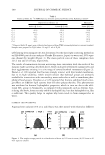
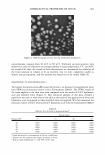
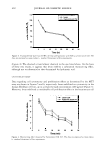
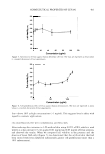
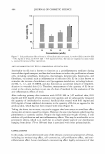
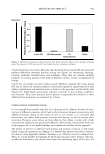
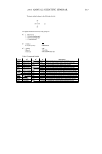
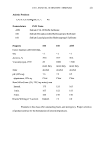
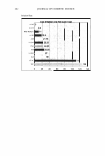
MOISTURIZER EFFICACY 433 MODEL SYSTEM III. BENEFIT: PREVENTION OF PRIMARY IRRITATION SURFACTANT PATCH TEST Test history. Primary skin irritation can be induced by many means. These include short-term (acute) exposure to a strong irritant or repeated (chronic) exposures to a weaker, cumulative irritant. Both approaches have been used experimentally. Kligman and Wooding (15), Phillips et al. (16), Frosch and Kligman (10), and Simian et al. (17) all describe patching methods that can produce primary irritation. Justice et al. (18) and Paye et al. (]_ 9) describe an arm-immersion test that produces erythema. As the purpose of the study was to assess the ability of moisturizers to prevent primary irritation, occlusive patching with sodium lauryl sulfate (SLS) was used to induce the irritation. Pretreatment of the skin with lotion was used to assess the ability of that product to prevent irritation, when compared with skin that was not pretreated. Similar methods have been used to assess the ability of barrier creams to reduce or even prevent the induction of irritation (20). For instance, Schentz et al. (21) standardized the repeated short-term occlusive irritation test (ROIT) to assess the ability of test-barrier creams to reduce irritation induced by toluene or 0.5% aqueous solutions of SLS. Sites on the volar forearm were pretreated with the test creams at 25 mg/cm2 . Ten minutes later the irritants were applied under occlusion for 30 minutes. This was repeated 3.5 hours later, and the twice-a-day treatment was used for two weeks (excluding the weekend). All four test centers found that the petrolatum-based creams were effective at reducing SLS-induced irritation as measured by TEWL rates and erythema measure ments (by both trained observer and colorimeter), but appeared to have a less consistent protective effect against toluene, possibly due to the hydrophobic nature of both pet rolatum and the solvent. Wigger-Alberti et al. (22) used a similar approach. They applied petrolatum to sites on the ventral forearms of 20 volunteers. Thirty minutes later, test irritants such as aqueous solutions of lauryl sulfate, sodium hydroxide, and lactic acid, as well as toluene, were applied for 30 minutes. This process was repeated daily for two weeks. Assessments of skin condition by erythema scoring, chromameter, and TEWL demonstrated that petrolatum could reduce irritation, although it appeared least effective against lactic acid. Procedure. Panelists whose skin was easily irritated by surfactants were recruited for this study. After they gave informed consent, three test sites, each 2 x 3 cm, were marked on each volar forearm. The test sites were evaluated for erythema, using a 0-to-4 scale (see below), and then two test products (lotions GR and H) were applied to their designated sites, the order being reversed on contralateral arms. The middle test site on each arm was a "no product" control. Each product was applied at a dosage of 2 mg/cm2 . After the test products had dried for at least 30 minutes, a 0.5% aqueous SLS solution was applied to each test site, using an occlusive 25-mm Hill Top® chamber system (Table III). After 24 hours, the Hill Top® chambers were removed and the test sites were rinsed with warm tap water and patted dry. A trained observer assessed erythema at each test site 24 hours after the patches were removed, using the same scale as shown above. Statistics. The erythema responses for two sites for each product were averaged and then compared to the responses for the other product and the untreated site using a paired t-test, with the p value set at 0.013 to compensate for multiple comparisons (Bonferroni).

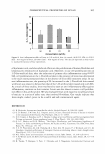
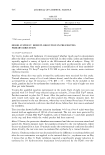
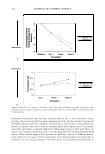
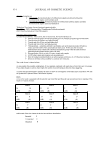
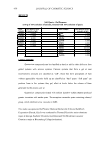
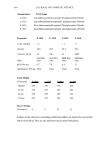
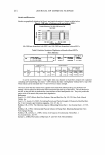
434 JOURNAL OF COSMETIC SCIENCE Erythema score* 0 2 3 4 * Half scores permitted. Table III Erythema Scoring Scale Description of skin None Minimal, non-uniform Moderate, uniform Severe Fiery red MODEL SYSTEM IV. BENEFIT: REDUCTION IN PRE-EXISTING PRIMARY IRRITATION 5%IVORY® SOAPSTUDY Test history. Loden and Anderson (3) investigated whether lipids used in moisturizers affect the skin's recovery after irritation with SLS. In their study, Loden and Andersson topically applied a variety of lipids to the SLS-irritated skin of subjects. Using 1 % hydrocortisone as the effective control, some lipids such as phytosterols were able to alleviate erythema. Our study protocol incorporated a modification of their methodol ogy, substituting 5% Ivory® soap for 0.5% SLS to give a less intense, more consistent erythema reaction. Panelists whose skin was easily irritated by surfactants were recruited for this study. Trained observers, using a 0-to-4 scale (shown above), rated the skin after it had been acclimated for at least 30 minutes ( 71 °F, RH = 3 5 ± 10% ). To be included in the study, panelists had to be erythema-free (erythema score = 0) at each of eight test sites (four per volar forearm). Twenty-five qualified panelists participated in the study. Each of eight test sites was patched with 5% Ivory® soap solution using an occlusive, 25-mm Hill Top® system. Patches remained in place for 22 hours. After the patches were removed, the test sites were rinsed with warm tap water, and then patted dry. Ninety minutes later, the panelists returned to the test laboratory, where they re-acclimated for at least 30 minutes under the environmental conditions described above, before their skin was re-evaluated for erythema. Test sites that showed sufficient irritation (erythema 2::: 1.0 on a 0-to-4 scale) were then treated with an application of 100 ul of test material. The test sites were protected by non-occlusive 25-mm Hill Top® chambers, each of which had a ¼-inch hole punched in the top, and from which the webril patches had been removed. After 22 hours, the protective chambers were removed and the test sites were rinsed and patted dry. Ninety minutes later, the panelists returned to the test laboratory, where they re-acclimated for at least 30 minutes under the environmental conditions described above. Finally, the test sites were re-evaluated for erythema by a trained observer. Statistics. Erythema reduction was determined from the difference in erythema before and after the test moisturizer was applied to the irritated skin (i.e., erythema score on Day 2 minus that on Day 3 ). Study validation required a significantly greater reduction in erythema by 1 % hydrocortisone (maximum level permitted by the FDA's over-the-
Purchased for the exclusive use of nofirst nolast (unknown)
From: SCC Media Library & Resource Center (library.scconline.org)