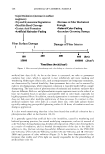
MOISTURIZER EFFICACY 429 and the accompanying low humidity found in centrally heated homes. The regression test as developed by Kligman ( 6) used dry skin produced by the cold environment as a starting point for testing lotion efficacy. Panelists treated each leg with a different product (or no product), usually twice daily for three weeks. The appearance of dryness was assessed weekly. Then treatment was stopped and the time necessary for the skin to return to its original appearance was determined. Kligman reported that the composi tion of a moisturizer greatly affects its performance, and that a product's performance could be measured by regression testing using visual observation. Boisits et al. (7) modified this procedure with daily assessments of dryness and with washing with soap to increase the drying stress on skin. This provides a constant stress on the skin to give a constant level of dryness that is observed on the "no product" control site. This is an advantage, especially in regions where weather conditions may vary during the study, resulting in changes in dryness at the control site. Grove (2) further modified the procedure, shortening the study from up to six weeks to eight days-mini-regression testing. Participants were treated with multiple test prod ucts for four days and re-evaluated four days later. The effectiveness of moisturizers on dry skin can be evaluated using several different parameters, including visual evaluation, measuring skin hydration via conductance or capacitance, and skin color. Visual evalu ation demands that a trained observer categorize the condition of a panelist's skin, using erythema and scaling grading scales. Conductance or capacitance measurements, col lected using a Skicon® Dermalab or Novameter®, respectively, allow for determination of skin hydration at different times throughout a study. Colorimeter readings were used to analyze variances in skin color, in particular those associated with erythema. Zhai and Maibach (8) and Gammal et al. (9) did further work using Grove's regression methodology. Zhai and Maibach reported that a single application of a moisturizer does not cause long-lasting effects, but that repeated applications of a moisturizer (that is, two times each day for seven days) can result in a significant conductance increase for at least one week after treatment has ceased. Gammal et al., in evaluating the effectiveness of moisturizers on soap-induced xerosis, used clinical scaling, electrical conductance, and D-Squames® to compare products. These previous publications contributed to the current study, which was conducted, in part, to prove that a product's ingredients contribute to its ability to provide both short and long-term benefits. In many of the studies discussed in this paper, relatively small panels of 25 or more volunteers were utilized. For instance, Boisits et al. used panels of at least 30 panelists. The panelists were selected to form a relatively homogeneous and reactive/responsive group. Previously Frosch and Kligman (10) had demonstrated that in irritation testing, such a panel predicts the reactions of a larger, general population. Procedure. Potential panelists, after giving informed consent, were directed to use only Ivory® soap to cleanse the lower legs at home, for a minimum of three days before the start of the treatment phase, using their usual method. The subjects also were told to stop using lotions, moisturizers, oils, and soaps, other than the Ivory® soap provided, on the legs. At the initial baseline visit, at least 25 panelists sat quietly in an environmentally controlled room (temperature at 18° to 21 ° C, RH = 35 ± 5%) for at least 20 minutes.

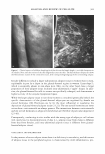
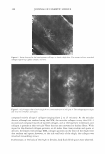
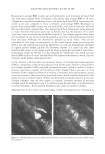
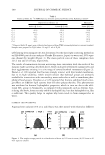
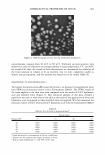
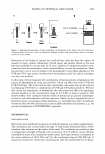
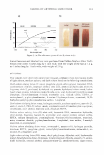
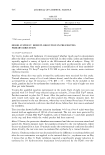
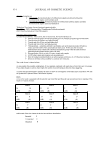
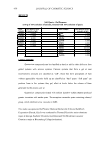
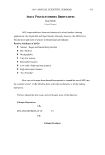
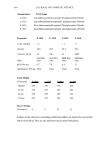
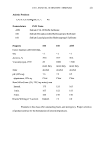
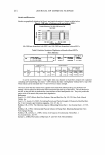
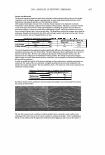
430 JOURNAL OF COSMETIC SCIENCE Then three test sites were designated on the lateral aspect of one lower leg of each subject, and two test sites on the other. Each site measured 5 cm by 5 cm. To be included in the study, panelists had to show a dryness score of 2::2.5 on a 0-to-4 scale (see below) on all the test sites. A trained evaluator performed all dry skin evalu ations in a blinded manner. Baseline (Day 0) measurements were then taken (Table II). Measurements using a Skicon® 200 conductance meter with an MT probe were taken in triplicate at each site on each participant by a trained operator. D-Squames® tape was then used to sample the dry flaky skin. Each test area was sub-divided into four quadrants. Each quadrant was sampled once with a D-Squames® disc during the study. Three samples were taken for determination of the desquamation index (DI) and a fourth sample for squamometry on Day 4. To sample the skin, a D-Squames® (25-mm) disc was applied to the designated site and a plunger was used to apply a constant pressure. Each D-Squames® disc was then removed and affixed to a black, labeled card. The D-Squames® discs were evaluated by computerized image analysis according to the method of Schatz et al. (11) to yield the desquamation index (DI). Test lotions were assigned to the sites using a balanced complete-block design, i.e., each panelist was treated with all the test products and had a "no product" control site. The assignment of the test products to individual test sites was balanced between panelists. To each site, a technician, using a finger cot, applied 0.05 ml of the assigned test lotion (dosage = 2 mg/cm2). A total of eight test lotion applications were made, twice daily, at least three hours apart, on Days 0, 1, 2, and 3. Treatment was followed by a regression period of four days, during which moisturizing products could not be used on the legs. Thus, the duration of the study totaled eight days. For both the treatment period and the regression period, subjects were directed to wash their legs only with Ivory® soap. Panelists were to wash their lower legs each morning using their normal procedure similarly on each leg otherwise the participants were to refrain from wetting their legs. On evaluation days (Days 0, 4, and 7), panelists were instructed that washing was to be at least two hours before the first visit of the day. Each test site was re-evaluated for observer scoring, desquamation index, and conduc tance on Days 4 and 7. Additionally, on Day 4, a second set of D-Squames® was taken and used for squamometry readings. Statistics. Skin hydration (conductance) and the desquamation index (DI), provided the primary measures of product efficacy. Visual evaluations and color readings of the stained D-Squames® provided secondary measures of efficacy. For skin hydration, observable Dryness score* 0 1 2 3 4 * Half scores permitted. Table II Dryness Scoring Scale Description of skin No dryness Slight flaking Moderate flaking/scaling Marked scaling/slight fissuring Severe scaling/fissuring A photographic scale was provided to illustrate examples of each dryness score.
Purchased for the exclusive use of nofirst nolast (unknown)
From: SCC Media Library & Resource Center (library.scconline.org)