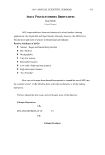
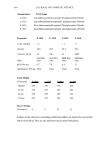
MOISTURIZER EFFICACY 435 counter regulations) compared with water. Significance was determined using a paired t-test. The ability of the test products to reduce erythema was compared using a one-way, within-subject, ANOVA. If an overall difference were detected (p � 0.05), then the individual means were compared using a Tukey HSD test. VALIDATION HOME-USE STUDY Study history. Ultimately, the clinical models are only useful if they predict the effects observed in real life. Therefore, we needed to assess whether the prediction that the high-glycerin lotion (GR) was more effective at reducing skin dryness and erythema than a lotion with much lower levels of glycerin is observed in a home-use situation. Han nuksela and Kinnunen's investigation (4) of whether moisturizers could prevent irritant contact dermatitis (ICD) caused by a detergent was used as a basis for our home-use study. Also, Zhai et al. 's studies (5 ,8), which reported on the use of dimethicone containing skin lotions to reduce SLS-induced irritant contact dermatitis (ICD) were again utilized in this study' s design. Procedure. Sixty volunteers, both male and female, ranging in age from 18 to 90 years, participated in a two-week, double-blind, between-groups, home-use study. They were in good general health and had no skin diseases other than mild eczema on the target site, and experienced itching with minimal cutaneous findings. Panelists were not pregnant, breast feeding, or undergoing treatment for any skin condition on the body did not have a history of allergic responses to sun exposure did not have a history of photosensitive skin conditions were not allergic to any ingredient in the products and were not taking systemic analgesic or antihistamine prescriptions. They had to be willing (a) to refrain from using unapproved topical nonprescription products and pre scription products on the body, and to use only the study products (6) to sign an informed consent statement and photography release form (c) to go to the research facility on assigned days at assigned times until the study was completed and (d) to refrain, throughout the study, from intentional sun exposure and the use of sun lamps and tanning beds, and the use self-tanning creams and other substances designed to artificially pigment the skin. They could not concurrently participate in another research study. Participants were equally split into two groups. One group used lotion GR and its associated mild liquid body and facial cleansers, while the other group used lotion LG, which has a substantially lower level of glycerin, and the leading U.S. liquid body and facial cleansers. All panelists were given one of two over-the-counter (OTC) analgesics for equal use on contralateral sites, as needed. At the onset and at the end of the study, photographs were taken of the target sites on ten subjects. Subjects did not apply lotions or creams for 12 hours before the first application of the study products. Additionally, except for the face and hands, the body was not washed, and no therapeutic or ancillary products were used for two hours before the first application of the study products. Upon their arrival at the test laboratory, panelists completed an informed consent form, and then acclimated their skin ( 21 °C at 30 ± 5 % RH) in an environmentally controlled room

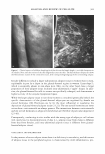
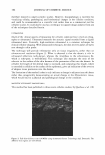
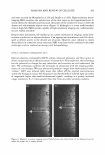
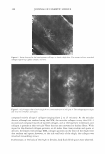
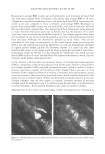
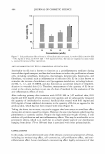
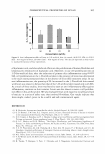
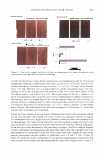
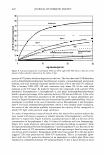
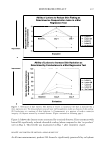
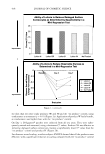
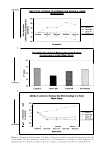
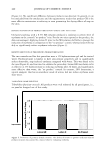
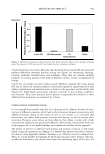
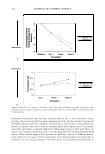
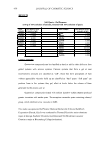
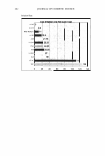
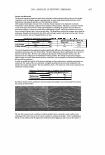
436 JOURNAL OF COSMETIC SCIENCE for at least 15 minutes. The dermatologist/investigator then evaluated the subjects using a 0-to-6 scale for scaling, crusting, erythema, lichenification, roughness, and excoriation. Subjects completed a self-evaluation questionnaire at initial baseline measurement, and then again between 15 and 30 minutes after the first product application, and at six hours, one day, one week, and two weeks. They evaluated the contralateral sites for skin softness, smoothness, moisturization, itching, dryness (look and feel), roughness, and irritation. Skicon® 200 conductance meter (with an MT probe) and trans-epidermal water loss (TEWL) measurements were taken from the contralateral target sites at baseline, one day, one week, and two weeks. Statistics. Biophysical measurements were analyzed using parametric statistics. The der matologist-scored measurements and the panelists' self-assessments were analyzed using non-parametric statistics. When the effects of using a product regimen were assessed, comparisons were made with initial baseline measurements using a Wilcoxon matched-pair rank-sum test for derma tologist assessments and self-assessments. Significance was set at p ::::::: 0.05. The paired t-test was used for biophysical measures. Comparable between-groups statistics were used to compare the effects of treatment regimens GR and LG during the study. RESULTS BENEFIT: ALLEVIATION OF DRYNESS-MINI-REGRESSION TEST Four skin lotions were evaluated to discern their effectiveness at alleviating the signs of skin dryness and to determine their capacity to preclude its return. Skin hydration (conductance) and desquamation index (DI) measurements provided primary measures of efficacy. Visual evaluations of scaling and assessment of skin-surface corneocyte integrity (color readings of stained D-Squames® patches) provided secondary measures of efficacy. Through the DI evaluation of skin flaking, a primary measure of efficacy, it was found that test product GR was significantly more effective than the other products (B, W, and H) and the untreated control in reducing skin dryness on Day 4 and in preventing its return by Day 7 (Figure la). Lotion B was more effective than the untreated control and lotions H and W at reducing skin flaking. The effects of Lotions H and W could not be differentiated from the "no product" control. Measurements of skin hydration using the Skicon® 200 conductance meter showed that test products GR, W, and B significantly increased skin hydration compared to the "no product" control, whereas lotion H was not effective by this parameter. Between treatment analysis showed that lotion GR significantly improved skin hydration com pared with the other test products (B, W, and H) and the untreated control site on Days 4 and 7 (p 0.001) (Figure lb). Analysis of the stained D-Squames® patches, a secondary measure of efficacy, showed that there was an overall significant difference (p=0.0001). Subsequent analysis showed that lotion GR was significantly more effective at removing damaged surface corneocytes than the other products or no treatment at all (Figure le).
Purchased for the exclusive use of nofirst nolast (unknown)
From: SCC Media Library & Resource Center (library.scconline.org)