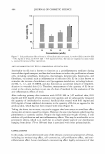
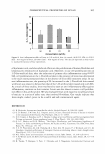
MOISTURIZER EFFICACY 443 the epidermis at a rate of tens to hundreds of micrograms of glycerin/cm2 from the test lotions LG and GR, respectfully, after 24 hours (data not shown). Recently, glycerin has been demonstrated to be able to reduce irritation potential. Fluhr et al. (28) showed that glycerin accelerated the repair of the stratum cornuem barrier of human volunteers when tape stripping had disrupted the barrier. The recovery, com pared with that of damaged but untreated skin, became significantly greater after three days and occurred whether the glycerin was applied openly or occluded to the damaged skin. Occlusion alone did not enhance recovery. Similar damage to skin was observed when washing with aqueous SLS solution, except that recovery appeared to take longer. However, the mechanism by which glycerin reduces irritation is not well understood. Mauro et al. (29) showed that barrier-function repair in mice occurs more rapidly at pH 5.5 than at 7.4. They speculated that the repair process involves extracellular lipid processing enzymes, whose pH optima is somewhat acidic. It should be noted that the pH of lotion GR (at 4.5) was the lowest (most acidic) of the lotions tested. Ultimately, it is important to demonstrate the relevance of controlled laboratory meth ods, whether in vivo or in vitro, to our consumers. This is the reason for running the home-use validation study. By using a group of consumers with a low level of derma tological distress (perceived itching, but few other clinical signs of eczema), we were able to show that a regimen based on using a high-glycerin lotion (GR) was significantly more effective than a regimen based on a low-glycerin lotion for both subjective and observable signs of eczema. This validates the predictions of the controlled in vivo studies. REFERENCES (1) D.R. Highley, V. 0. Savoyka, J. J. O'Neill, et al., A stereomicroscopic method for the determination of moisturizing efficacy in humans,]. Soc. Cosnzet. Chem., 27, 351-363 (1976). (2) G. L. Grove, Skin surface hydration changes during a mini regression test as measured in vivo by electrical conductivity, Curr. Ther. Res., 52, 556-561 (1992). (3) M. Loden and A.-C. Andersson, Effect of topically applied lipids on surfactant-irritated skin, Br. J. Derrnatol., 134, 215-220 (1996). (4) A. Hannuksela and T. Kinnunen, Moisturizers prevent irritant dermatitis, Acta Derin. Venereal. (Stockh.), 72, 42-44 (1992). (5) H. Zhai, F. Brachman, A. Pelosi, et al., A bioengineering study on the efficacy of a skin protectant lotion in preventing SLS-induced dermatitis, Skin Res. Technol., 6, 77-80 (2000). (6) A. M. Kligman, Regression method for assessing the efficacy of moisturizers, Cosmet. Toiletr. 93, 27-35 (1978). (7) E. K. Boisits, G. E. Nole, and M. C. Cheney, The refined regression method,]. Cutan. Aging Cosmet. Dermatol., 1, 155-163 (1989). (8) H. Zhai and H. I. Maibach, Moisturizers in preventing irritant contact dermatitis: An overview, Contact Dermatitis, 38, 241-244 (1998). (9) C. E. Gammal, A. Fagnoni, A. M. Kligman, et al., A model to assess the efficacy of moisturizers-The quantification of soap-induced xerosis by image analysis of adhesive-coated discs (D-Squames), Clin. Exp. Dernzatol., 21, 338-343 (1996). (10) P. J. Frosch and A. M. Kligman. The soap chamber test: A new method of assessing the irritancy of soaps. J. Am. Acad. Dermatol. 1, 35-41 (1979). (11) H. Schatz, A. M. Kligman, S. Manning, et al., Quantification of dry (xerotic) skin by image analysis of scales removed by adhesive discs (D-Squames),j. Soc. Cosmet. Chern., 44, 53 (1993). (12) L. M. Wall and K. A. Gebauer. Occupational skin disease in Western Australia, Contact Dermatitis, 24, 101-109 (1991).

444 JOURNAL OF COSMETIC SCIENCE (13) E. Nilsson, B. Mikaelsson, and S. Andersson. Atopy, occupation and domestic work as risk factors for hand eczema in hospital workers, Contact Dermatitis, 13, 216-223 (1985). (14) F. A. Simian, S. W. Babulak, B. M. Morrison, Jr., et al., Experimental method for soap-induced dryness in absence of erythema, American Academy of Dermatology, 50th Annual Meeting, December 1991. (15) A. M. Kligman and W. M. Wooding, A method for the measurement and evaluation of irritants on human skin,]. Invest. Dermatol., 49, 78-94 (1967). (16) L. Phillips, M. Steinberg, H. I. Maibach, et al., A comparison of rabbit and human skin responses to certain irritants, Toxicol. Appl. Pharmacol., 21, 369-382 (1972). (17) F. A. Simian, L. D. Rhein, G. L. Grove, et al., Sequential order of skin responses to surfactants during a soap chamber test, Contact Dermatitis, 25, 242-249 (1991). (18) J. D. Justice, J. J. Travers, and L. J. Vinson. The correlation between animal tests and human tests in assessing product mildness, Toilet Goods Assoc. Proc. Sci. Sect., 35 12-17 (1961). (19) M. Paye, G. Gomes, C.R. Zerweck, et al., A hand immersion test under laboratory-controlled usage conditions: The need for sensitive and controlled assessment methods, Contact Dermatitis, 40, 133-138 (1999). (20) P. J. Frosch and A. Kurte. Efficacy of barrier creams (IV): The repetitive irritation test (RIT) with a set of 4 standard irritants, Contact Dermatitis 31, 161-168 (1994). (21) E. Schentz, T. L. Diepgen, P. Elsner, et al., Multicentre study for the development of an in vivo model to evaluate the influence of topical formulations on irritation, Contact Dermatitis, 42, 336-341 (2000). (22) W. Wigger-Alberti, L. Caduff, G. Burg, et al., Experimentally induced chronic irritant dermatitis to evaluate the efficacy of protective creams in vivo. J. Am. Acad. Dermatol., 40, 590-596 (1999). (23) W. Shaprio, Glycerin moisturizers, Cosmet. Dermatol. (Suppl., Symposium on Cosmetic Efficacy), 26-30 (1996). (24) A. V. Rawlings, D. A. Canestrari, and B. Dobkowski. Moisturizer technology versus clinical perfor mance, Dermatolog. Ther., 17, 49-5 6 (2004). (25) A. Rawlings, C. Harding, A. Watkinson, et al., The effect of glycerol and humidity on desmosome degradation in stratum cornuem, Arch. Dermatol. Res., 287, 457-464 (1995). (26) C. Froebe, F. A. Simian, H. Ohlmeyer, et al., Prevention of stratum corneum lipid phase transitions in vitro by glycerol-An alternate mechanism for skin moisturization,J. Soc. Cosmet. Chem., 41, 51-65 (1990). (27) J. Mattai, C. L. Froebe, L. D. Rhein, et al., Prevention of model stratum corneum lipid phase transi tions in vitro by cosmetic additives-Differential scanning calorimetry, optical microscopy, and water evaporation studies,]. Soc. Cosmet. Chem., 44, 89-100 (1993). (28) J. W. Fluhr, M. Gloor, L. Lehmann, et al., Glycerol accelerates recovery of barrier function in vivo, Acta Derm. Venereal., 79, 418-421 (1999). (29) T. Mauro, W. H. Holleran, S. Gryson, et al., Barrier recovery is impeded at neutral pH, independent of ion effects: Implications for extracellular lipid processing, Arch. Dermatol. Res., 290, 215-222 (1998).
Purchased for the exclusive use of nofirst nolast (unknown)
From: SCC Media Library & Resource Center (library.scconline.org)