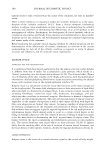
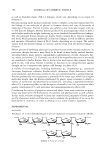
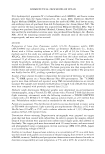
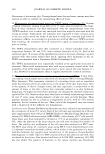
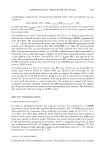
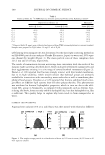
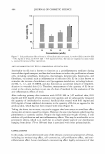
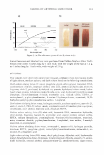
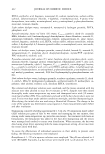
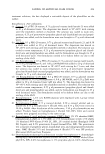
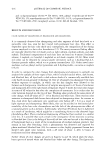
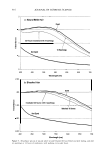
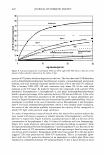
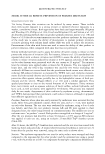
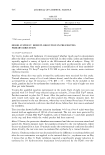
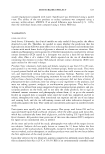
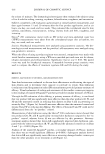
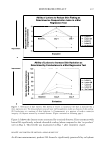
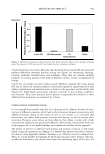
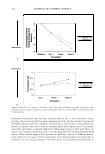
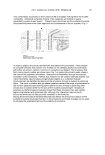
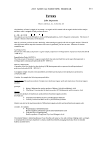
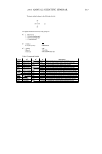
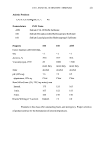
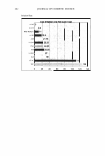
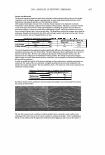
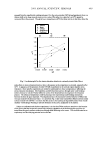
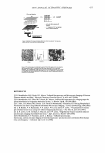
416 JOURNAL OF COSMETIC SCIENCE Cl) u C C'IJ CD u C C'IJ -e 0 Cl) .Cl ct 2�-----------------------------. a: Natural White Hair 32 Hours irradiation with 4 washings 0 +------,-------.----------.---------.----------,--------, 400 450 500 550 Wavelength (nm) 600 650 700 2.00 �------------------------------ b: Bleached Hair Irradiated 32 hours with 4 washings -f 1.00 +-----------------------+---....::,,.,.=---�..-----, 0 Cl) .Cl ct 0.00 -l-------------------------------- 400 450 500 550 Wavelength (nm) 600 650 700 Figure 5. Absorbance spectra of natural white (a) and bleached (b) hair before and after dyeing, and after ten washings or 32 hours of irradiation, with washing every eight hours.

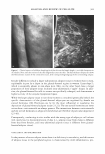
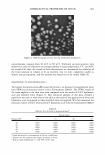
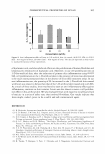
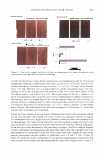
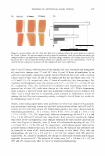
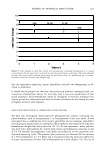
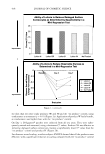
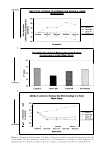
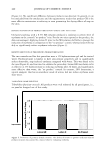
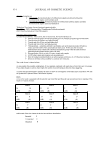
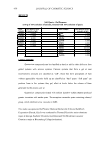
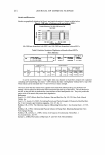
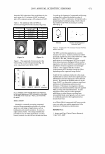
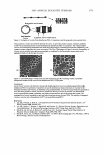
a) Initial FADING OF ARTlflCIAL HAIR COlOR :t6 Ho, s 32 Konn b) I •. ,.,..,, Tol.l,I Cr.lor Clil .. ..,. ■lrnnm.mcrrt, IC,IV111,t111h:a,-w.1ITil:ti 10 12 Fi ure 6. (a) Loss of hair color for •chite hair dyed with a medium auburn dy. and exposed to irradia1ion for 16 and 32 hours. The top-row sample was only exposed to irradiation, while the bottom-row sample was shampooed after every eight hours of irradiation. (b) Color change parameter (dE) for hair shown in (a). The fi�ure also shows the dE values for shampoo cl-only hair (samples placed in the weatherometer, ,1,,·hich , ·as covered and not exposed to radiation) and hair shampool.'d after every eight hours. after 16 and 32 hours, while for areas of the samples chat ·were irradiated and shampooed th mtal color changes wer 7. 3, and 10. 7 aft ,r 16 and 32 hours of irradiation. In an addicional experimen -, mployin .,. another batch of Piedmont hai dyed ,.,,1ith a medium auburn shade of hair color, JE and dC for shampooed but not irradiated areas were 3.6 ± , ).7 and L ± L4, respectivdy, after 32 hours of weatherin • (four shampooing.). :for irradiated and shampooed areas, the changes were 10. ± .7 and 2.7 ± ( .4 for dE and dC, respectively. Thus, the combination of irradiation and shampooing leads to the greate ·c .loss of rnlor (dE), with some change in color shade (c/C). hile shampooing alone produces a relatively small color loss, additional irradiation greatly enhances chis effoct. Sud1 a resul may noc b · surpri .in .,. , since c 'I osure t irradiation i known co damage the I 'ir fiber and increase its po ·osity, makin , the lo· s of larger dye moJecufo by shampooing easier ( 1 7, 18). Finally, coJor fading experiments were performed on white hair treated ,vith pyrazole and pyrnzolnne-concaining intense red and dark auburn shades of hair color (l V and V). lntense red {JV) and dark auburn (V) formulations produce hair color characterized by tristimulus parameters L = 31.2 ± 0.6/a = 30.0 ± 0.2/b = 9.5 ± 0. l and l = 2- .0 ± 1. /a = 7. 7 ± 0.03/b = 7 .0 ± 0.4, re:specrively. After ten shampooings, dB was 4. 7 ± 1.3 and 5.6 ± LO for (IV) and (V) treated hair, respectivdy. Both values are si ·•nificantly higher than those of the corresponding color changes measured for non-pyrazole dyed nacuraJ white hair (l◄igure 4). Similarly, after 32 hours of irradiation/shampooing dE was l .0 ± 2.4 and 16.5 ± 1.3 for (IV) ,nd V), respectively, which shows greater color loss for pyrazole-based permanent hair dyes. In addition to tl1is, the fading of hair coloration can be measured in terms of dC, which m asures a change in color shade. l'hus, after ten shampooings, dC was 1.4 ± 0.5 and 2.1 ± 0.7 for hair treated witl (IV) and (V), respectively. As a result of irradiation, the change in color shade becomes much larger, especially for product OV). The observed dC values were 10.7 ± 0.6 and 3.8 ± 0.5, for (IV) and (V), respectively, after 32 hours of irradiation/shampooing.
Purchased for the exclusive use of nofirst nolast (unknown)
From: SCC Media Library & Resource Center (library.scconline.org)