592 JOURNAL OF COSMETIC SCIENCE ALL THAT GLITTERS IS GOLD Gary Agisim, Richard Kenny, Sara Magee, and Bhalchandra Patel Wyeth Consumer Healthcare In today's highly competitive global economy, the cosmetic chemist is constantly searching for innovative strategies. Green chemistry, focusing on quality products whose composition and manufacture are environmentally friendly, resonates powerfully with the modem consumer as exemplified by Walmart's strong commercial success with "green products" representing manufacturing processes with minimal environmental footprint. There is potential to apply catalysis by gold in numerous commercial applications. Several investigators have now demonstrated that heterogenous gold catalysts, when prepared in an appropriate manner, are highly active and selective for a number reactions, often at lower temperatures than existing commercial catalysts. Despite occasional references in the older literature to the ability of gold to catalyze certain reactions, the metal has until recently had the reputation of being one of the least catalytically useful. The recent discovery that some supported gold catalysts can affect the oxidation of carbon monoxide at or below ambient temperature has, however, focused attention on the metal's ability in this respect. For oxidation of carbon monoxide at low temperature, catalysts comprising small ( 5nm) gold particles supported preferably on an oxide of the first transition series, such as titanium dioxide or alpha-ferrous oxide are needed. Deposition-precipitation and co-precipitation are better methods than impregnation for this purpose and provide the desired intimacy of contact between metal and support. High activity may well originate at sites at the gold-support interface, with the support making a vital contribution. Stable activity can result by optimizing aging in solution during preparation, and low calcination temperatures are generally desired. Gold catalysts also have potential for both selective and nonselective oxidation of hydrocarbon, for methanol synthesis by hydrogenation of carbon monoxide or dioxide, or the water-gas shift, and for the reduction of nitric acid by hydrogen, propene, or carbon dioxide. The remarkable catalytic activity behavior shown by gold depends on forming it into very small particles. This is because the massive metal and large particles cannot chemisorb typical reactant molecules to any useful extent this only occurs when adequate number of low-coordination surface atoms are present, ideally on particles so small that they lack full metallic character. The long neglect of gold as a catalyst is chiefly due to the failure to appreciate the necessity of creating particles sufficiently small and, for oxidations, of selecting a helpful support. Other relevant factors may be the likely high mobility of surface atoms on small particles and the electronegative character of gold, both stemming from the relativistic contraction of the s-electron orbitals. Although a great many different methods for preparing supported metal catalysts are reported in the literature, three predominate: 1) Impregnation of a preformed support with a solution of a salt of the metal in question, followed by drying and reduction: this may be accomplished either just by filling the pores of the support with solution or by suspending the support in a larger volume of solution, from which the solvent is then removed. 2) Exchange of protons or other cations associated with the support for cations of the desired element, followed by washing, drying, and reduction. 3) Co-precipitation of hydroxides or similar precursors to both support and metal, followed by drying, calcinations, and reduction

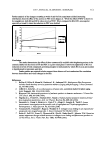
2007 ANNUAL SCIENTIFIC SEMINAR 593 Aromatic amines are generally produced by catalytic hydrogenation of nitro compounds. The reduction of simple nitro compounds is readily carried out with various commercial catalysts, but the selective reduction of a nitro group with H2 when other reducible groups are present in the molecule, is more challenging. Functionalized anilines are industrially important intermediates for pharmaceuticals, cosmetics, polymers, herbicides, and fine chemicals, so there is strong incentive to develop chemoselective catalysts for the reduction of nitro groups. Stoichiometric reducing agents such as sodium hydrosulfite, iron, tin, or zinc in ammonium hydroxide have been successfully used to reduce aromatic nitro compounds containing olefinic bonds. However, these processes are not environmentally sustainable. Cobalt and ruthenium sulfide catalysts can selective convert nitro compounds into amines in the presence of olefinic groups, but the yields are low and sulfur containing by-products are also formed that strongly limit the usefulness of these catalysts. Gold in the form of nanoparticles is an active redox catalyst for oxygen-containing hydrocarbons, such as alcohols and carbonyls, but does not interact with olefinic groups. For reduction, gold can hydrogenate, although at different rates, alkenes, alkynes, imines, and carbonyls in the presence of H2. Gold exhibits some selectivity for hydrogenation of C=O groups of alpha, beta unsaturated alcohols. Because platinum and palladium are not chemoselective catalysts for the reduction of nitro groups, and because olefins and NO2 adsorb differently on Pt and Pd than Au, gold would appear to be a potential candidate for a chemoselective catalyst for the reduction of nitro compounds in the presence of other reducible groups. Two supported gold catalysts (1.5 wt% Au/TiO2 and 4.5 wt% Au/Fe2Q3 ) as well as Pt, Pd, AuPt and AuPt supported catalysts were used for the hydrogenation of 3-nirostyrene with H2 under mild reaction conditions of 9 bar and 120°C. The results showed that only the two supported gold catalysts gave conversions of 98% with 96% selectivity to 3-vinylaniline. The residual product was 3-ethylaniline with only traces hydroxylamine styrene, azostyrene, and azoxystyrene. This is important because accumulated hydroxylamines can undergo exothermic decomposition their toxicity and ability to form colored compounds lead to poorer quality of the desired product. References: 1) Commercial Aspects of Gold Catalysis, Christopher Corti, et al, Applied Catalysis A General, 291 (2005) 253-261 2) Catalysis byGold, Geoffrey Bond, et al, Catal Rev - Sci-Eng 41( 3&4) 319-388 (1999) 3) Chemoselective Hydrogenation of Nitro Compounds with Supported Gold Catalysts Avelino Carma et al, Science, 21 July 2006, vol 313, PP 332-334 4) Biominieralization of Gold: Biofilms on Bacteroform Gold, Frank Reith et al, Science, vol 313, 14 July 2006, 23-236
Purchased for the exclusive use of nofirst nolast (unknown)
From: SCC Media Library & Resource Center (library.scconline.org)