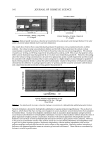
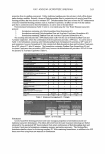
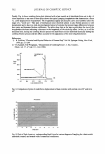
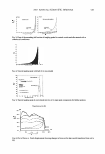
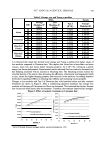
JOURNAL OF COSMETIC SCIENCE used is a combination of hydrogen peroxide and an ammonia alkalizer at a final mixed pH of 10. Importantly, it is also the oxidant that is mainly responsible for the damage to the hair fiber that can lead to the loss of the hair's strength and healthy appearance. The key chemical species that is reported in the literature (4) as responsible for both the lightening and damaging processes of keratin fibers is the perhydroxyl anion. This species is present at pH 10 and above, from the deprotonation of the hydrogen peroxide (equation 1). However, it is also well known in the literature (5) that hydrogen peroxide at high pH is likely to form reactive radical species that would be an alternative source of fiber damage. Hydrogen peroxide can readily decompose in the presence of redox metal ions such as copper and iron to form hydroxyl and perhydroxyl radicals, HO* (equations 2-4). The hydroxyl radical is extremely reactive toward organic substrates, with typical reaction rates being diffusion controlled (k = 109 M- 1 s- 1 ) (6), and would be expected to react with hair if formed. In addition, molecular oxygen can be formed from the decomposition of these radical species (equation 4). It should also be noted that the chemistry is catalytic, i.e., only a small amount of redox metal is required for extensive decomposition of the hydrogen peroxide to occur. H202 � H++ HOO- pKa = 11.6 H202 + Cu2+ ➔ Cu+ + HOO* + H+ H20 2 +Cu+ ➔ Cu2+ + HO- + HO* HOO*+ Cu2+ ➔Cu+ + H+ + 0 2 (1) (2) (3) (4) The objective of this study was to investigate whether free radical generation is present during the coloring process and to measure whether it is a significant contributor to hair fiber damage. A strategy of using chelating agents to prevent this radical chemistry was also investigated. EXPERIMENTAL RADICAL FORMATION MEASUREMENTS Caucasian untreated mixed hair (medium brown), obtained from a commercial source (IHIP, New York), was formed into swatches (16 cm, 1.5 g). The hair swatches were subjected to five repeat coloring cycles with a commercial blonde permanent hair col orant. Between each cycle the hair was washed twelve times in tap water with a commercial clarifying shampoo. The hardness of the tap water was 275-300 ppm calcium ions and 0.1-0.2 ppm copper ions. Metal analyses were carried out using inductively coupled plasma mass spectroscopy (ICP-MS) by AES (Newcastle, UK). The chemiluminescence measurements were carried out on an L-Max microtiter plate luminometer from Molecular Devices, using the Revelations software package. The instrument was set up in the Long Kinetic mode, the kinetic time interval of measure ment was 2.50 min, the total run time was 1000 sec, and the temperature was ambient (auto gain setting). The blank, test, and control set locations were specified on the plate. The area under the curve was calculated by the software used for data analysis. Each test was a replicate of five sets. All test and control readings were blank subtracted. The materials used were Tris buffer saline (pH 7) supplied by Fluka, hydrogen peroxide

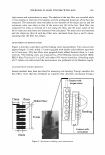
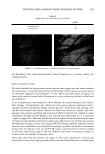
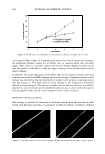
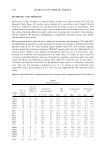
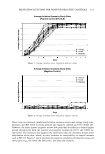
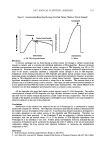
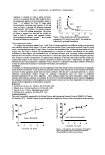
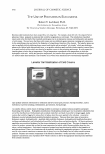
REDUCED HAIR DAMAGE FROM COLORING SYSTEMS 497 solution 3 0 % , and 1-012 ( 8-amino-5-chloro-7-phenylpyrido {3 ,4-d}pyridazine-1,4- ( 2 H, 3 H) dione sodium salt) supplied by Wako Chemicals. All solutions were made in Tris buffer saline (pH 7). The 1012 solution was made by dissolving 5 mg in SO ml of Tris buffer (pH 7). The H 2 O2 solution was made by diluting 2.0 g of peroxide in SO ml of Tris buffer. The samples of the starting substrate and the colored hair were cut up with ceramic scissors into small pieces (4 mg per sample) and placed in the bottom of the wells of the microtiter plate. To visualize the gas formation on the hair fibers, a commercial permanent colorant was mixed and applied to the same hair samples used for the chemiluminescence measurements (4 g/g dose) and left at room temperature. At intervals up to an hour the hair was imaged on a Zeiss Stemi SVII M2Bio stereoscope, using an Olympus MagnaFire 8-bit camera in monochrome mode. DAMAGE MEASUREMENTS A Perkin-Elmer Spectrum® 1 Fourier transform infrared (FTIR) system equipped with a diamond attenuated total internal reflection (ATR) cell was used to measure the surface cysteic acid concentration in human hair. The swatches were plaited (~ 1 plait per cm) in order to minimize variations in the surface area of contact between readings, and four readings per swatch were taken. The second derivative of the absorbance at 1040 cm - l was taken as the relative concentration of cysteic acid after normalization of the spectra to the 1450 cm- 1 protein CH2 stretch peak. This figure was multiplied by -1 x 10- 4 to recast it into suitable units. It was found that untreated human hair produced a value of ~20 cysteic acid units and that heavily oxidized hair produced values of 170 units. A Jeol 5200 scanning electron microscope was used to visually assess the cuticle quality of the fibers. To measure the SEM damage index, at least SO fibers were rated on a four-point scale: 1 = low damage 2 = medium damage 3 = high damage 4 = completely stripped cuticle. The SEM damage index was calculated from ((1 x score = 2) + (3 x score = 3) + (5 x score = 4))/5. Caucasian untreated mixed hair (medium brown), obtained from a commercial source (IHIP, New York), was formed into swatches (16 cm, 1.5 g). The hair swatches were subjected to five repeat coloring cycles with a commercial blonde permanent hair col orant. Between each cycle the hair was washed four times with a commercial clarifying shampoo in controlled water conditions. The flow rate was adjusted to 61/min, the water was dosed with 275-300 ppm water hardness ions (3:1 calcium:magnesium), and optionally, copper ions were dosed in at a controlled rate (typically 1 ppm). RESULTS AND DISCUSSION RADICAL FOMATION ON HAIR The initial experiments were designed to determine whether redox metals are present in hair that has been colored using a permanent level 3 hair colorant and whether metal induced radical formation is occurring during the coloring process. A hair substrate was produced in the laboratory to mimic hair samples from consumers that are using col oring products on a regular basis. Untreated hair was taken through five repeat coloring cycles with 12 shampoo washes in-between.
Purchased for the exclusive use of nofirst nolast (unknown)
From: SCC Media Library & Resource Center (library.scconline.org)