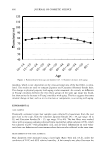
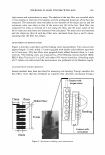
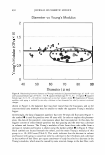
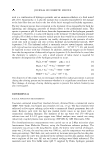
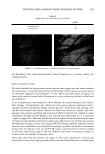
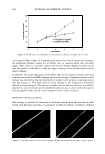
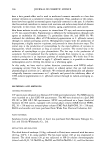
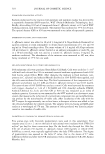
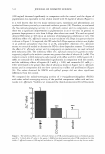
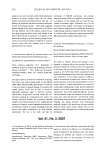
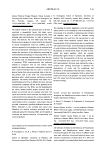
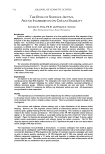
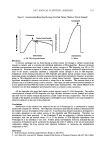
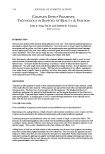
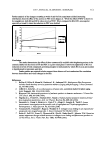
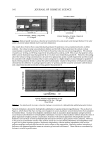
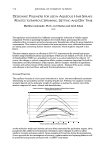
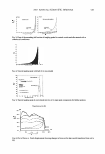
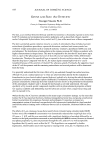
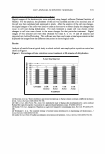
500 JOURNAL OF COSMETIC SCIENCE 120 100 80 ::::, u 60 a: 40 20 0 0 2 3 4 5 6 Cycle Number Figure 2. FT-IR cysteic acid formation in the presence vs absence of copper ions in water. on or near the fiber surface. It is hypothesized that as the level of cysteic acid increases, the additional sulfonate groups act as further sites to complex metal ions including copper. Thus, there is a synergy in that as the level of colorant damage increases, so too does the capacity of the fibers to take up copper, leading to even further metal-induced radical damage. In addition, the cuticle appearance of the fibers after the five repeat coloring cycles plus washing was assessed via SEM (scanning electron microscopy). Significantly more cuticle damage was observed on the hair that had been washed with tap water containing copper ions (see Figure 3). This high level of cuticle damage is not unexpected if hydroxyl radicals are being formed. This species is highly reactive and not selective it would be expected to not only break cystine disulfide bonds but also to react with other species such as peptide bonds critical to the integrity of the cuticle structure. PREVENTION OF RADICAL DAMAGE One strategy to prevent the formation of hydroxyl radicals from the reaction of redox metals with hydrogen peroxide is to introduce an effective chelant. A chelant is defined Figure 3. Left: hair washed in tap water (no copper). Right: hair washed in tap water (1 ppm copper).

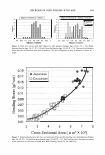
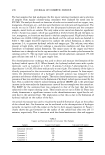
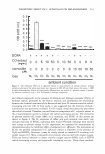
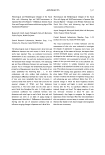
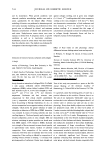
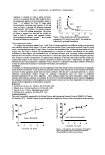
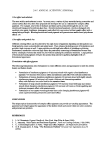
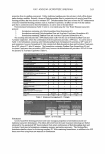
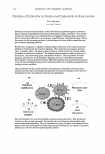
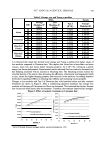
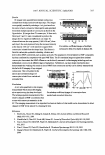
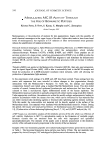
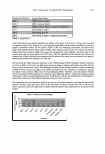
REDUCED HAIR DAMAGE FROM COLORING SYSTEMS 501 ---r� HN H�C � C�H ('" C�H EDDS ( COCH COCH HOOC � N � N) HOOC) EDTA /\t\ / N N H� ) H� HOiC DTPA P03H I N \ CO:zH CO:zH H3C-C-OH P03H HEDP Figure 4. Chemical structures of the four chelants tested. Table III Performance Data for Chelants vs the Cu/Ca Conditional Formation Constant Ratio Chelant (0.05 M) added Ratio of Cu to Ca SEM damage F-IR cysteic to colorant cream conditional formation constant index score acid units No copper control 5.0 100 EDDS 4 X 10 11 6.8 110 DTPA 4.6 X 10⁷ 49.8 147 EDTA 1.6 X 10⁶ 68.6 165 HEDP 7.7 X 10³ 61.0 163 as a molecule that can bind a metal via two or more atoms through either a coordination or ionic bond (13 ). Four commonly used chelants were tested to investigate whether the metal-induced radical chemistry could be prevented on hair. The four chelants (Figure 4) were: N ,N' -ethylenediamine disuccinic acid (EDDS) ethylenediaminetetraacetic acid (EDTA) diethylenetriaminepentaacetate (DTPA) and, l-hydroxyethane-1, 1-diphos phonic acid (HEDP). These four chelants were formulated into a simple emulsion cream at 0.10 M concen tration and mixed with a hydrogen peroxide cream (9% active concentration) in a 1:1 ratio. Five repeat coloring cycles were then performed. At the completion of five cycles, the FT-IR cysteic acid values were measured, the cuticle quality of the fibers was reviewed using SEM, and the semi-quantitative SEM damage index was calculated. The only tested chelant that significantly reduced the fiber damage, and by inference the metal-induced radical formation, was EDDS. We hypothesize that its high efficacy derives from its ability to selectively bind transition metal ions in the high-pH and high-water-hardness ion concentration conditions present during the hair coloring pro cess. To compare the metal binding efficiency of the chelants, the conditional formation constants for each with calcium and copper at pH 10 were calculated. The ratio of the
Purchased for the exclusive use of nofirst nolast (unknown)
From: SCC Media Library & Resource Center (library.scconline.org)