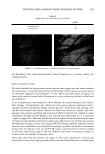
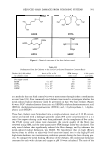
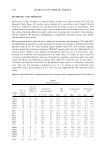
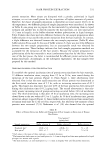
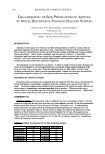
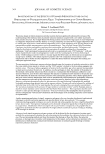
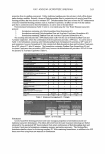
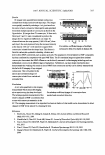
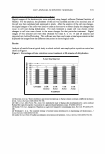
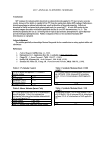
568 JOURNAL OF COSMETIC SCIENCE USE OF FILM-FORMING POLYMERSFOR INCREASED EFFICACY IN SUNSCREENS Jennifer A. Davis1, Doreen Petersen1 and Daniel Li2 'National Starch & Chemical Company, Bridgewater, NJ, USA 2 National Starch & Chemical Company, Shanghai, China It is well established that in order to optimize the efficacy of sunscreens and achieve higher SPF (Sun Protection Factor) values, the sunscreen film must be uniform on the skin as well as water resistant. Additionally, the sun protection market is now filled with a variety of product forms which requires the fihn forming technology to be utilized in a variety of fonnulation types and to be compatible with organic and inorganic UV filters as well as combinations of the two. Most recently, the explosion of alcohol-based aerosol and non-aerosol pwnps and sprays has posed an interesting challenge to formulators trying to waterproof these types of systems. Film-fanning polymers serve as ideal technologies when formulating sunscreens for water and rulHff resistance in both traditional and newer non-traditional products. This paper discusses how the water resistance capability of film-forming polymers is affected in a variety of vehicle types, including water and alcohol-based systems. Performance data including in-vitro and in-vivo SPF testing is given, demonstrating efficacy in emulsions with both organic and inorganic UV actives as well as alcohol-based systems. Of particular interest are combinations of film-forming polymers that show an unexpected boost in SPF. An example of this formulating approach will be descnbcd. Acrylic film-Forming Polymers to Enb nee SPF Water Resistance In addition to waxes and silicones, acrylic film-forming polymers also improve the SPF value 8Dd serve to enhance water and rub-off resistance. These types of polymers, including Acrylates Copolymer and Acrylates/Octylacrylamide Copolymer, have the advantage of forming a uniform film on the skin due to their hydrophobic nature, without an increase in product viscosity or a tacky afterfeel. The hydrophobic moieties on the polymers trap the UV filters into the film matrix upon dry-down. Water resistance performance and SPF enhancement is demonstrated using Aaylates Copolymer and Acrylates/Octylacrylamide Copolymer in a variety of formulation types, with both in-vitro and in-vivo testing methodologies. In-vitro SPF testing was conducted on an alcohol-based system with samples that contained either no film forming polymer or Acrylates/Octylacrylamide Copolymer. Results show that the formulation containing the film-forming polymer achieved higher SPF values, in additionto an increase in the % SPF retained after 80- minute water immersion (Tables 1-2). Ii ,,, ?, •, J fd, ,, If 1, 11 I rm1.l•'1 11 Total I I J • 1 � 1 ', 1, I T ! r 1 IN ! 11o 1,p111• •1 1111,, i 111n11, 48 46 0 10 10 3 6 6 4 4 24 24 100 100 Table 1. Alcohol-Based Formulation Details 11 t'• L.1 •'• ,",,1�•1,,f:�•.•••t.·11,r,1•• ... 1• 8 .1,1 .. '(.1·t•' 1 ,., •1'" r -- .. : �·-, ·:1 �� ,.�� ,,,, • � ,,,,\, ' ,, •••'I �� r : '. • ., �� Table 2. In-vitro Data Results Another example will be presented which describes in-vivo SPF testing performed according to the FDA final monograph for Very Water Resistant sunscreens. Testing was conducted on formulations that contained either no film-forming polymer or Acrylates Copolymer and was perfonncd using five hwnan panelists. Readings were taken before and after an 80-minute immersion in water. The results demonsttate that the formulation containing Acrylates Copolymer offers 97% SPF retention. Enhanced SPF via combinations of Debydro:unthan Gum and Acrylic Film-Forming Polymers Dehydroxanthan Gwn is a heat treated variant of xanthan gum that gives very different performance

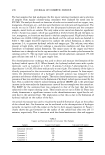
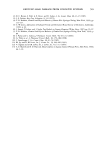
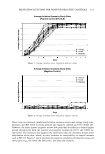
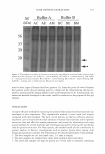
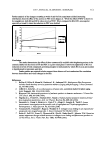
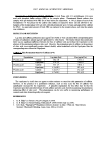
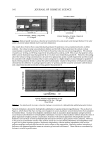
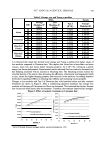
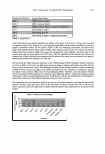
2007 ANNUAL SCIENTIFIC SEMINAR 569 properties from its xanthan gum parent. Unlike traditional xanthan gum, this polymer is both a film-former and a rheology modifier. Recently, the use of Dehydroxanthan Gum in conjunction with acrylic based film forming polymers has been shown to enhance SPF. Dehydroxanthan Gum acts to boost the SPF enhancement of acrylic based film-forming polymers such as Acrylates Copolymer, an effect not seen with the xanthan gum that is commonly used in these formulations, as can be seen in the data below. Three emulsion formulations (Table 3) were in-vivo tested using the Very Water Resistant SWlscreen protocol: 1. formulation containing only Dehydroxanthan Gum (formulation #1) 2. formulation containing Dehydroxanthan Gum and Acrylates Copolymer (formulation #2) 3. formulation containing Xanthan Gum and Acrylates Copolymer (formulation #3) The resulting data indicates that a SPF enhancement exists with the use of Dehydroxanthan Gum and Acrylates Copolymer, where the combination of the two polymers provides a SPF boost. As can be seen in Table 3, the formulation containing only Dehydroxanthan Gum (formulation #1) provides a SPF value of 9 post immersion, however formulation #2, that contains both Dehydroxanthan Gum and Acrylates Copolymer, has a SPF value of 27 after 80 minutes. The formulation containing Xanthan Gum (formulation #3) and Acrylates Copolymer does not exhibit a SPF boost, however the formulation still provides a SPF of 19 from the presence of Acrylates Copolymer (Table 4 ). tn,vtvo 1'�ed Em1.1tslon PolfflUlatkn fl t 2 �11,ranlhan Ott1V!fro:uwfw1 Gum and Ac:,yl.iln IWCiD.8� :G.umoni.v Copo!)'mff Phase A lsohexadecane 1.5 1.5 C12-15 Alkvl Benzoate 3 3 Cvclooentasiloxane 2.25 2.25 Sorbitan Stearate 1 1 Glvcervl Stearate and PEG-100 Stearate 2 2 Octocrvlene 2 2 Ethvlhexvl Methoxvcinnamate 7.5 7.5 Benzoohenone-3 3 3 Zinc Oxide and C12-15 Alkyl Benzoate and Polvhvdroxvstearic Acid 6 6 Phase B Water 58.65 54.25 Dehvdroxanthan Gum 0.5 0.5 Xanthan Gum o o Acrvlates Cooolvmer o 4.4 Glvcerin 3 3 Titanium Dioxide and Alumina and Silica and Sodium Polvacrvlate 7 7 Phase C Com Starch Modified 2 2 DMDM Hydantoin and lodopropynyl Butvlcarbamate 0.6 0.6 Citric Acid as to oH 7 as tooH7 Total 100 100 Table 3. Emulsion Formulation #1-3 Details Table 4. In-vivo Data Conclusion 3 ,'{llfltllan oum a,,d A�!)'!�� Co�nwr 1.5 3 2.25 1 2 2 7.5 3 6 54 25 0 0.5 4.4 3 7 2 0.6 as tooH7 100 Acrylic-based film-forming polymers lend water resistance properties to both traditional and non traditional sunscreen formulations. The effects delivered from the water resistance technology are further enhanced by the unexpected SPF boost produced from select combinations of Dehydroxanthan Gum and Acrylates Copolymer in formulations containing inorganic particulate sunscreens. This finding offers formulators another choice for thickening inorganic UV filter-containing formulations, in addition to the SPF boost seen when using these raw materials in combination.
Purchased for the exclusive use of nofirst nolast (unknown)
From: SCC Media Library & Resource Center (library.scconline.org)