]. Cosmet. Sci. J 56, 395-406 (November/December 2005) Cosmeceutical properties of levan produced by Zymomonas mobilis KI HO KIM, CHAN BOK CHUNG, YOUNG HEUI KIM, Kl SOO KIM, CHANG SUNG HAN, and CHUL HO KIM, R&D Center, Bioland Ltd., Cheonan 330-863, Korea (K.H.K., C.B.C.J Y.H.K., K.S.K., C.S.H.), and Metabolic Engineering Research Laboratory, KRIBBJ Taejon 305-333J Korea (C.H.K.). Accepted for publication July 18, 2005. Synopsis Levan, a polysaccharide that can be produced by both plants and microorganisms, is a sugar polymer composed of fructose, with [)-2,6 linkages. Here, we have attempted to assess the possible use of levan produced by Zymomonas mobilis as a cosmeceutical ingredient. In service of this goal, we assessed a host of levan's properties, including its moisturizing effects, cell cytotoxicity, cell proliferation effects, and anti inflammation effects. Levan exhibited a moisturizing effect that was almost exactly the same as that evidenced by hyaluronic acid, as well as a similar cell proliferation effect in human fibroblast and keratinocyte cell lines. Moreover, in our cell proliferation test, which was conducted using bio-artificial skin constructed via 3-dimensional (3-D) culture after the induction of primary skin inflammation with 0.05% sodium lauryl sulfate (SLS), cell viability in the presence of levan (0.01 mg/ml, 0.05 mg/ml) was determined to be higher than cell viability in the absence of levan. In our anti-inflammation test, which was also conducted using 3-D artificial skin, and which involved the measurement of a quantity of secreted interleukin-la (IL-lex), a pre-inflammatory mediator induced by SLS, we determined that the quantity of IL-la in the 3-D artificial skin treated with 0.01 mg/ml and 0.05 mg/ml of levan was less than that registered in a skin sample that had been treated only with SLS. In this study, we determined that levan exerted an anti-inflammatory effect against inflam matory reactions to skin irritants, and also that levan exerted a cell-proliferative effect in bio-artificial skin, thereby indicating its potential applicability as a cosmeceutical agent. INTRODUCTION Polysaccharides that exist in nature can be divided into structural carbohydrates and non-structural carbohydrates. Cellulose, xyloglucan, pectin, etc. are designated as struc tural carbohydrates. Sucrose, starch, and fructan are considered non-structural carbohy drates. The best-known non-structural carbohydrate is starch, which consists either of amylase, with a-1,4 glucose linkages, or of amylopectin, with a-1,6 glucose linkages. Fructan, which is normally isolated from plants under natural conditions, or produced by microorganisms, is a non-structural carbohydrate containing r?,-2,6 fructose linkages 395

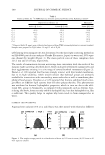
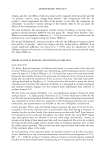
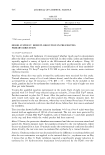
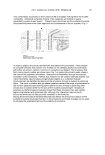
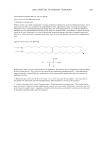
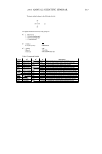
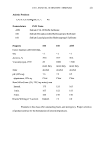
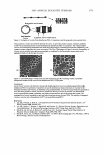
396 JOURNAL OF COSMETIC SCIENCE as well as branched chains of f3-2,l linkages, which vary depending on its origin (1) (Scheme 1). Fructan existing under natural conditions tends to exhibit a structure characterized by the linkage of one molecule of glucose to between dozens and tens of thousands of molecules of fructose. Fructan in plants also exhibits a low molecular weight, with up to 200 fructose linkages, whereas fructan produced by microorganisms tends to have a much higher molecular weight, harboring up to one hundred thousand fructose linkages. The two principal fructan variants are inulin, which contains f3-2,l fructose linkages, and levan, which primarily harbors f3-2,6 fructose linkages as well as different patterns and amounts of branched chains of f3-2,l bonds, depending on its origin. The inulin variant with the shortest linkage is 1-ketose, and the levan with the shortest linkage is 6-ketose. Fifteen percent of flowering plant species produce fructan under natural conditions. In particular, though, fructan is most likely to be found in more highly evolved families, including liliales, poals, astrales, campanulales, palemoniaceae, ericales, dipsacales, bar ley, wheat, and onions (2,3). Currently, one third of the vegetables that exist in the world are considered to harbor fructan. Due to the fact that most species that generate fructan grow in dry, cold areas, fructan is known to function as an osmoprotectant against drought and as a cryoprotectant against cold damage in plants (4,5). A variety of microorganisms, including Pseudomonas sp., Xanthomonas sp., Azotobacter chroococum, Streptococcus salivarius, Bacillus subtilis, Actinomyces, Rothis dentocariosa, Arthro bacter ureafaciens, and Zymomonas mobilis (6-14), are currently known to generate fructan. Fructan generated by microorganisms is primarily of the levan type, which has a higher molecular weight than the fructan synthesized by plants. Levan is known to exhibit a variety of nutritional and pharmaceutical functions, including a hypocholesterolemic effect (15), a promoting effect on the absorption of metallic ions (16), a preventive effect against constipation (17), and antitumor and immunomodulatory effects (18). Considering the variety of properties mentioned above, levan may constitute an appro priate raw material for the formulation of cosmetics and pharmaceutics as well as foods. In this study, we have attempted to assess the cosmeceutical properties of levan gener ated by Zymomonas mobilis and have also tried to evaluate the possibility of its use in the formulation of cosmetics, in order to develop it as a novel cosmetic ingredient. EXPERIMENT AL MATERIALS Purchases of 3-(4,5-dimethylthiazol-2-yl)-2,5-diphenyl tetrazolium bromide (MTT), Scheme 1. Structure of levan.
Purchased for the exclusive use of nofirst nolast (unknown)
From: SCC Media Library & Resource Center (library.scconline.org)