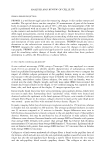
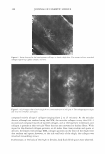
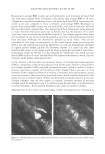
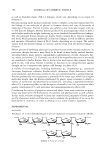
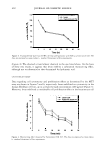
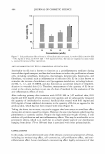
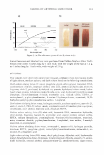
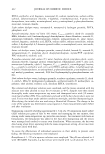
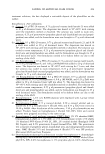
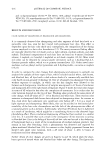
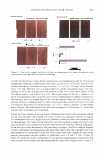
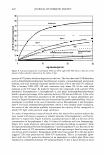
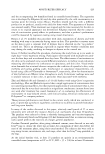
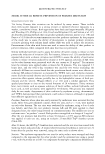
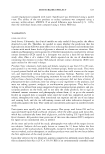
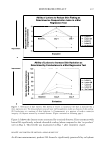
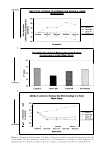
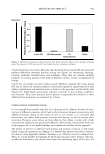
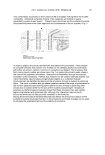
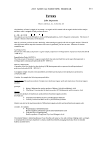
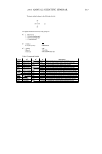
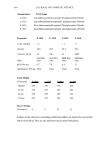
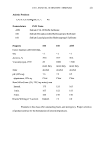
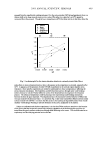
FADING OF ARTIFICIAL HAIR COLOR 421 10 9 8 ) 15% 26.2% 21.3% Cl) 7 34% ca 6 ('\ (J ... 5 (J 4 3 2 1 0 I I I I 0 1 2 3 4 5 %Benz-3 Figure 9. Color changes in dyed hair treated with formulations containing benzophenone-3 at various concentrations. Percent protection is indicated for each data point shown in the figure. Data were obtained for white hair tinted with a medium auburn hair dye and treated with a 0.5 formulation per 1 g of hair. Irradiation time was 16 hours (two shampooings). that the experiment employing organic photofilters included two shampooings in ad dition to irradiation. It should also be pointed out that hair-color protection products containing high con centrations of photofilters (above 5% w/w) may lead to excessive modification of hair tactile properties. Such formulations cannot be designated as everyday treatments but only as special-use, color-protection leave-in lotions or fixatives for use during the time of highest-intensity solar exposure. HAIR COLOR PROTECTION BY A COMBINATION OF PHOTO FILTERS We have also investigated multicomponent photoprotection systems containing two photo-absorbers, such as benzophenone-3 or benzophenone-4 and zinc oxide. It was anticipated that a combination of an organic photofilter and an inorganic photofilter/ scattering agent might result in a synergistic effect similar to that reported for sunscreen formulations designed for skin protection (20-22). In one experiment, white yak hair was dyed with a light auburn dye, treated with a leave-on formulation containing a total of 3% UV absorber (benzophenone-3 and ZnO), and subjected to two eight-hour irra diation/shampooing cycles. The greatest color protection was observed for the mixture of 1.5% benzophenone-3-1.5% ZnO, and it was greater than the protection offered by an equal concentration of either ZnO or Benzophenone-3 alone (Figure 1 la). The use of

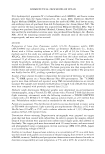
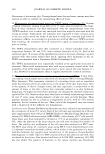
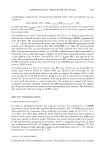
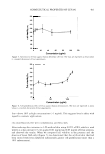
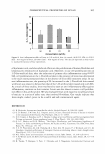
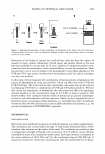
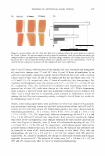
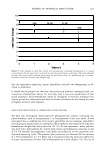
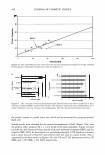
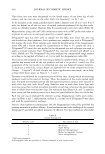
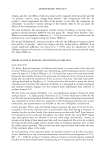
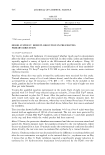
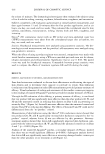
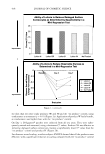
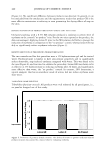
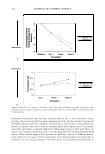
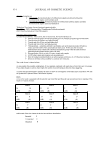
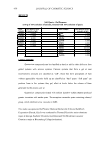
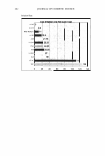
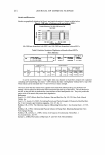
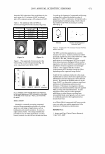
422 JOURNAL OF COSMETIC SCIENCE 60 a. 40 u � 0 20 %UV Absorbed Figure 10. The relationship between color protection and the calculated percentage of UV light absorbed by formulations containing benzophenone-3 and benzophenone-4. a Surfactant Only I 3%Zn0llde 23% Protection J 1 5% Benz-3, 1.5% ,I'! ZnOxlde --� - �� - ---r 3" eenz.3 17% Protection Total Color Change b 3'!1,0MC 1.5% ZnO, 1.5% OMC J 3'lfl Benz-4 j 1.5% ZnO, 1.5'lfl Benz-4 3'1f1Zn0 No Fonnulation 4 Tolal Color Cha-(cE) Figure 11. Hair color protection by (a) benzophenone and ZnO (micronized) and (b) benzophenone-4, octyl methoxy cinnamate (OMC), and ZnO (micronized). The treatment amount was 0.5 g of formulation per 1 g hair. Irradiation time was 16 hours (two shampooings). Yak hair was dyed with auburn hair color. the product results in a small luster loss, which can be minimized by using micronized ZnO (23). Similar results were obtained for the system benzophenone-4-ZnO (Figure 11 b), with the greatest effect produced by a 1:1 w/w blend of the photo-absorbers. Figure 116 also includes the data obtained for hair treated with octyl methoxy cinnamate (OMC) and the mixture OMC-ZnO. As mentioned in a preceding paragraph, UVB absorbers attenuate only a small fraction of total UV and prevent color loss only to a small extent. This is supported by the data shown in Figure 116, with 3% and 7.9% photoprotection by 3% OMC and 1.5% OMC-1.5% ZnO, respectively.
Purchased for the exclusive use of nofirst nolast (unknown)
From: SCC Media Library & Resource Center (library.scconline.org)