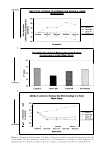
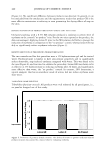
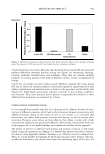
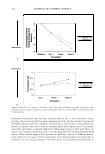
448 JOURNAL OF COSMETIC SCIENCE N-Palmitoyl-4-Hydroxy-L-Proline Palmityl Ester: A Pseudoceramide that Provides Efficient Skin Barrier Repair and Protection Gabriele Vielhaber, Sabine Lange, Jakob Ley and Oskar Koch Symrise GmbH & Co KG, D-37603 Holzminden, Germany Ceramides are the main constituents of the ep idermal permeability barrier, and it has been demonstrated that the application of ceramide enriched creams promotes ep idermal barrier repair. However, nature-identical ceramides are extremely expensive and difficult to formulate. We therefore developed a new pseudoceramide, N-palmitoyl-4-hydroxy-L pr oline palmityl ester (810391). Due to its low melting point of D 60°C the pseudoceramide Bl0391 can easily be incorporated into cosmetic formulations. In addition, it is very safe for use in cosmetics. The efficacy of the pseudoceramide BI0391 was investigated in vivo in a model for detergent induced barrier disruption. Trans-epidermal water loss, redness, and skin hydration were recorded before and after barrier disruption as well as during the subsequent 9-day treatment with the test pr oducts. Barrier repair of skin treated with the pseudoceramide B1O391 was accomplished earlier than that of untreated and vehicle treated skin. Optimum barrier repair was achieved with 1.0% pseudoceramide BI0391 and optimum erythema reduction with 0.5% pseudoceramide BI039 l. The optimum dosage could be reduced to 0.1 % pseudo-ceramide by synergistic combination with 0.1% (-)-0-bisabolol. In addition, the pseudoceramide B1O391 pr oved to be as effective as nature-identical ceramides 2 and 3. In summary, N-palmitoyl-4-hydroxy-L pr oline palmityl ester is a highly efficient barrier repair agent with efficacy equivalent to that of nature-identical ceramides, and it has excellent formulation pr operties. Production of the Tissue Inhibitor of Metalloproteinase-2 (TIMP-2) and Evaluation of Its Potential as Anti-Aging Active Rolf Schiltz, Beatrice Konig, Beat Hochstrasser, Patrick Stolz, Dominik Imfeld Pentapharm Ltd, Department of Biotechnology, Engelgasse 109, CH-4002 Basel, Switzerland Collagen-degrading matrix metalloproteinases (MMPs) show increased activities pr edominantly in W-irradiated skin as well as in chronologically aged skin. MMPs are therefore reasoned to be associated with the degenerative alterations in the collagenous dermal extracellular matrix, which in tum may accelerate the signs of skin aging such as wrinkle formation and skin sagging. In normal physiological pr ocesses MMP activity is controlled by the endogenous tissue inhibitors of metalloproteinases (TIMPs). Here we report the biotechnological production of the human-identical inhibitor TIMP-2 and its evaluation as an anti-aging active through attenuation of the degenerative MMP activity. The recombinant TIMP-2 polypeptide selectively inhibited MMPs in vitro which are involved in aging pr ocesses and showed efficient IC50 values in the low nanomolar range. Topical application of formulated TIMP-2 on skin explants with subsequent UVB irradiation (2-3 MED) resulted in an almost quantitative protection against collagen degradation. Thus, our biotechnological pr oduction of TIMP-2 leads to the active broad-spectrum MMP inhibitor that reduces excessive MMP activity and thereby presCIVes the structural integrity of collagen network. Optical Properties of Skin Gloss and Development of a »Mizumizushii« Look Makeup Foundation Hirochika Nishimura, Yutaka Takasuka, Megumi Yamamoto POLA Chemical Industries, Inc , 27-1 Takashimadai, Kanagawa-ku, Yokohama 221-0833 Japan In Japan, the term »mizurnizushii« is used to describe a quality of »beauty«. We studied »apparently mizumizushii looking skin« and tried to develop makeup products that »make the skin look rnizumizushii« which is one of the characteristics of beauty. To accomplish this what constitutes »mizumizushii-looking skin« and »non mizumizushii-looking skin« first had to be defined. Hence, sensory evaluations were performed on 100 women. The results showed that these panelists could be classified into two groups: 25 women »having mizumizushii-looking skin« and 75 women »having skin without a rnizumizushii look«. Further, it was revealed that the »skin without a rnizumizushii look« could be classified into two groups, those with dry-looking skin and those with excessively oily-looking skin. We then succeeded in qualitatively classifying the appearance of the skin of these three groups on the basis of the difference in a value obtained for optical properties analyzed under specified conditions. Moreover, results of studies on possible qualitative classification of these groups using Zl, the newly discovered optical parameter for optical properties of the skin, showed an apparent relationship with the surface morphology (homogeneity on a micron scale). Based on the findings on the optical properties of »mizumizushii-looking skin«, we designed a makeup film imparting the »mizumizushii look«, which in turn led to the development a »rnizumizushii look« makeup foundation. Development of a Novel Oxidative Hair Color Based on a System with an Optimized Ratio of Higher Alcohol to Cationic Surfactant Takahiro Yamashita, Masatoshi Ochiai, Kazuya Shibata, Masaaki Yasuda, and Akira Noda Shiseido Research Center, 2-2-1 Hayabuchi, Tsuzuki-ku, Yokohama 224-8558, Japan Oxidative hair color, the most commonly used for coloring hair, is characterized by its bleaching effect. This effect enables dark hair to be dyed in various bright colors. In order to enhance this bleaching effect, the concentration of either the alkalizing or oxidizing agent in the hair color base is generally increased. However, this method causes chemical damage to the hair. With the aim of finding methods to obtain an improved bleaching effect without increasing the amount of bleaching ingredients, the authors investigated the permeation mechanism. Cationic bases showed the highest bleaching effect and allowed greater penetration, permitting bleaching ingredients to enter the cortex of the hair more easily and diffuse more quickly. In addition, the molar ratios of higher alcohol (A) to cationic surfactant (C) as a function of the bleaching effect were also evaluated. The results showed an optimum range for this A/C ratio. The smoothness of the hair was also evaluated, revealing an optimum range for the A/C ratio. Based on these findings, a product with an A/C ratio that maximizes the bleaching effect and the smoothness of the hair was successfully developed. Comparison of this newly developed product with a conventional product verified that the new pr oduct has a greater bleaching effect and gives a beautiful depth of color while maintaining the silky smoothness of the texture of the hair.

J. Cosmet. Sci., 56, 449-479 (November/December 2005) Papers Presented at the Annual Scientific Seminar of the Society of Cosmetic Chemists (Friday's Program) June 2-3, 2005 Mandalay Bay Resort Las Vegas, Nevada 449
Purchased for the exclusive use of nofirst nolast (unknown)
From: SCC Media Library & Resource Center (library.scconline.org)