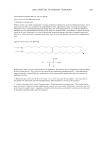
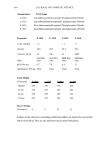
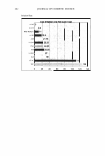
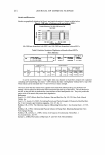
446 JOURNAL OF COSMETIC SCIENCE importance for a deeper understanding of skin aging as a whole, the process of intrinsic skin aging in particular has barely been investigated. In this study, the molecular changes of intrinsic skin aging were analyzed by applying 'Serial Analysis of Gene Expression' (SAGETM) to skin biopsies of young and aged donors. The analysis resulted in several hundred differentially expressed genes with varying statistical significance. Of these, several genes were identified that either have never been described in skin aging before ( e.g. APP) or have no identified function, e.g. EST sequences. This is the first time that intrinsic skin aging has been analyzed in such a comprehensive manner, offering a new and partially unexpected set of target genes that have to be analyzed in more detail in terms of their contribution to the skin aging process. New anti-RNS and -RCS products for cosmetic treatment A new method to evaluate lower eyelid sag using three-dimensional image analysis Y. Fukuda, T. Fujimura, S. Moriwaki and T. Kitahara Biological Science Laboratories, Kao Corporation, Tochigi, Japan Lower eyelid sags as well as wrinkles represent age related morphological changes of the skin surface. However, a quantitative method to evaluate lower eyelid sagging has not been previously established. We designed a new quantitative evaluation method that uses non-invasive skin scanning, which is based on the difference between the superficial dimension of the sagging surface of the lower eyelid and the dimension of its projection area. In 97 females, 2-D and the 3-D images were taken. By 3-D image analysis, the difference between the superficial dimension of the sagging surface of the lower eyelid and the dimension of its virtual projection area was assessed, and was defined as the sag parameter. This parameter was significantly correlated with the sag score ( a photographic scale to assess the degree of sagging) and with aging. The accuracy of the sag parameter was confirmed in a clinical test using a sag treatment lotion and a placebo lotion. The sag score decreased in skin treated with the sag treatment lotion, but the change was not significantly different from that of the placebo treated skin. On the contrary, the sag parameter was significantly reduced (P 0.05) after topical application of the sag treatment lotion compared with the placebotreated skin. These results indicate that the sag parameter as proposed herein is useful in clinical studies to evaluate slight changes in lower eyelid sagging. Quantification of dandruff adherence to hair C. Pierard-Franchimont, E. Uhoda and G. E. Pierard Department of Dermatopathology, University Hospital Sart Tilman, B-4000 Liege, Belgium Dandruff adherence to hair shafts is a visible annoying phenomenon. The aspect can be recorded by different means including the ultraviolet light-enhanced visualization (ULEV) method and microscopy. We present another quantitative method. Hairs were clipped from the parietal scalp area of 25 volunteers complaining of dandruff. They were firmly applied onto cyanoacrylate-coated microscopic slides. Hairs were lifted up after 15-20 s leaving a cast in the adhesive coat. Dandruff were thus harvested from the hair shafts and remained attached to the cyanoacrylate coat. After staining, the material was submitted to image analysis to derive the dandruff density per unit length of hairs. In 11/25 subjects, a correlation was found between the width of the hair casts and the dandruff density. This method does not collect all dandruff along hair shafts, but data are likely representative of the whole comeocyte load.

J. Cosrnet. Sci., 56, 447-448 (November/December 2005) Abstracts IFSCC Magazine Vol. 8, No. 3, 2005* Membrane Structured Solid Nanoparticles - A Novel Nanotechnology for Delivery of Cosmetic Active Ingredients Gerd H. Dahms Institute for Applied Colloid Technology, Koopmannstrasse 59A, D-47138 Duisburg, Germany Lipid nanoparticles have a structure similar to that of nanoemulsions. Their size ranges typically from 50 to 1000 nm. They differ from nanoemulsions in that the lipid core is a solid. The matrix consists of solid lipids or mixtures of lipids. Over the past years it has been demonstrated that solid lipid nanoparticles appear to be a promising drug carrier system for the future. Their occlusion properties reduce transepidermal water loss and can enhance penetration of active ingredients through the stratum comeum. As with all new technologies, some problems with the solid lipid nanoparticle technology need to be solved. One major problem is the homogeneous incotporation of amphiphilic active ingredients into the crystal matrix of the nanoparticles. Actives with an amphiphilic character like tocopherol or retinol cannot be kept homogeneously distributed in the wax structure during the emulsification process. Due to their hydrophilic head group they accumulate at the exterior layer of the nanoparticles together with the surfactant system used. Consequently, homogeneous release over time is not guaranteed and a burst release has to be expected. A second disadvantage is the manufacturing process. Solid lipid nanoparticles can be produced only under high pressure conditions. Also the concentration of the solid particles in the dispersion, which is added to an emulsion, is quite low. To overcome these problems membrane structured solid nanoparticles (MSSN) have been developed. These MSSN systems consist of liquid crystalline membrane systems with extremely low surfactant concentrations. The lateral movement of actives is controlled by amphiphilic solid actives such as ceramides and solid emollients. This guarantees maintenance of the advantageous properties of solid lipid nanoparticles such as retarded release of actives and their protection against chemical decomposition, but it also allows the homogeneous incoiporation of amphiphilic actives. Membrane structured solid nanoparticles are produced using a continuous three-phase emulsification technique. This allows protection of heat-sensitive actives against decomposition. The concentration of nanoparticles in the MSSN dispersion can be kept higher than 60% (w/w). Even at these concentrations the nanodispersions keep their flow properties. As a result, they can be easily incotporated into the final formulation. A National Web-Based Survey of Sunscreen Products as a Tool for Industry Self-Regulation, Consumer Awareness Campaigns and Marketing Beverley Summers 1, Rob S. Summers 1, and Esme Muller 2 1 Photobiology Laboratory, School of Pharmacy, Box 2 18, Medical University of Southern Africa, PO Medunsa 0204, South Africa (now Medunsa Campus, University of Limpopo) 2 SurveyIT, PO Box 179, Newlands, Pretoria 0049, South Africa The objective of the work was to test a web-based tool in the collection and presentation of data for our regular sunscreen surveys and to develop, test and conduct a web-based survey of sunscreen products, with instant data reporting. After the Photobiology Laboratory at MEDUNSA was approached by SurveylT to pilot a new web-based data collection and reporting tool, companies were contacted via e-mail and invited to visit a secure web-based site to complete the provided questionnaire. Data collection and processing were greatly simplified by the new approach. The survey gleaned responses from 18 companies on 31 brands with a total of 110 primary sunscreen products. The data revealed a reduction in the number of companies marketing sunscreens in South Africa compared with the previous year, despite an increase in the volume of sunscreen sales. Ninety-eight percent of the products were claimed to be in vivo SPF tested. Fifty-seven percent of the products had undergone in vitro SPF testing for determination of their UV A protection. Fifty one percent of the products were claimed to be water resistant. Octyl methoxycinnamate was the most popular UV filter (88% of products), followed by benzophenone-3 (60%). Butyl methoxydibenzoylmethane was in 52% of the products and suiprisingly only 2 9% of the products contained titanium dioxide. The major conclusions are that the data collection tool was a success and that sunscreens are becoming more widely used and more thoroughly tested in South Africa. * These abstracts appear as they were originally published. They have not been edited by the Journal of Cosmetic Science. 447
Purchased for the exclusive use of nofirst nolast (unknown)
From: SCC Media Library & Resource Center (library.scconline.org)