452 JOURNAL OF COSMETIC SCIENCE AMPHOTERIC SURFACTANTS Euen Gunn Rhodia Amphoteric surfactants have been used by the cosmetic industry for now more than forty years. Amphoteric surfactants based on carboxymethylation of coconut irnidazolines or coconut amidoarnines are now well established as extremely mild surfactants (American College of toxicology, 1990). They are widely used in mild, tear free shampoos and sensitive skin cleansers due to their favorable surfactant properties, low irritation profile, and irritation mollifying properties known as detoxification (A.LL Hunting, 1985 G. Panzer, 1980). But over the past few years due to a reRewed interest in the fundamental properties of amphoteric surfactants, extensive research effort now shows that there is more functional attributes besides their intrinsic properties. Byproducts which used to be considered as impurities have been shown to play an extensive role in controlling foaming and rheological behaviour of cosmetic formulations. The product composition can then be tuned to provide tailorrnade performances. But this is in the field of surfactant I surfactant interactions and their interactions with polymers that the most existing insights have been discovered. In formulations containing conditioning polymers, mostly cationic polymers, what were previously identified as incompatibility areas in the phase diagram can now be turned into a powerful way for optimizing the delivery of a given attribute. Precipitation of the surfactant / polymer complex can be controlled through several features such as chemical nature of the surfactants, electrolyte content, nature of the counterions, electrostatic balance of the polymer, hydrophobicity of the polymer, ... This paper will present key features of amphoteric surfactants and how controlled interactions with cationic polymers can be tuned into a powerful delivery system.

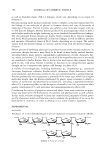
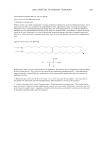
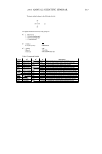
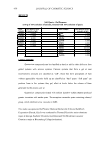
2005 ANNUAL SCIENTIFIC SEMINAR 453 ESTERS John Imperante Phoenix Chemical, Inc., Somerville, NJ The chemistry of esters is simple in its concept. An organic acid is reacted with an organic alcohol with a catalyst and heat, water is stripped off and you have an ester. R-OH+RCOOH The catalyst can vary from (Phosphoric Acid and (Hypophosphorous Acid to Organotin compounds). The choice of catalyst is based on the kinetics of the reaction. How do you know you have an ester? Basically, when reacting an organic acid with an organic alcohol, if the acid value decreases and the sap value increases while water is generated, you have an ester. Measures of reaction completion are: Acid Value (AV): The amount of free fatty acid present in a given sample, expressed in milliequivalents of potassium hydroxide (KOH -MW 56.1) Saponification Value (SAP NO.): The total amount of fat present in a given sample (both free and esterified) that can be saponified expressed in milliequivalents of potassium hydroxide (KOH -MW 56. l) Hydroxyl Value (OH): A measure of the free alcohol or other hydroxyl (OH) bearing materials as expressed in milliequivalents of potassium hydroxide (KOH -MW 56.1) It all appears simple, however, ester possibilities are infinite and in practice, ester production can become a complicated affair. Consider, for example the following ester possibilities. Simple Esters/ The reaction products of simple mono functional organic acids and simple mono functional organic alcohols: Example: ► Behenyl Behenate the reaction product of Behenyl Alcohol and Behenic Acid ► Ethylhenxyl Isononanoate, the reaction product ofEthylhexanoate and Isononanoic Acid Diesters The reaction products of dicarboxylic acids and mono functional organic alcohols. Examples are: ► ► lsopropanol and Sebacic Acid to yield Diisopropyl Sebacate Isostearyl Alcohol and Malic Acid to yield Dissosteryl Malate Diesters can also be the reaction products of difunctional organic alcohols and monofunctional organic acids. Consider, for example: ► Neopentylglycol Diethylhexanoate Reaction product ofNeopentyl glycol and 2-Ethylhexanoic acid ► Propylene Glycol Dipelargonate Reaction product of Proplylene Glycol and Pelarganic Acid Diisostearyl Malate is interesting because if you drive the acid value too low and continue stripping water, you begin to strip water from the malic backbone to create a double bond thereby changing the product from its intended hydroxy acid derivative.
Purchased for the exclusive use of nofirst nolast (unknown)
From: SCC Media Library & Resource Center (library.scconline.org)