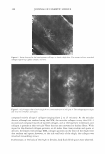
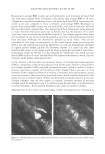
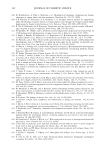
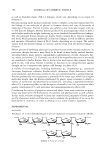
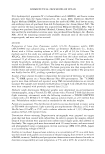
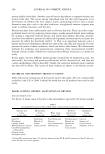
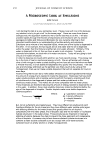
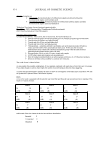
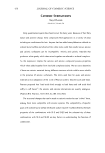
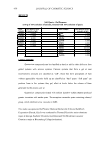
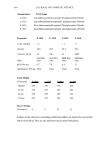
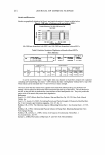
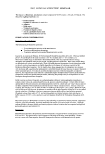
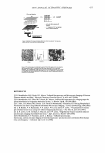
454 Triesters Examples are: JOURNAL OF COSMETIC SCIENCE ► Triisostearin the reaction product of a trifunctional organic alcohol and a Glycerine monofunctional organic acid (isostearic acid) ► Trioctyldodecyl Citrate, the reaction product of a trifunctional carboxy organic acid and a monofunctional organic acid (octyl dodecanol) Triethylene Glycol ester of mono functional organic alcohols Mixed Esters (INCI: Dipentaerythrityl Tetrabehenate/Polyhydroxystearate) (INCi: Bis(Trioctyldodecyl Citryl) Dilinoleate)) Polymeric and Complex Esters Consider the possibilities. These can be, but not exclusively, the reaction/products of: ► Diacids and diols (Adipic acid and propylene glycol to yield poly propylene glycol Dilinoleate ► Diacids and triols (Sebacic acid and glycerine) ► Triacids and diols (Citric acid and butane diol) ► Triacids and triols (Citric acid and glycerine) ► Homopolymers,,sometimes referred to as Estalids, such as the reaction product of hydroxy stearic acid with itself to form, poly hydroxyl stearic acid. IN this case, the monomer, hydroxystearic acid, contain both a hydroxyl and carboxy group within the same molecule permitting hydroxystearic acid to react with itself. ► Homopolymers of diols or triols EO esters, simple and complex ► EO/PO esters simple and complex such as polyglycerol ► Ester of residual or pendant hydroxy or carboxy groups with mono, di, or Tri functional products. ► Esters are limitless in the possibility to construct new molecules. The world of ester is indeed infinite. As one ponders the possible combinations of raw materials combined with each class of ester there are 144 groups. If you make changes to carbon chain length, the number of possible products becomes truly staggering. A system has been developed to classify the esters to allow for investigation of the many types of products. We call the system PECS (Phoenix Ester Classification System). PECS A two letter code is assigned with the alcohol type listed first and the acid type second (just like in naming). This results in 9 classes of esters. Class I Class 4 M M D M (OH) (H) (OH) (H) Class 2 Class 5 M D D D (OH) (H) (OH) (H) Class 3 Class 6 M p D p (OH) (H) (OH) (H) Within each of the nine classes the alcohol and acids are described as: Saturated S Unsaturated U Branched B Class 7 p M (OH) (H) Class 8 p D (OH) (H) Class 9 p p (OH) (H)

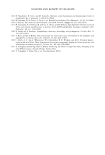
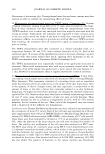
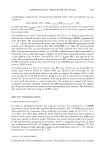
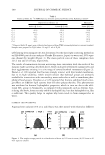
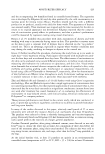
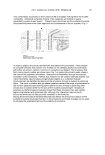
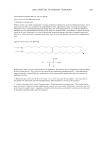
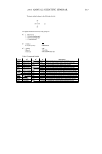
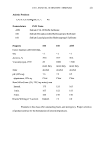
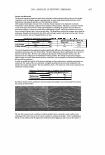
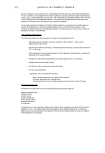
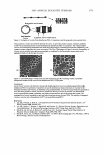
2005 ANNUAL SCIENTIFIC SEMINAR Putting them all together there are 144 ester groups. Some recent ester developments include I). Hydrolysis resistant esters 455 Products in this class exhibit extraordinary resistance to hydrolysis both on the acidic and alkaline pH values. This is most easily seen when one attempts to run a saponification value. Saponification value is an analytical technique which allows one to determine the molecular weight of an ester, by breaking down the ester with base (KOH). In standard esters, the amount of KOH consumed in the analysis is measured and is stoichiometric with the molecular weight of the ester. Surprisingly, the esters of the present invention do not have the expected saponification value. They have, in fact, essentially no saponification value, since the ester must hydrolyze to provide the saponification value. Typical of these esters is the following: Hydrolytically stable esters are indicated for use in depilatories, hair relaxers, and as scalp protective barriers during the hair relaxing process. These esters will also provide hair conditioning and manageability. Other applications suggest further use in high pH hair dye emulsions as well as in non-transfer lipstick where they also contribute a high degree of gloss. 2). High humectany esters such as Glyceryl Citrate. These can be clear gels to clear liquids. These materials are anticipated to be humectants and will find application in lipstick products as well as in skin products. 3). Lanolin replacement esters such as Dipentaerythrityl Tetrabehenate/Polyhydroxystearatc. This product has the same consistency as lanolin however, unlike lanolin it has no odor and no taste. Additionally, the product can hold up to 3 times its weight in water. Application in lipstick when humectancy and transfer resistance arc desirable and in substantive skin humectant product are indicated.
Purchased for the exclusive use of nofirst nolast (unknown)
From: SCC Media Library & Resource Center (library.scconline.org)