576 JOURNAL OF COSMETIC SCIENCE
suggested that Corynebacteria must have mutualist trophic relationships with the main skin
colonizers, like Staphylococci. The literature mentions that Corynebacteria colonize all body
sites (dry, sebaceous, moist), even if in low proportions on the skin (10%)1, and Dimitri
et al. (2019) also suggested that some species like C kroppenstedtii are associated with skin
aging and wrinkles. Overall, these data suggest that Corynebacteria are ubiquitous members
of the skin microbiota.
Micrococcus sp. and Streptococci are low abundant species (5%),36,9 yet several studies of the
face microbiota report their presence and describe potentially beneficial roles for the skin.
For instance, Streptococci have been associated to the recovery of the barrier function in vitro
through the secretion of spermidine while Micrococci have been positively associated with
protection against signs of skin aging.37,38
Together, these data indicate that not only C acnes, S epidermidis, Micrococci, Streptococci, and
Corynebacteria are representative of the skin microbiota, but they also play key roles in the
skin homeostasis maintenance. One of the challenges of the present study was to obtain
a consortium with these five species. Despite their different nutritional needs and growth
requirements, an adapted protocol was elaborated that allowed the growth of wild isolates
for these five bacteria.
REPRODUCIBILITY OF THE MODEL
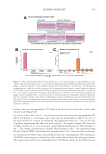
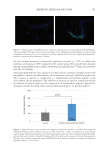
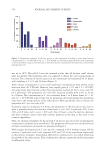
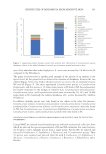
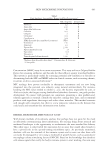
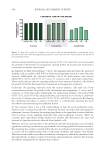
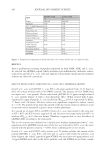
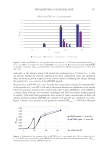
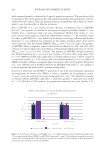
Overall, the species proportions (%)in the coculture after 8 hours of incubation are close
to those that are described in the literature (Figure 4).9 Nevertheless, the total bacterial
concentration in the consortium after 8 h of incubation is of more than 109 CFU/mL.
Thus, percentages (per 102) are not relevant indicators to study the model reproducibility.
Consequently, the concentrations’ variability were analyzed rather than the proportions.
Coefficients of variation are inferior to 4%, indicating a very good reproducibility of the
coculture preparation protocol.
IMPACT OF COSMETIC PRODUCTS ON THE SKIN MICROBIOTA
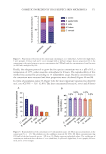
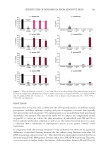
In order to analyze the effects and compare tested products, the LR on the five species
were calculated. The calculation of LR is common to measure the bactericidal efficacy
of disinfectants or preservatives that indicates the quantity of microorganisms
eliminated by a substance in a given contact time.39,40 When studying biocidal
substances, LR at least equal to five log are requested for a treatment to be effective.
In a challenge test for cosmetic formulations, an LR of three is required on bacteria
to validate the preservative efficacy.41 On the contrary, LRs less than or equal to 1
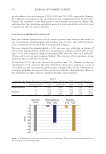
(LR ≤ 1) are not considered significant. In the present study, a score (sum of the 5
LR) was calculated, in order to aggregate the data on the five species. Consequently,
scores between 0 and –5 (LR ≤ 1) are obtained with neutral ingredients for the
microbiota (microbiota-friendly). Such scores were observed with proline, glycine,
glycerol, glucose, and inulin. All these substances are potential substrates for bacteria
and could have stimulated bacterial growth. However, the contact time of 8 hours
was not long enough to observe a significant increase of bacteria. We concluded that
the model was stable enough to be well adapted to discriminate between neutral and
harmful substances.
suggested that Corynebacteria must have mutualist trophic relationships with the main skin
colonizers, like Staphylococci. The literature mentions that Corynebacteria colonize all body
sites (dry, sebaceous, moist), even if in low proportions on the skin (10%)1, and Dimitri
et al. (2019) also suggested that some species like C kroppenstedtii are associated with skin
aging and wrinkles. Overall, these data suggest that Corynebacteria are ubiquitous members
of the skin microbiota.
Micrococcus sp. and Streptococci are low abundant species (5%),36,9 yet several studies of the
face microbiota report their presence and describe potentially beneficial roles for the skin.
For instance, Streptococci have been associated to the recovery of the barrier function in vitro
through the secretion of spermidine while Micrococci have been positively associated with
protection against signs of skin aging.37,38
Together, these data indicate that not only C acnes, S epidermidis, Micrococci, Streptococci, and
Corynebacteria are representative of the skin microbiota, but they also play key roles in the
skin homeostasis maintenance. One of the challenges of the present study was to obtain
a consortium with these five species. Despite their different nutritional needs and growth
requirements, an adapted protocol was elaborated that allowed the growth of wild isolates
for these five bacteria.
REPRODUCIBILITY OF THE MODEL
Overall, the species proportions (%)in the coculture after 8 hours of incubation are close
to those that are described in the literature (Figure 4).9 Nevertheless, the total bacterial
concentration in the consortium after 8 h of incubation is of more than 109 CFU/mL.
Thus, percentages (per 102) are not relevant indicators to study the model reproducibility.
Consequently, the concentrations’ variability were analyzed rather than the proportions.
Coefficients of variation are inferior to 4%, indicating a very good reproducibility of the
coculture preparation protocol.
IMPACT OF COSMETIC PRODUCTS ON THE SKIN MICROBIOTA
In order to analyze the effects and compare tested products, the LR on the five species
were calculated. The calculation of LR is common to measure the bactericidal efficacy
of disinfectants or preservatives that indicates the quantity of microorganisms
eliminated by a substance in a given contact time.39,40 When studying biocidal
substances, LR at least equal to five log are requested for a treatment to be effective.
In a challenge test for cosmetic formulations, an LR of three is required on bacteria
to validate the preservative efficacy.41 On the contrary, LRs less than or equal to 1
(LR ≤ 1) are not considered significant. In the present study, a score (sum of the 5
LR) was calculated, in order to aggregate the data on the five species. Consequently,
scores between 0 and –5 (LR ≤ 1) are obtained with neutral ingredients for the
microbiota (microbiota-friendly). Such scores were observed with proline, glycine,
glycerol, glucose, and inulin. All these substances are potential substrates for bacteria
and could have stimulated bacterial growth. However, the contact time of 8 hours
was not long enough to observe a significant increase of bacteria. We concluded that
the model was stable enough to be well adapted to discriminate between neutral and
harmful substances.