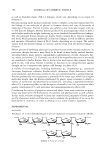
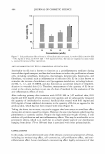
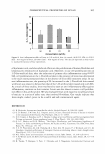
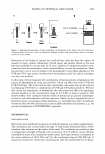
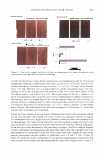
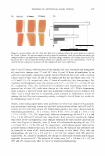
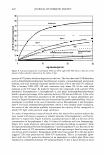
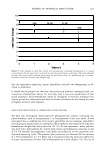
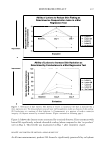
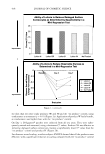
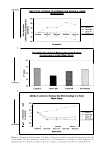
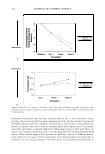
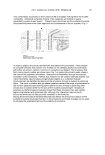
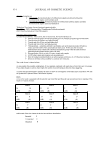
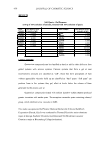
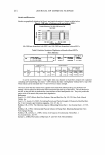
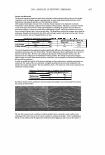
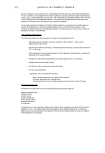
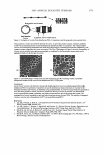
3I --+ i �-i H FADING OF ARTIFICIAL HAIR COLOR 409 Area 1, not irradiated ---+--i;.... --+ Area 2, irradiated Treat 3/4 1 Sllqoo Saq1le Irradiate Figure 2. Experimental procedures of hair weathering: (a) Irradiation of the whole tress with color mea surements taken at the tress center. (b) Irradiation through window with measurements taken in the areas indicated in the scheme. Prevention of the fading of natural and artificial hair color has been the subject of research in many cosmetic laboratories. Several papers and patents related to this area have been published in recent years (6-9), and a number of commercial products were introduced into the marketplace, which claimed efficacy in color loss prevention. There has also been a lot of activity related to the development of new photo-absorbers of the UVB and UV A type, and an introduction of antioxidants and/or free radical scavengers into hair care products. In this work, we have reassessed the contributions of various portions of radiation to the process of photofading by using special filters, which can effectively block UVB and UVB/UVA light. The results indicate that considerable color protection can be achieved by employing UV A filters or combinations of UVB and UV A photo-absorbers. We have also carried out experiments to demonstrate the color protection effects by employing selected absorbers in the concentration range of 0.5-6.0% in leave-in products. The observed effects were correlated with the results of theoretical calculations of photopro tection for individual absorbers and their mixtures. Finally, we have explored the use of blends of organic and inorganic photo-absorbers, e.g., benzophenone-ZnO. In addition, we have studied the effect of mixtures or salts of photo-absorbers and polymers, e.g., the system benzophenone-4-PVP/DMAPMA copolymer. EXPERIMENT AL INSTRUMENTATION Hair tresses were weathered by exposure to artificial radiation in an Atlas weatherometer. This instrument uses a xenon lamp with type "S" high-borate borosilicate filters, which simulates solar radiation on the surface of the earth. The irradiation was similar to that of average April sunlight in Florida, with an intensity of 0.35 mW/m2-nm at 340 nm, controlled by means of an irradiation control sensor. Such light intensity corresponds to the total irradiation of 149.4 J/(hr cm2) for the wavelength range of 400-800 nm. A typical test involved 21 tresses and a total exposure time that varied from 8 to 32 hours,

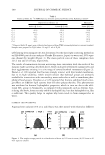
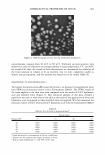
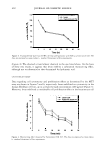
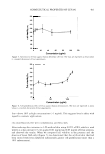
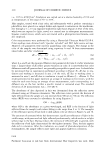
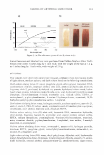
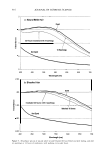
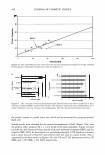
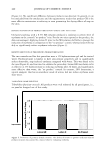
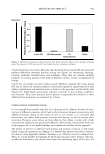
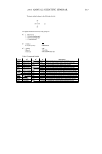
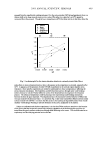
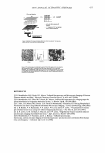
410 JOURNAL OF COSMETIC SCIENCE i.e., 1195 to 4780 J/cm2 • Irradiation was carried out at a relative humidity of 35% and at temperatures in the range of 45° to 50°C. Hair samples, treated with a hair color, and subsequently with a product containing a photofilter, were placed in a sample holder and exposed to radiation in the weatherom eter through a 5 x 2.5-cm exposure window for eight hours (Figure 2). Part of the tress, which was not exposed to light, served as a control area in subsequent measurements. Separate control tresses, which were not treated with a photoprotection formula, were also employed. Color measurements were performed by using a Hunterlab Ultrascan Model D25P-9. Color readings were obtained with "specular included" and D65 light-source settings. Hunter L-a-6 parameters were used for quantifying color changes. The change in the color of the samples was determined using equations la and 1 b from measurements taken before and after irradiation: dB = ✓((L 0 - L/ + (a0 - a/ + (b 0 - b/) dC = ✓[(a 0 - a/ + (b0 - b/J (la) (lb) where L, a, and b are the measured Hunter color parameters for time O or after irradiation time t. Larger values of dB reflect greater variation in color. It is noteworthy that color differences with dB greater than 1 are generally perceptible in panel tests. It should also be mentioned that in experiments performed according to Figure 26, dB due to irra diation and washing is measured in area 2 of the tress, dB due to washing alone is measured in area 1, and dB due to irradiation is equal to dB(area 2) - dB(area 1). The results presented in this paper represent an average of readings on five tresses, with the value for each tress being an average of ten measurements, each corresponding to a different site on the hair (within a specific treated or untreated area). The standard deviation of dB measurements was ± (10-20) %. The absorbance of dyes deposited in hair was determined from the reflection curves obtained using an Ultrascan colorimeter. The reflection curves provide the fraction of light reflected from the sample at 1-nm intervals from 380 nm to 750 nm. The reflection values (REF) were converted to absorbance by using Equation 2: OD = -log10(REF) (2) where OD is the absorbance at a given wavelength, and REF is the fraction of light reflected from the sample (with values falling in the range from O to 1). The examples of the reflectance spectra of hair dyed to dark auburn color are shown in Figures 3a and 36. The spectrum of untreated white hair demonstrates significant reflectance of light in the visible range, with green and red light reflected predominantly, which results in a slight yellow tinge to the hair. Dyeing reduces the intensity of reflected light in general, with the reflection of red light characterized by the highest intensity. Thus, the hair appears dark red in coloration. After the irradiation, as a result of photodecomposition of dye chromophores, the sample reflects more light and appears lighter in coloration. HAIR Piedmont Caucasian or yak hair from International Hair Importers was used. Dark
Purchased for the exclusive use of nofirst nolast (unknown)
From: SCC Media Library & Resource Center (library.scconline.org)