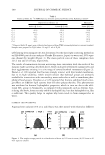
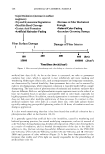
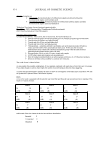
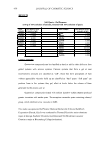
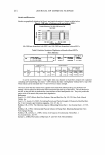
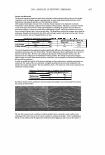
428 JOURNAL OF COSMETIC SCIENCE among elderly individuals. Another cause of barrier degradation is repeated wetting and drying of the skin. This occurs among individuals who lick their lips frequently or on the bottoms of children who wear diapers. Lastly, immunologic factors such as atopic dermatitis may play a role in dry skin conditions: a heightened immune response may result in asthma, hay fever, and dry skin. Moisturizers have been traditionally used to alleviate dry skin. They can reduce trans epidermal water loss by promoting barrier repair, soothe exposed dermal nerve endings by creating a temporary artificial barrier, and restore skin softness. Recently, moistur izers have been shown to prevent the induction of primary irritation and to accelerate the processes by which the skin heals itself (1-5). This is an important function, since a quality moisturizer formulation should not only reduce dry skin and irritation, but also prevent the return of these conditions, which can lead to skin disease. We demonstrate methods for modeling and quantitatively evaluating these moisturization benefits through clinical studies, followed by overall product efficacy evaluation in a home-use study. In this paper, the four different model systems utilized will be presented in turn. For each model, the history and previous publications will be discussed first, and then the current methodology will be described. Finally, the statistical methods used to analyze the data will be shown. The results of these analyses are shown in the Results section. MATERIALS AND METHODS: PRODUCTS TESTED Table I shows the composition of the lotions used in this study. All were commercially available in the U.S. in 2000. It should be noted that not all products were used in each study. MODEL SYSTEM I. BENEFIT: ALLEVIATION OF DRYNESS MINI-REGRESSION TEST Test history. A major cause of dry skin is the environment, especially cold winter weather Table I Key Ingredients Listed in Descending Order of Concentration (excluding water) Glycerin-rich lotion (Lotion GR) Glycerin* Petrolatum Ceteary 1 alcohol Behentrimonium chloride Cetyl-PG-hydroxyethyl palmitamide Oatmeal extract Eucalyptus extract Hydrocarbon lotion (Lotion H) Petrolatum Mineral oil Ceresin Lanolin alcohol Waxy lotion (Lotion W) Emulsifying wax Glycerin Octyl isononanoate Dimethicone Butylene glycol lotion (Lotion B) Butylene glycol Mineral oil Petrolatum Glycerin Cetyl alcohol Low-glycerin lotion (Lotion LG) Glycerin Stearic acid Glycol stearate Sunflower seed oil * Lotion GR contains more than 15% glycerin, whereas lotions W, B, and LG contain less than 8% glycerin. Lotion H does not contain glycerin.

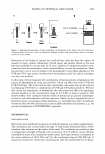
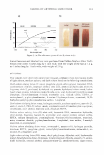
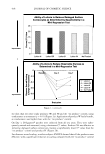
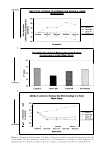
MOISTURIZER EFFICACY 429 and the accompanying low humidity found in centrally heated homes. The regression test as developed by Kligman ( 6) used dry skin produced by the cold environment as a starting point for testing lotion efficacy. Panelists treated each leg with a different product (or no product), usually twice daily for three weeks. The appearance of dryness was assessed weekly. Then treatment was stopped and the time necessary for the skin to return to its original appearance was determined. Kligman reported that the composi tion of a moisturizer greatly affects its performance, and that a product's performance could be measured by regression testing using visual observation. Boisits et al. (7) modified this procedure with daily assessments of dryness and with washing with soap to increase the drying stress on skin. This provides a constant stress on the skin to give a constant level of dryness that is observed on the "no product" control site. This is an advantage, especially in regions where weather conditions may vary during the study, resulting in changes in dryness at the control site. Grove (2) further modified the procedure, shortening the study from up to six weeks to eight days-mini-regression testing. Participants were treated with multiple test prod ucts for four days and re-evaluated four days later. The effectiveness of moisturizers on dry skin can be evaluated using several different parameters, including visual evaluation, measuring skin hydration via conductance or capacitance, and skin color. Visual evalu ation demands that a trained observer categorize the condition of a panelist's skin, using erythema and scaling grading scales. Conductance or capacitance measurements, col lected using a Skicon® Dermalab or Novameter®, respectively, allow for determination of skin hydration at different times throughout a study. Colorimeter readings were used to analyze variances in skin color, in particular those associated with erythema. Zhai and Maibach (8) and Gammal et al. (9) did further work using Grove's regression methodology. Zhai and Maibach reported that a single application of a moisturizer does not cause long-lasting effects, but that repeated applications of a moisturizer (that is, two times each day for seven days) can result in a significant conductance increase for at least one week after treatment has ceased. Gammal et al., in evaluating the effectiveness of moisturizers on soap-induced xerosis, used clinical scaling, electrical conductance, and D-Squames® to compare products. These previous publications contributed to the current study, which was conducted, in part, to prove that a product's ingredients contribute to its ability to provide both short and long-term benefits. In many of the studies discussed in this paper, relatively small panels of 25 or more volunteers were utilized. For instance, Boisits et al. used panels of at least 30 panelists. The panelists were selected to form a relatively homogeneous and reactive/responsive group. Previously Frosch and Kligman (10) had demonstrated that in irritation testing, such a panel predicts the reactions of a larger, general population. Procedure. Potential panelists, after giving informed consent, were directed to use only Ivory® soap to cleanse the lower legs at home, for a minimum of three days before the start of the treatment phase, using their usual method. The subjects also were told to stop using lotions, moisturizers, oils, and soaps, other than the Ivory® soap provided, on the legs. At the initial baseline visit, at least 25 panelists sat quietly in an environmentally controlled room (temperature at 18° to 21 ° C, RH = 35 ± 5%) for at least 20 minutes.
Purchased for the exclusive use of nofirst nolast (unknown)
From: SCC Media Library & Resource Center (library.scconline.org)