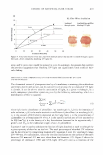
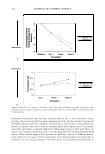
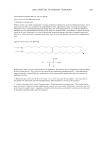
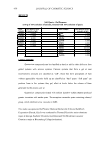
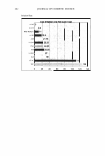
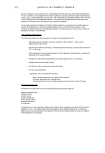
468 JOURNAL OF COSMETIC SCIENCE THERMOMECHANICAL ANALYSIS OF HAIR FIBERS TREATED WITH KNOWN ACTIVES IN FORMULATIONS K.R. Ramaprasad, Ph.D., Binhua Yang and Yash K. Karnath, Ph.D. TRI/Princeton, PO Box 625, Princeton, NJ 08542 Introduction The constant damages suffered by hair fibers because of diverse grooming practices have their inevitable toll on their strength. The formulations that have been designed to address specific damage issues in the hair care industry need quantitative physical methods to objectively evaluate product efficacy. The relevant mechanical property of hair is a context specific attribute, since improvements claimed do not always ref er to any specific locale in the complex hair structure. Depending on the history of the hair fiber and the chemical structure and size of the active in the formulation, specific location in the hair fiber will be affected. It would be desirable to have complementary methods that would aid in the better understanding of the locale specificity of a successful active. 111.is work reports on initial results from an investigation to understand the way the thennomechanical properties of hair fibers change after application of actives whose location in the hair, when they are applied, is known from literature. Experirnental Bair fibers: All work was performed on yellow bleached hair procured from De Meo Bros., New York. The fibers were all screened so that their cross-sections are in the range of0.00300 to 0.00500 mm2• Actives: The following actives, generally in vogue in hair care formulations, were used: 0.5% solution ofa polyquat-10, 0.5% solution ofCETAB, 1% solution of Panthenol and just deionized water for a control. Treatment protocol: With each solution of the active, the hair fibers were soaked in the solution and kept for 6 h at 40°C. The fibers were then gently rinsed and equilibrated at room ambient (65% RH and 21 ° C) overnight before being mounted for TMA analysis. Instrument: Perkin Elmer Thermomechanical Analyzer, Model TMA 7, was used to make the stress relaxation measurements. Such studies were undertaken at three different temperatures (40 ° , 60° and 80°C). At each temperature, the properly mounted hair fiber (-3 cm long) was allowed to equilibrate with the ambient for 5 min before application of the stress. At the end of this period, a stress of 250 mN was applied and stress relaxation recorded. More than IO fibers were studied, individually, and from this set, only those results were chosen that had a strain value in the region of I - 2 %. 111.is was an attempt to normalize as closely as possible tl1e initial conditions for each fiber in the study. Results and Discussion Only the initial stress relaxation rates have been considered (about 30 s after application of the stress). For each fiber, a first order plot of In S1 vs t gave the rate constant k. Here S1 is the recorded stress at time t. These plots (too numerous) are not shown here. From the set of k values for each active, at each temperature, an average k was calculated. The Arrhenius plot of In k vs 1/f, where T is the temperature in Kelvin at which stress relaxation was carried out, is shown in Fig. I for all the actives studied. It must be pointed out that there is considerable spread in the results and one of the future efforts would be directed towards understanding the TMA protocol for this kind of study so that potential variables contributing to this could be identified and corrected. But, given this stipulation, it is to be observed, from Fig. I, that the fibers treated with different actives do exhibit a distinctly different stress relaxation kinetics depending on the kind of interaction of actives with the fibers. It is to be recalled that prior work published in the literature has established that polyquatemium compounds reside mainly on the hair surface and in the intercuticular regions, whereas the much smaller CET AB molecules and also panthenol diffuse into the cuticular and coritcal domain with time. The untreated control (Fig. 1) shows a (small) negative slope, typical of Arrhenius plots, indicating a small activation energy for stress relaxation under these small strain conditions. But as we

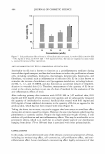
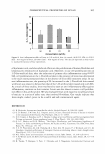
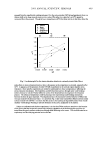
2005 ANNUAL SCIENTIFIC SEMINAR proceed from the superficially residing polyquat-10 to the cortex resident CET AB and panthenol, there is a distinct shift in the slope towards more positive values (The rather low value for k at 60°C cannot be accounted for at the present). Though at lower temperatures (40°C) the three actives on hair have about the � --+- Control --- Water -•- CETAB --T--- Polyquat-10 ♦ Panthenol 80 oc 60 40 1.85 �-'-------I---------+-� 1.80 1.75 1.70 1.65 - 1.60 - 1.55 - 1.50 -+-----.----�--�---�--' 0.0028 0.0029 0.0030 0.0031 1fT 0.0032 Fig. 1 Arrhenius plot for the stress relaxation kinetics in variously treated hair fibers same effect on stress relaxation kinetics, there is divergence as the temperature is elevated, especially after 60°C. It appears as if the presence of either CET AB or panthenol in the cortical region impedes stress relaxation. More specific experiments are needed to understand how these compounds are affecting the stress relaxation mechanism. One hypothesis could be that these actives, through some weak bonding (either chemical or van der Waals) stiffen the cortex of the bleached hair slowing down the relaxation process. The enhanced temperature could be playing a role in promoting such bonding interactions between the host the guest materials. This hypothesis has to be reconciled with the behavior of fibers that were just treated with deionized water. It is seen from Fig. 1 that water treated fibers behave almost similar to those treated with CET AB. It is likely that this is due to the leaching of degraded keratins which would interfere with hydrogen bonding or salt link formation in the cortex (especially in the matrix). Subject to confinnation by further experiments, it is clear that TMA results are sensitive to the location of the actives that hair tresses are treated with, showing a gradation in the Arrhenius plot as actives are sorted from the purely surface resident one through those diffusing to the cortex. This could be used as an exploratory tool for studying potential actives for hair. 469
Purchased for the exclusive use of nofirst nolast (unknown)
From: SCC Media Library & Resource Center (library.scconline.org)