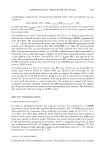
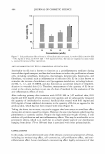
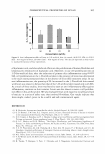
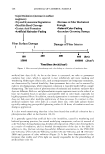
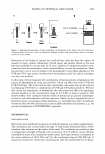
474 JOURNAL OF COSMETIC SCIENCE bacterial endospores and acid fast bacteria. Benzalkonium chloride functions well within the pH range of 4.5 to 6.5 however it is incompatible with anionic surfactants, nonionic surfactants (high concentrations), citrates, soaps, cellulose polymers, and zinc salts. The incorporation of disodium edetate at 0.0 I to 0.1 % is critical to the function of benzalkonium chloride. This agent chelates magnesium ions allowing for the penetration of the preservative through the micro-organism membrane. Occasionally, nasal spray formulas will contain cellulose polymers to suspend water-insoluble drugs, to increase the formulation viscosity thus minimizing throat-drip, or to retard ciliary clearance. Since cellulose can bind and inactivate benzalkonium chloride, a second preservative such as benzyl alcohol or phenylethyl alcohol is recommended. Drug Candidate Characteristics The following attributes are most desirable for a drug for nasal administration [ l]: --- Substantial aqueous solubility to provide an effective dose in the 25 - 150µ1 volume administered to each nostril --- pH-partition coefficient indicating a substantial portion of the drug is unionized at the desired 4.5 - 6.5 pH range --- Other appropriate nasal absorption properties such as promotes self-absorption via temporary disruption of the nasal membrane --- Responsive to absorption promotion by an excipient agent such as a cyclodextrin --- Minimal nasal _irritation from the drug --- No offensive odors / aroma associated with the drug --- No toxic nasal metabolites Appropriate clinical rationale for nasal dose Nasal treatment drug such as a cough/cold decongestant Low dose, generally below 25mg per dose Desired rapid onset of action without exposure to gastric system or liver first pass Absorption Optimization The following excipients have been investigated nasals drug aborption enhancers: ammonium glyrrhizinate hyaluronic Acid acetyl-1-cystein sodium taurocholate fusidic acid derivatives phosphatidylcholines cyclodextrins Cyclodextrins are cyclic oligomers of glucose that form inclusion complexes with drugs that fit into their lipophilic cavities. The drug solubility and bioavailability can be markedly improved. A substantial improvement in insulin absorption was reported by Merkus [5] by administering the insulin in a complex with dimethyl-beta-cyclodextrin.

2005 ANNUAL SCIENTIFIC SEMINAR CONCLUSION Nasal drug delivery is a viable alternative for many drugs both for treatment of nasal diseases, and for the administration of drugs presently administered orally or parentally. Nasal drug delivery can be optimized through proper selection of formulation excipients, selection of appropriate candidate drugs, and use of novel absorption enhancers. REFERENCES I. C.R. Behl, H.K. Pimplasker, A.P. Seleno, J.C. deMeireles, V.D. Romeo, Effects of Physicochemical Properties and Other Factors on Systemic Nasal Drug delivery Advanced Drug DeliveryReviews, 29, 89-116, 1998 2. Lisbeth Illum, Transport of Drugs form the Nasal Cavity to the Central Nervous System. European Journal of Pharmaceutical Sciences, 11, I -18, 2000. 3. S. Esmail Tabibi, Thomas E. Needham, Hossein Zia, Nasal Drug Delivery. Course Syllabus of Technomic Publishing, 1995. 4. S. Hirai, T. Yashika, T. Matsuzawa, H. Mim�, Absorption of Drugs from the Nasal Mucosa of the Rat Int. J. Pharm, 1, 317-325, 1981. 5. F.W.H.M. Merkus, J. Coos Verhoef, S.G. Romeijn, N.G.M. Schipper, Absorption Enhancing Effect of Cyclodextrins on Intranasally Administered Insulin in Rats Pharm Res, 8, 588-592, 1991. 475
Purchased for the exclusive use of nofirst nolast (unknown)
From: SCC Media Library & Resource Center (library.scconline.org)