CONTINUOUS PROCESSING OF COSMETIC PRODUCTS IN VOTATOR APPARATUS* By JoI•N P. BOL^NOWSS:I The Girdler Company, 1/otator Division, Louisville, Ky. As INVESTIGATION' of the effort required to place virtually any single item on today's drug or super-market shelf would reveal that this effort encompasses an almost innumerable combination of steps, first to create raw ingredients, and then to transform them into brilliantly packaged products. Without a doubt, the average individual purchaser would be astounded if he or she were brought face to face with the entire group of people involved in the manufacture of a tube of shaving cream or a bottle of hand lotion. The transformation of raw ingredients into a finished product ipvolves many vital operations performed by many people, and significant among them are the equipment designer and methods or process engineer. There are two major problems that must be solved before product production can begin. The first is the development of the product, and the second is the development of an efficient process to produce the product. In the following discussion we will be concerned with the second of these problems, namely the development of the process and the equipment in which to carry it out. More specifically, we will be concerned with a con- tinuous heat transfer apparatus that has many applications, and may also serve simultaneously as an emulsifier, homogenizer or texturizer and blender. Generalizing, one may consider the modern production line as an engi- neered combination of unit operations and unit processes. From the equipment engineer's point of view, unit processes or operations are steps or operations which are common to most industries, including those engaged in producing foods, chemicals and cosmetics. For example, margarine, hand cream lotion and the easy to apply polishes for automobiles and floors are quite similar in that they are all emulsions. The ingredients, of course differ, depending on the product but fundamentally, the steps required to transform the ingredients into the final product are much the same and all are functions of temperature, time and physical work. To the equipment * Presented at the October 5, 1956, Seminar, New York City. 5O9

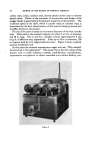
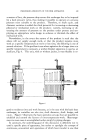
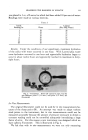
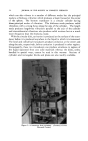
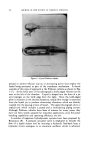
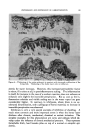
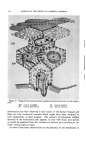
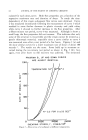
510 JOURNAl. OF THE SOCIETY OF COSMETIC CHEMISTS and process engineer, these functions mean heat transfer, heat transfer rates and physical work, before, after or during the compound formation or finishing. To the product processor, it should be apparent that qualified equipment and process engineers need not necessarily be experts in making specified cosmetics, confections, foods and chemicals. But they should be experts in the unit operation or operations the processor requires if they are to do an effective job of process development. From here this discussion will be concerned with a highly efficient heat transfer mechanism which is employed in many types of processes where its use has converted batch operations into efficient, accurate and easily con- trolled continuous processes. In such heat transfer apparatus fluid material or slurties or solid material in liquids are pumped into one end of the apparatus, rapidly and uniformly heated, cooled, or both, and discharged at the outlet at the desired temperature and with predetermined physical properties such as consistency, homogeneity or degree of emulsification. These transformations are effected with very close control of such process conditions as time, temperature and work. While heat transfer and mixing are two of the oldest unit operations Figure 1
Purchased for the exclusive use of nofirst nolast (unknown)
From: SCC Media Library & Resource Center (library.scconline.org)