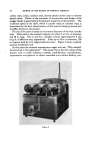
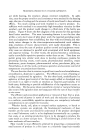
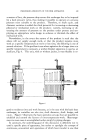
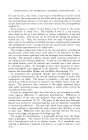
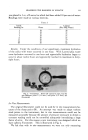
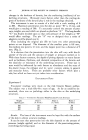
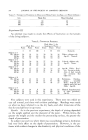
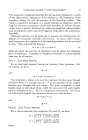
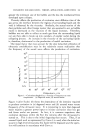
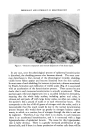
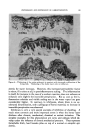
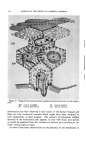
MEASURING THE HARDNESS OF KERATIN 539 keratin which probably reflects itself in their capacity to absorb water, there were definite differences before hydration in the depth of pitting. Im- mersion of the feet in water for one-half hour in subjects three, four and five allowed greater depth of penetration under the same experimental conditions as in the so-called normal subjects (Table 8). We are not attempting to deduce any conclusion concerning differences in keratin of psoriatics and nonpsoriatics, but again we wish to illustrate possible uses for the Tonometer. COMMENT Another use of the instrument is to observe not only the depth of pitting under various conditions, but to study the rate of disappearance of the pitting. Chieffi (3) used a rather complicated instrument to study the effects of local application of hormones on the elastic properties of senile skin. Direct Tonometer readings, as well as the rate of disappearance of any pitting produced, can be used similarly to study differences before and after the application of hormone creams as well as changes induced by such conditions as edema, urticaria, atrophy, etc. The senior author had actually carried on comparative studies with the Tonometer before and after the use of hormones and compared the results Histology of tissue from heel 25/1000 of an inch thick.

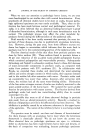
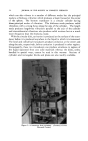
540 JOURNAL OF THE SOCIETY OF COSMETIC CHEMISTS with the intradermal saline test and histologic studies. There is a definite correlation between the Tonometer readings, the rate of disappearance of the pitting, and the histologic changes produced by local hormone applica- tions as well as changes in the McClure-Aldrich test. SUMMARY Two instruments are described for in vitro and in vivo measurements of the hardness of keratin. Experiments are described which indicate their possible fields of usefulness. Our experiments indicate, as did those of Blank, that it is the water content of the keratin that is mainly involved with its flexibility or hard- ness. Completely dehydrated keratin is extremely hard and brittle. In the absence of water, anhydrous lanolin, mineral oil, soy oil, glycerin, and even a fat-soluble, dewaxed lanolin fraction did not soften such de- hydrated keratin. In fact, glycerin made such tissue more brittle. When sufficient water is added to a chemical agent which is capable of taking it up and then making it available to dehydrated keratin, softening of the hard keratin takes place. The rate and degree of softening depends on the rate of rehydration. Anhydrous lanolin U.S.P. was not as efficient as a fat-soluble dewaxed fraction (Lantrol) derived from it in rehydrating and softening com- pletely dehydrated keratin under the same experimental conditions. The instrument used for the in vivo studies, which has been called a Tonometer, lends itself to studies other than measurements of hardness of keratin. It can also be used to measure skin elasticity or skin tone. REFERENCES (1) (a) Blank, I. H., 5 t. Investigative DermatoL, 18, 430 (1952). (b) Ibid., 21, 259 (1953). (c) Blank, I. H., Drug and Cosmetic Ind., 76, 758 (1955). (2) Gaul, L. E., and Underwood, G. B., 7- Investigative DermatoL, 19, 9 (1952). (3) Chieffi, M., 7. GerontoL, 5, 17 (1950).
Purchased for the exclusive use of nofirst nolast (unknown)
From: SCC Media Library & Resource Center (library.scconline.org)