INTERPRETATIONS AND APPIACATIONS OF FI,OW MEASUREMENTS 599 (18) Rudall, K. M., Biochim. et Biophys. ztcta., 1, 549 (1947). (19) Rudall, K. M., ztdvances in Protein Chem., 9, 253 (1952). (20) Astbury, W. T., and Woods, H. J., Nature, 126, 913 (1930). (21) Roe, D. A., unpublished data. (22) Montagna, W., Internatl. Rev. Cytol., 1,265 (1952). (23) Pease, D.C., vim. •7. •lnat., 89, 469 (1951). (24) Farrant, J., Rees, A. L. G., and Mercer, E. H., Nature, 159, 535 (1947) (25) Astbury, W. T., Proc. Roy. Soc. (London), B134, 303 (1945). (26) Pauling, L., and Coney, R. B., Nature, 171, 59 (1953). (27) Crick, F. H. C., ztcta cryst., 6, 685 (1953). (28) Bear, R. S., and Selby, C. C., y. Biophys. and Blochem. Cytol., 2, 71 (1956). (29) Mark, J. S. T., ztnat. Record, 125, 73 (1956). (30) Spiro, D., Exp. Cell Research, 10, 562 (1956). (31) Palade, G. E., y. Histochem. and Cytochem., 1, 188 (1953). (32) Palade, G. E., and Porter, K. R., •7. Exp. Med., 100, 641 (1954). (33) Birbeck, M. S.C., Mercer, E. H., and Barnicot, N. A., Exp. CellResearch, 10, 505 (1956). (34) Moberger, G., and De, P., Ibid., 8, 578 (1955). (35) Montagna, W., "The Structure and Function of Skin," New York, Academic Press, Inc. (1956). (36) Motoltsy, A. G., and Balsatoo, C. A., •7. Biophys. and Biochem. Cytol., 1, 339 (1955). (37) Middlebrook, W. R., Biochem. and Biophys. ,4eta, 7, 547 (1951). (38) Huggins, C., Tapley, D. F., and Jensen, E. V., Nature, 167, 592 (1951). (39) Mercer, E. H., Btochem. and Biophys. ztcta, 3, 161 (1949). (40) Van Scott, E. J., and Flesch, P., ztrch. of Dermatol. and Syphilol., 70, 141 (1954). (41) Barrnett, R. J., y. Natl. CancerInst., 13, 905 (1953). (42) Carrhthers, C., and Suntzeff, V., Physiol. Revs., 33, 229 (1953). (43) Ward, W. H., and Lundgren, H. P., ztdvances in Protein Chem., 9, 243 (1954). INTERPRETATIONS AND APPLICATIONS OF FLOW MEASUREMENTS* By RUTH N. WELTMANN Lewis Flight Propulsion Laboratory, C/eve/and 11, Ohio WHEN A MATERIAL is being handled during its manufacture or while a measurement of its flow properties is made or while it is being applied to a specific purpose, it is subjected to shear and temperature changes. The viscosity of a Newtonian material is only temperature de- pendent therefore, flow measurements which are made under controlled temperature conditions will yield all the required information about its flow behavior. However, non-Newtonian materials such as are frequently encountered in the cosmetic industry, are temperature and shear de- pendent. While the flow properties of some non-Newtonian materials are affected by the rate of shear only, others will depend also on the length of time that the shear rates are applied. The latter types of materials will be called time-dependent non-Newtonian materials. Thus, to make inter- pretations possible, flow measurements of such materials have to be made not only under controlled temperature conditions, but it is essential * Presented at the October 4, 1956, Seminar, New York City.

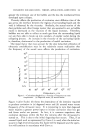
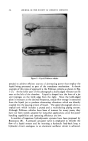
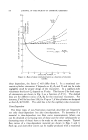
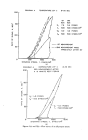
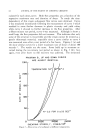
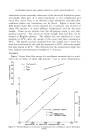
600 JOURNAL OF THE SOCIETY OF COSMETIC CHEMISTS to control, in addition, the rate of shear and shear duration for each flow measurement. The flow properties can then be interpreted from the measurements and specified for a temperature, a shear rate and, if nec- essary, a time of shear duration. This paper will discuss the flow characteristics of the different types of materials and the results which can be expected from measurements with rotational concentric-cylinder and capillary-tube viscometers. It will also suggest a sequence of controlled flow measurements which are required to yield sufficient data to interpret the flow behavior of the materials and to assign characteristic flow properties. Some such flow measurements ob- tained for an all-purpose cream and a toothpaste will be presented. These measurements were obtained with an automatic rotational concentric- cylinder viscometer, which was built at the NACA Lewis Flight Propulsion Laboratory. Its automatic features permitted two push-button con- trolled sequences of flow measurements. The characteristic flow properties can be applied to the solution of manufacturing, application and research problems. Since the flow properties are very sensitive to changes in the formulation and in the manufacturing process the flow measurement is a very useful tool for product research and product control. This paper will discuss some of the physical and chemical factors which are responsible for the changes in flow properties and will indicate how these changes can be estimated. It will also be shown how to use the flow properties to determine the pressure losses in a pipeline system and thus how to design the pipeline to yield the desired flow rates when transporting a non-Newtonian material. As an example, the pressure losses for the toothpaste and a pigment sus- pension are calculated for a one-inch pipeline. FLOW MEASUREMENTS The flow properties of any type of material can best be determined from a measurement of a flow curve, which is a curve of rate of shear against shearing stress. Flow curves representing different types of materials are shown in Fig. 1 together with the respective flow properties. Flow curves are measured by shearing the material in a viscometer under lami- nat and defined shear conditions and at a constant temperature. The two most popular viscometers are the concentric-cylinder rotational vis- cometer and the capillary-tube viscometer. In a concentric-cylinder rotational viscometer two cylinders are rotated with respect to each other and the sample is sheared in the confined an- nular space between the two cylinders. Measurements are made of the rotational speed n applied to the rotating cylinder and of the torque T exerted on the stationary cylinder by the sample. Under laminar flow conditions, the rate of shear G in a concentric-
Purchased for the exclusive use of nofirst nolast (unknown)
From: SCC Media Library & Resource Center (library.scconline.org)