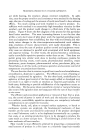
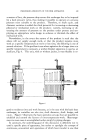
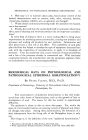
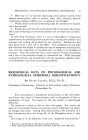
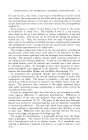
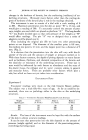
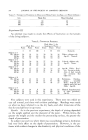
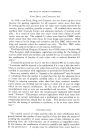
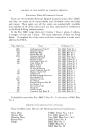
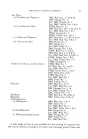
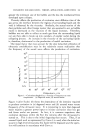
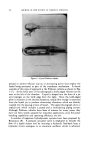
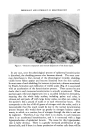
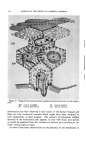
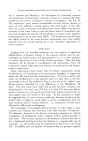
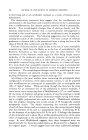
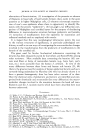
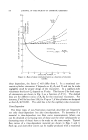
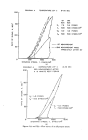
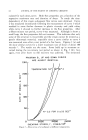
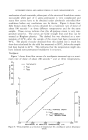
INTERPRETATIONS AND APPLICATIONS OF FLOW MEASUREMENTS 611 mechanism of such materials, where part of the structural breakdown seems recoverable while part of it seems permanent is very complicated and many flow curves have to be obtained under absolutely controlled flow conditions before any conclusions can be drawn. Figure 6 shows four fully broken down flow curves obtained for a maximum rate of shear of about 190 seconds -• at three different temperatures and for the same sample. These curves indicate that this all-purpose cream is very tem- perature sensitive. The curves are fairly straight lines and thus can be treated as Bingham plastics. The dashed line was obtained at a tem- perature of 24øC., after the sample of the cream had been measured at 44øC. The plastic viscosity obtained from this dashed line is much less than that calculated for the solid line measured at 24øC., before the sample had been heated to 44øC. This indicates that the temperature might also have induced some permanent breakdown in structure. Toothpaste Figure 7 shows three flow curves of a toothpaste measured up to a maxi- mum rate of shear of about 240 seconds -• and at three temperatures. 90 .- i.- 6o • 5o 4o - 5 4 TOOTHPASTE •oo •oo / ,¾ / / / ------ALL-PURPOSE CREAM • U•90 • COMPLETELY D f•90J BROKEN DOWN 300 •00 •z _J _ I - IOO .035 I I 1 .031 .03P_ .0:33 .034 RECIPROCAL OF ABSOLUTE TEMPERATURE, I/øK Figure 8.--Flow properties as a function of' temperature for a toothpaste and an all-purpose cream.

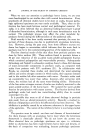
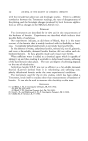
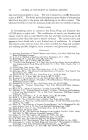
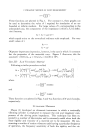
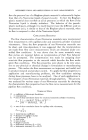
612 JOURNAL OF THE SOCIETY OF COSMETIC CHEMISTS These curves show no time dependency. The toothpaste behaves like a pseudoplastic. At rates of shear above 35 seconds -• the structure number N is constant. It is 2.2 at all three temperatures. The apparent vis- cosity depends on the temperature and rate of shear. The logarithm of the apparent viscosity is plotted in Fig. 8 as a function of the reciprocal of the absolute temperature for a rate of shear of 100 seconds -• and 200 seconds -•. The dashed lines on the same figure are similar plots for the plastic viscosities and for the yield values of the all-purpose cream. These values, which are taken from Fig. 6 were obtained at a maximum rate of shear of 190 seconds -• and after the structure was completely broken down. Figure 8 indicates that the all-purpose cream is much more tem- perature sensitive than the toothpaste. The plots in Fig. 8 seem to be straight lines. For NewtonJan fluids Andfade (8) established a law which predicts such a straight line relationship between the logarithm of the viscosity and the reciprocal of the absolute temperature. Similar re- lationships have been obtained for non-Newtonian materials. The yield value as a function of temperature, however, was not found to obey any such law and, therefore, the straight line would require further studies. APPLICATIONS OF FLOW MEASUREMENTS Product Research and Control The problems of product research and product control are usually re- lated. Since the flow properties change appreciably with a change in ingredients, formulation and manufacturing process, a measurement of the flow properties is often used to control the quality of the product and also to achieve reproducibility. On the other hand research is frequently done to obtain the flow properties which are desirable for a certain application. In this case the ingredients, the formulation and the manufacturing process are changed in a purposeful and systematic manner until the de- sired flow properties are obtained. In view of this it seems interesting to review how some changes in ingredients, formulation and process can affect the flow properties of the finished products. In mixing ingredients, a law similar to Arrhenius' law (9) can frequently be applied to estimate how a change in mixing ratio will affect the flow properties. This law states that the logarithm of the viscosity • of the mixture is proportional to the concentration c of one of the ingredients. This law can be generally expressed as /• = /•0e TM (11) In this equation, m is a constant for any one mixture or suspension. In the case of a mixture of two NewtonJan liquids, •0 is the viscosity of one liquid and c is the volume per cent of the other liquid. The ma- terial constant m is then a function of the difference of the logarithms of
Purchased for the exclusive use of nofirst nolast (unknown)
From: SCC Media Library & Resource Center (library.scconline.org)