524 JOURNAL OF THE SOCIETY OF COSMETIC CHEMISTS the logical thing to do is to isolate and analyze the keratin forming cells and compare them with their product, the horny layer. At present such isolation is a technical impossibility. Separation of human epidermis into a cellular and a keratinous fraction by fractional centrifugation of dried epidermal powder that has been suspended in ether is at best a crude pro- cedure (4). Another more tedious method has been used recently by Szakall in Germany. By stripping successive layers from the skin sur- face with Scotch tape, he eventually reached the epidermal barrier at the base of the horny layer. The barrier could be removed as a coherent mem- brane. Detailed chemical analyses of this membrane are not ready (5). At present, there is only one solution to this problem: To remove epi- dermis from a region where the horny layer is thin and compare it with pure epidermal horny material, such as callus. It is true that the epider- mis contains not only cellular, but also horny material however, the amounts contributed by the horny layer are relatively small. During the past year, two sets of data appeared, giving us a complete list of the amounts of some 20 amino acids in human epidermis and horny layer. Both tissues were analyzed by Miiting and his co-workers in Germany (6). The other set of data was obtained from human epidermis by Block (7). Although many of M•ting's values do not agree with those of Block's and of other authors', for comparative purposes his data on epidermis and horny layer may still be useful. From these and previous analyses the following changes can be deduced to occur in the course of epidermal keratinization: (1) definitely established--hydroxyproline disappears and cystine sometimes increases (2) questionable, to be confirmed--phenyL alanine and proline increase and glycine and isoleucine decrease. At present it is difficult to speculate about the possible significance of these changes. The role of cystine will be discussed shortly. The possi- bility that hydroxyproline is converted to proline must be considered. Decrease in isoleucine may be an attempt on the part of the organism to avoid wasting an essential amino acid. The unused phenylalanine may be due to accumulation of this pigment precursor in the course of epidermal differentiation, because pigmentation takes place in the basal layer of the epidermis only. However, these are mere speculations and we do not even know whether or not these changes occur at all. Most striking, however, is the similarity in the composition of the epidermis and the horny layer. Out of 20 amino acids, only one has been shown to undergo quantitative changes in the course of epidermal kera- tinization. It is legitimate to conclude that keratinization essentially represents a rearrangement of the existing building stones of a precursor. Cystine and cysteine are key amino acids in keratinization and have been studied more extensively than any of the other amino acids.

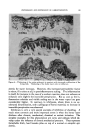
PHYSIOLOGICAl. AND PATHOLOGICAl. EPIDERMAL KERATINIZATION 525 Cystine occurs in higher quantities in keratins than in other proteins, if we disregard some exceptions, such as insulin. Epidermal keratin has less cystine than other keratins, for example hair or nail. In general, the harder keratins contain more cystine than the softer ones. The disul- fide groups of cystine form bridges, linking neighboring polypeptide chains in the keratin molecule, thus greatly adding to the stability of the horny layer and its resistance against some chemical influences. Cold per- manent waving and bleaching of the hair would be impossible, if the horny layer, because of its relatively low cystine content, would not be more resistant to thioglycolates or peroxide than hair. These are generally accepted facts. Controversial is the distribution of cysteine and cystine in the various layers of the epidermis and their localization among the various epidermal components. The classical concept, advanced by Giroud and his co-workers (8) was based on nonspecific histochemical methods for --SH groups and on chemi- cal analyses of an animal specimen, the horse burr, a rudimentary toe. It was proposed that epidermal keratinization had the following char- acteristics: 1. Sulfhydryl groups were limited to the cellular layers of the epider- mis and none occurred in the horny layer. 2. Keratinization of hard structures, such as hair, was characterized by a zone of intense --SH reaction, immediately underneath the zone of full keratinization. This zone was called the keratogenous zone. It was claimed that this zone occurred in hard keratinous structures only and was absent in the epidermis. 3. It was thought that since --SH was absent in the horny layer, the oxidation of the --SH groups accounted for the cystine present in the horny layer. None of these assumptions could be confirmed by later authors. 1. Sulfhydryl was not limited to the cellular layer of the epidermis, but occurred in the horny layer as well, as shown by more specific histo- chemical (9) and direct chemical tests (10). Moreover, recently we have shown that most, if not all of the --SH compounds in the horny layer could be extracted with detergents or even with water (11) hence, it is unlikely that these groups are part of the keratin molecule. 2. With more specific modern stains, the keratogenous zone has been found to occur not only in the hair matrix, but also in the epidermis (9). The significance of this zone of intense sulfhydryl reaction is ob- scure. It could be due to consolidation and dehydration of the tissue immediately before full hardening sets in or to an increased concentration of sulfhydryl compounds or enzymes which may participate in the final consolidation of the keratin molecule. 3. Finally, the theory that the cystine in the horny layer originated
Purchased for the exclusive use of nofirst nolast (unknown)
From: SCC Media Library & Resource Center (library.scconline.org)